TL;DR

Get backup power and energy gear delivered free with Prime
- Fast, free delivery on millions of items
- Prime Video, Amazon Music and more included
- Member-only deals all year
The Agile Electrification Project has started a 12-month study in which about 200 California households will help design hypothetical virtual power plant programs. Researchers will examine what participants are willing to share, what incentives they prefer and how their choices could affect the grid; the project is research, not a live utility program.
The Agile Electrification Project, led by the Design Lab at the University of California, San Diego, has launched a 12-month research phase asking about 200 volunteer households to help design hypothetical virtual power plant programs. The study will test what participants are willing to share from their home energy devices, under what conditions and for what incentives, offering planners evidence about how future programs might better reflect customer priorities.
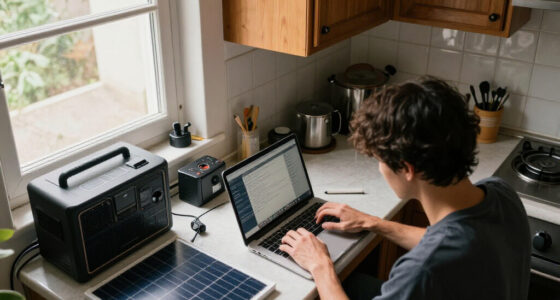
Participants in the project’s Living Laboratory have solar panels, home batteries, electric vehicles, heat pumps, smart thermostats and other connected devices from different manufacturers. Researchers will use surveys to explore practical limits on participation, including how often households would accept reduced air conditioning during heat waves and how much battery capacity they would want to reserve in case of a possible blackout.
The questions will also look at participants’ motivations. Some households may favor financial benefits, while others may prioritize using more clean energy or helping neighbors who rely on lifesaving medical equipment. The answers will guide researchers as they create a range of hypothetical VPP programs; the source does not describe the study as enrolling households in an operating power plant or changing their utility service.
San Diego startup Balto Energy will track and share data showing how each household’s simulated participation would change its hour-by-hour electricity use. Researchers will feed those responses into DERConnect, a UC San Diego-backed testing facility that uses grid-simulation software and hardware to model potential effects on California’s electricity system.
Household Choices Could Shape VPP Design
Virtual power plants, or VPPs, coordinate energy resources distributed across homes—such as batteries, solar systems and controllable appliances—to act together as a grid resource. Their practical value depends not only on the devices available, but also on whether households accept the terms of participation. A program that requires more control over a home’s battery or heating than customers are comfortable giving may be difficult to attract participants to.
This study matters because it examines customer preferences before program rules are set. Its simulated choices could help utilities, policymakers and energy companies compare possible designs, including the trade-offs between compensation, comfort, backup power and support for others. The project’s grid modeling may also help planners estimate how those choices could affect electricity use at a larger scale. The work does not yet establish which design will succeed or quantify resulting grid benefits.
The project’s co-lead, Andrew Krause, has also raised a broader concern: if households with the means to install solar and batteries rely less on the grid, remaining customers could be left with a greater share of infrastructure costs. That is a concern voiced by Krause, not a conclusion established by this research. How VPP participation and electrification affect costs across different customer groups remains a policy issue the study may help inform.
home battery backup system for solar panels
As an affiliate, we earn on qualifying purchases.
As an affiliate, we earn on qualifying purchases.
From Utility Programs to Customer Input
The report describes existing VPP offerings from utilities, technology companies and solar-and-battery providers, including Sunrun and Tesla. The Agile Electrification Project takes a different approach: rather than starting with a specific provider’s program, it will ask households to respond to proposed rules and incentives in a simulated setting.
The project brings together researchers and energy-sector participants. Krause is chief executive of Northern Pacific Power Systems, a California solar, battery and home-electrification contractor and project co-lead. Thomas Familia, a former utility energy analyst and postdoctoral research scholar at Arizona State University, is also working on the study. Balto Energy will handle household energy-use data, while DERConnect will model possible grid effects.
The project is positioned as research that could inform future offerings for Californians who may be interested in VPPs but do not participate in the limited options currently available. Its findings will be based on a volunteer group and hypothetical program choices; the report does not say the results will automatically represent all California households.
“What would happen if we put customers in a simulated environment, tweaked the rules, and found compelling, sophisticated program designs that give people agency to achieve their desired outcomes?”
— Andrew Krause, project co-lead and CEO of Northern Pacific Power Systems
Study Limits and Open Questions
The study has only begun, so its results are not yet available. The report does not specify the exact survey schedule, the full set of hypothetical program designs, how participants will be recruited beyond describing them as volunteers, or how the researchers will account for differences among households and devices.
It is also unclear how closely simulated energy-use changes will match what households do in a real VPP, where compensation, equipment performance and grid conditions can vary. The project is intended to generate information for future program design; no utility adoption, customer savings, emissions reductions or reliability gains are confirmed in the source material.
Surveys, Simulations and Findings
Over the next 12 months, researchers plan to survey the participating households, use their responses to develop hypothetical VPP program designs, and model resulting energy-use profiles through Balto Energy and DERConnect. The next substantive development will be the release of findings on what participants prefer and how those preferences may translate into modeled grid effects.
The source does not provide a specific publication date or say whether utilities will adopt any of the proposed designs. Any later program decisions would depend on the research results and on choices by utilities, regulators and participating customers.
Key Questions
Is this a live virtual power plant program?
No. The project is testing hypothetical VPP programs through household surveys and grid simulations. The source does not say participants are being enrolled in a live utility program.
Who is taking part in the study?
About 200 volunteer households with solar panels, batteries, electric vehicles, heat pumps, smart thermostats and other connected devices will participate in the Living Laboratory.
What choices will households be asked to make?
Researchers will ask about willingness to share electricity, comfort trade-offs such as reducing air conditioning during heat waves, battery reserves for possible outages and preferred incentives or motivations.
How will researchers estimate effects on the grid?
Balto Energy will share modeled household energy-use changes, which the team will feed into DERConnect to simulate potential effects on California’s grid.
When will the findings be available?
The research phase is expected to last 12 months. The source does not give a specific date for publication of results or confirm that utilities will use the findings.
Source: rss
Fall Picks
fall essentials
As an affiliate, we earn on qualifying purchases.