Vertical venting offers a straightforward, less visible solution but involves roof penetration, which can be more complex and costly to install. Horizontal venting runs through exterior walls, making installation easier and less intrusive to your roof, with a more discreet appearance. However, wall access and structural factors may limit your options. Want to understand how each choice impacts your home’s look and setup? Keep exploring for the full picture.
Key Takeaways
- Vertical venting requires roof penetration, which can be more complex and costly to install.
- Horizontal venting is easier and less invasive, running through exterior walls at lower levels.
- Vertical vents are more visible and may impact home aesthetics, while horizontal vents blend more seamlessly.
- Horizontal venting may face installation limitations due to obstructions or wall accessibility.
- The choice depends on home design, structural factors, and aesthetic preferences, often needing professional consultation.
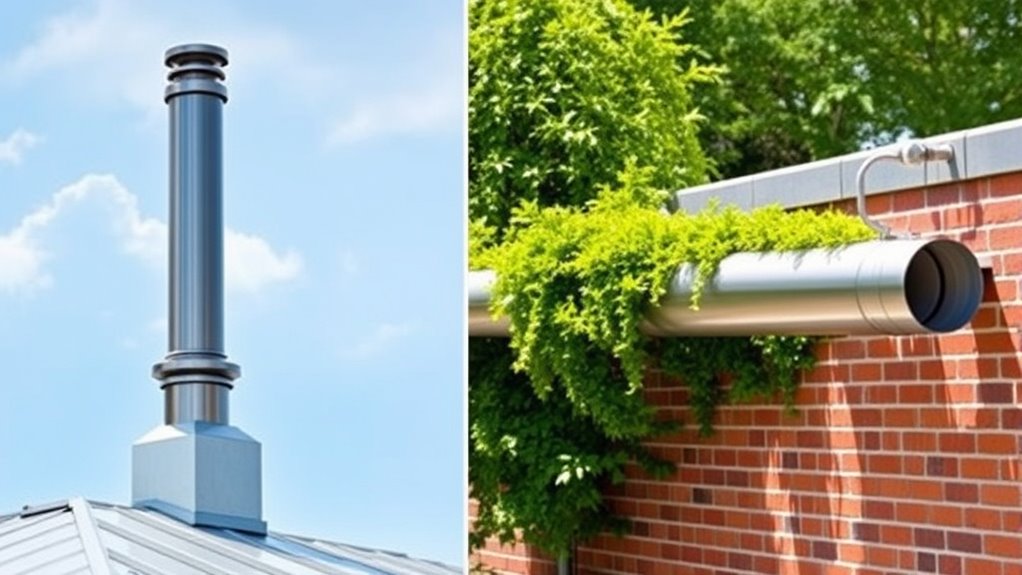
Have you ever wondered which venting option is better for your heating system—vertical or horizontal? Choosing between the two isn’t just about functionality; it’s also about understanding the installation challenges and aesthetic considerations involved. Vertical venting involves running the exhaust pipe straight up through the roof, while horizontal venting directs fumes out through a wall. Each has its own advantages and drawbacks that can influence your decision based on your home’s design and your priorities.
Choosing between vertical and horizontal venting depends on your home’s design and installation preferences.
When it comes to installation challenges, vertical venting often requires more effort upfront. You’ll need to ensure there’s enough space on your roof and that the vent can pass through the roof structure safely. This process might involve cutting through roofing materials, which can be complex and may require permits or professional help. In contrast, horizontal venting tends to be simpler to install since it runs through an exterior wall at a lower level, avoiding the need for roof penetration. However, it can still pose challenges if your home’s layout doesn’t allow for an easy wall exit or if there are obstacles like siding, brick, or other exterior features that complicate the installation.
Aesthetic considerations are equally important when choosing venting options. Vertical vents are more visible from afar, protruding prominently from your roofline. While some may find this look acceptable or even appealing, others might see it as an eyesore that disrupts your home’s exterior appearance. On the other hand, horizontal vents are typically less conspicuous, blending more seamlessly into wall designs. If maintaining a sleek, unobtrusive look is a priority, horizontal venting may be the better choice. Still, it’s worth noting that horizontal vents can sometimes be less noticeable but may require careful planning to avoid cluttering your exterior with multiple pipes or fixtures.
Ultimately, your choice depends on balancing these factors. If your home’s structure makes roof venting complicated or if you prefer a less visible option, horizontal venting could be more practical. Conversely, if you want a straightforward installation and don’t mind the visual impact, vertical venting might be suitable. Remember, consulting with a professional can help clarify which approach aligns best with your home’s architecture and your aesthetic preferences, ensuring safe, efficient venting without unnecessary complications.
Frequently Asked Questions
How Does Venting Choice Affect Overall System Efficiency?
Your venting choice directly impacts your system’s efficiency by influencing venting insulation and system durability. Vertical venting often allows better airflow and easier venting insulation management, reducing blockages and improving efficiency. Horizontal venting, however, might be more prone to obstructions, which can decrease efficiency over time. Proper venting guarantees your system maintains peak performance and durability, helping you save energy and avoid costly repairs.
Can Vertical or Horizontal Venting Impact Indoor Air Quality?
You might think venting choice doesn’t impact indoor air quality, but it definitely does. Vertical venting promotes better indoor air circulation by reducing backdraft risks, while horizontal venting can trap fumes if not properly maintained. Additionally, venting material durability is vital—poorly durable materials can leak or deteriorate, affecting air quality. Choose wisely; a well-maintained venting system keeps your indoor air fresh and safe, because a chain is only as strong as its weakest link.
Are There Specific Building Codes for Vertical Versus Horizontal Venting?
Yes, there are specific building codes for vertical and horizontal venting to guarantee safety and efficiency. You must follow venting regulations that specify proper materials, installation methods, and clearance distances. Building code compliance is essential, so check local codes and manufacturer instructions. These regulations help prevent leaks, ensure proper venting, and maintain indoor air quality, whether you choose vertical or horizontal venting for your system.
Which Venting Method Is More Cost-Effective Long-Term?
Vertical venting tends to be more cost-effective long-term because its installation costs are higher initially, but it offers better material durability and fewer potential issues. Horizontal venting may save you money upfront, but it can require more maintenance and repairs over time. By choosing vertical venting, you invest in a more durable, reliable system that minimizes costly repairs and replacements, making it the better long-term choice.
How Does Venting Type Influence Maintenance and Cleaning Needs?
Imagine your vent as a garden hose; if it’s clogged with debris like chimney blockages, water flows poorly. Vertical venting often stays cleaner longer, reducing vent cleaning frequency and easing maintenance. Horizontal venting, however, may gather more debris, requiring more frequent cleaning. You’ll find that managing chimney blockages is easier with vertical systems, saving you time and effort in the long run.
Conclusion
So, whether you go vertical or horizontal, just remember—it’s all about your home’s personality. Vertical vents love the drama of chimney stacks, while horizontal vents cozy up under your eaves, playing it safe. Both have their perks and quirks, so pick your poison wisely. After all, venting isn’t just about smoke; it’s about making a statement—whether loud and tall or discreet and flat. Happy venting, and may your choices always be well-vented!