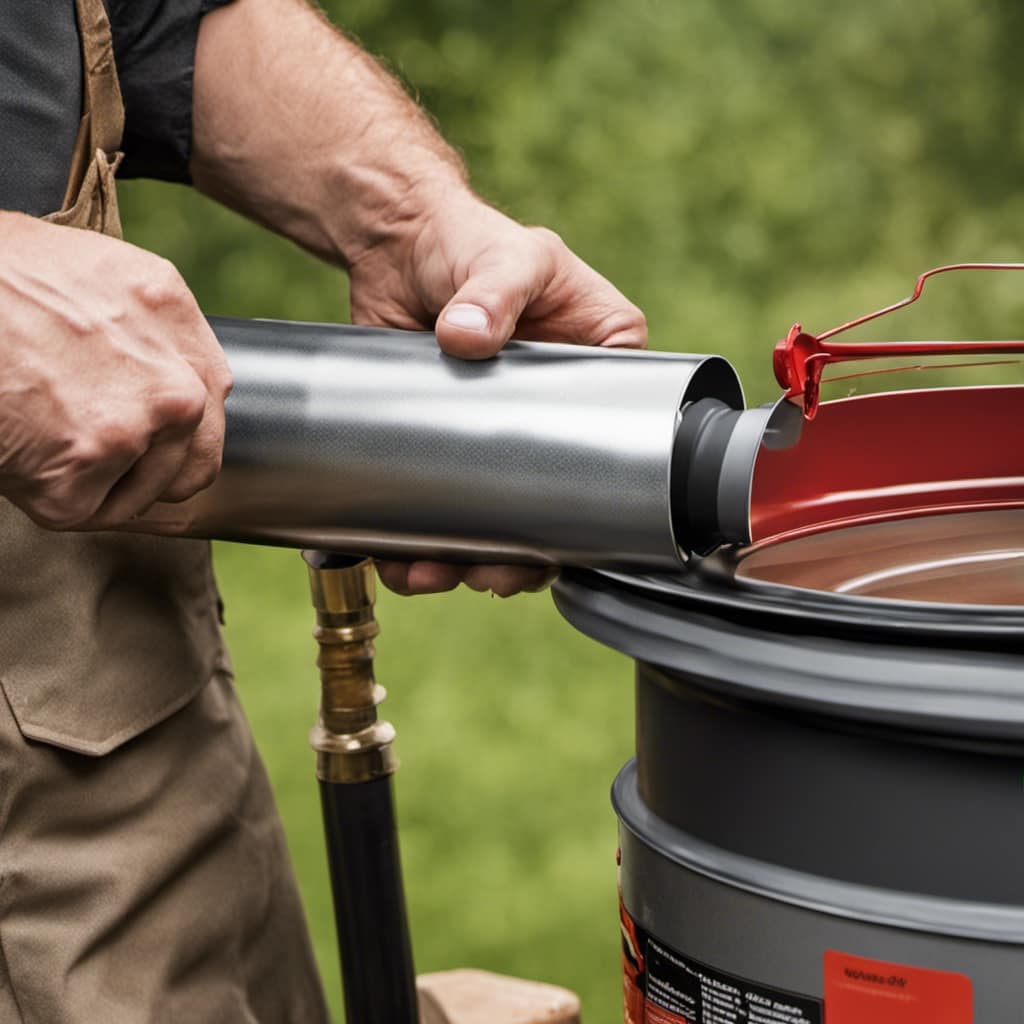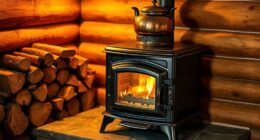
Using wood stoves in urban areas presents challenges like air pollution and strict regulations designed to limit emissions. Many cities enforce standards requiring EPA-certified stoves, regular maintenance, and responsible burning practices. Non-compliance can lead to fines or restrictions, especially during winter when pollution rises. Balancing comfort with community health means staying informed about local rules and properly maintaining your stove. Keep exploring to learn how to use your stove responsibly and stay within legal limits.
Key Takeaways
- Urban areas face increased pollution from wood stove emissions, impacting air quality and public health.
- Strict regulations and emission standards aim to limit pollutants from residential wood stoves.
- Non-compliance with local laws can result in fines, legal action, or stove upgrades.
- Proper use and regular maintenance of EPA-certified stoves help reduce environmental and health impacts.
- Balancing comfort with community responsibility requires awareness, responsible operation, and adherence to regulations.

While wood stoves offer a cozy and efficient heating option, using them in urban areas requires careful consideration. City environments tend to have higher population densities, which means more people are affected by the pollutants produced during combustion. Air quality becomes a significant concern, as wood stoves can emit particulate matter, volatile organic compounds, and other pollutants that degrade the air we breathe. Municipalities and environmental agencies recognize these risks, leading to stricter regulations on what types of stoves can be installed and operated within city limits. You need to be aware of local emission standards, which dictate the allowable emissions for residential heating appliances. These standards aim to reduce air pollution by limiting the amount of smoke and pollutants that wood stoves can produce. Non-compliance can result in hefty fines, the requirement to upgrade or replace your stove, or even legal restrictions on your ability to operate it.
Understanding the significance of emission standards is vital if you plan to use a wood stove in the city. Many modern stoves are designed to meet strict regulations, incorporating advanced combustion technology that minimizes emissions. If your stove doesn’t meet these standards, it may be illegal to operate, and you could be contributing to urban air pollution. This is particularly critical during winter months when wood stoves are in heavy use, and air quality tends to decline. Authorities monitor pollution levels and may implement burn bans or restrict stove use when air quality reaches unhealthy levels. Ignoring these regulations not only risks fines but also impacts your community’s health, especially vulnerable populations like children and the elderly. Additionally, promoting resilience through proper maintenance and adherence to regulations can help mitigate the environmental impact of wood stove use.
To stay compliant, you should choose EPA-certified or similarly approved stoves that meet the current emission standards. Proper installation and maintenance are equally important—regular cleaning of chimneys and proper burning techniques help reduce emissions further. It’s also wise to stay informed about local air quality alerts and restrictions on wood stove use. Some cities have designated approved fuels or specific burning times to minimize pollution, and ignoring these guidelines can undermine efforts to improve urban air quality. Ultimately, while your wood stove can provide warmth and ambiance, you must balance that comfort with the responsibility to protect your community’s health. Being aware of air quality concerns and adhering strictly to emission standards ensures you can enjoy the benefits of your stove without contributing to urban pollution or risking legal issues.

Ashley Hearth AW2520E-P 2,500 Sq. Ft. EPA Certified Pedestal Wood Burning Stove
112,800 BTUs heats up to 2,500 square feet
As an affiliate, we earn on qualifying purchases.
As an affiliate, we earn on qualifying purchases.
Frequently Asked Questions
Are There Specific Permits Required for Urban Wood Stove Installation?
Yes, you need to check permit requirements before installing a wood stove in an urban area. Local installation regulations often mandate permits to guarantee safety and compliance with emissions standards. You should contact your city’s building department or fire authority to obtain the necessary permits. Failing to follow these regulations can lead to fines or required removal, so always verify permit requirements and installation regulations beforehand.
How Do Wood Stove Emissions Impact Local Air Quality?
Your wood stove emissions, mainly from indoor combustion, contribute to particulate pollution in your area. These tiny particles can escape into the outdoor air, worsening local air quality and posing health risks. When you burn wood, you release pollutants that affect not only your indoor environment but also your neighbors and community. To minimize these impacts, follow regulations and use cleaner burning methods to reduce particulate pollution.
Can I Use Treated or Painted Wood in My Urban Stove?
You shouldn’t burn treated or painted wood in your urban stove, as it’s like inviting a storm into your cozy home. Treated wood and painted wood release harmful chemicals and toxins that can choke the air you breathe. Stick to dry, seasoned natural wood to keep your space warm and safe, ensuring you avoid dangerous fumes and help protect your neighborhood’s air quality.
What Are the Best Practices for Minimizing Smoke in City Environments?
To minimize smoke in city environments, focus on improving air quality with proper ventilation techniques. Always use dry, seasoned wood for cleaner burns, and avoid burning treated or painted wood. Make certain your stove is well-maintained and properly vented to reduce smoke emissions. Practice good combustion habits, like maintaining the right airflow and avoiding excessive fuel loading. These steps help protect air quality and keep your urban air cleaner.
Are There Exemptions for Certain Types of Wood Stoves in Urban Areas?
You might wonder if exemptions exist for certain wood stoves in urban areas. For example, some cities offer exemptions for EPA-certified pellet stoves, provided they meet specific exemption criteria and adhere to stove type restrictions. These exemptions aim to balance traditional heating needs with air quality concerns. Always check local regulations, as criteria vary and exemptions are typically granted based on stove efficiency, emission standards, and specific urban policies.

Bluesea 30 Feet Chimney Sweep Kit, Ergonomic Chimney Cleaning Kit, Extends Up to 30 Feet, Chimney Cleaner, Chimney Cleaning Tools, Chimney Cleaning System with Strong Brush, 9 Flexible Chimney Rods
✅【THE LATEST GENERATION DESIGN】The chimney sweep kit has a sturdy, nice chrome button locking system to ensure that…
As an affiliate, we earn on qualifying purchases.
As an affiliate, we earn on qualifying purchases.
Conclusion
Managing the use of wood stoves in urban areas is like walking a tightrope—you need to balance warmth with pollution concerns. While they offer cozy comfort, strict regulations and environmental challenges remind you that every flame you kindle impacts your community. Staying informed and compliant keeps your home’s hearth a source of warmth, not worry. Ultimately, responsible use ensures your fire doesn’t burn bridges but rather fuels a healthier, more sustainable city for everyone.
urban wood stove air quality monitor
As an affiliate, we earn on qualifying purchases.
As an affiliate, we earn on qualifying purchases.

Shwuevei 65 pcs Fire Starter – Natural Fire Starters for Fireplace, Pellet Stove & Wood, Fire Pit, Smoker, BBQ, Chimney, Pizza Oven – Fire Starters for Grill, Charcoal Starter
[All-Natural]: Fire starter sticks is made of Hand-woven from premium natural wood. Natural, odorless, no chemical additives, great…
As an affiliate, we earn on qualifying purchases.
As an affiliate, we earn on qualifying purchases.