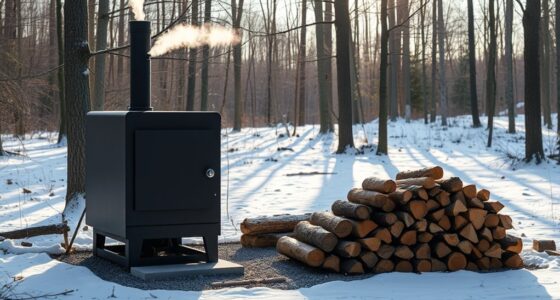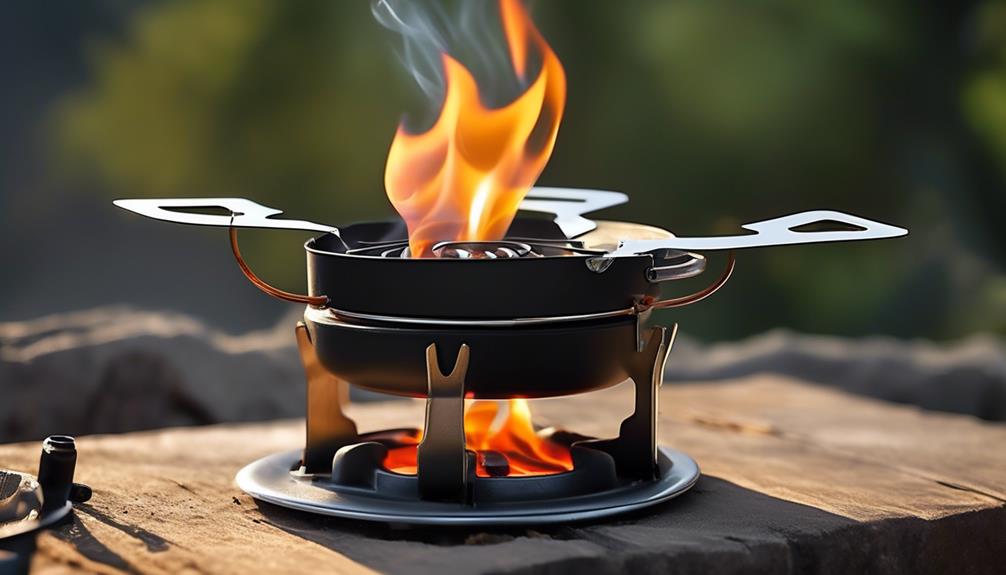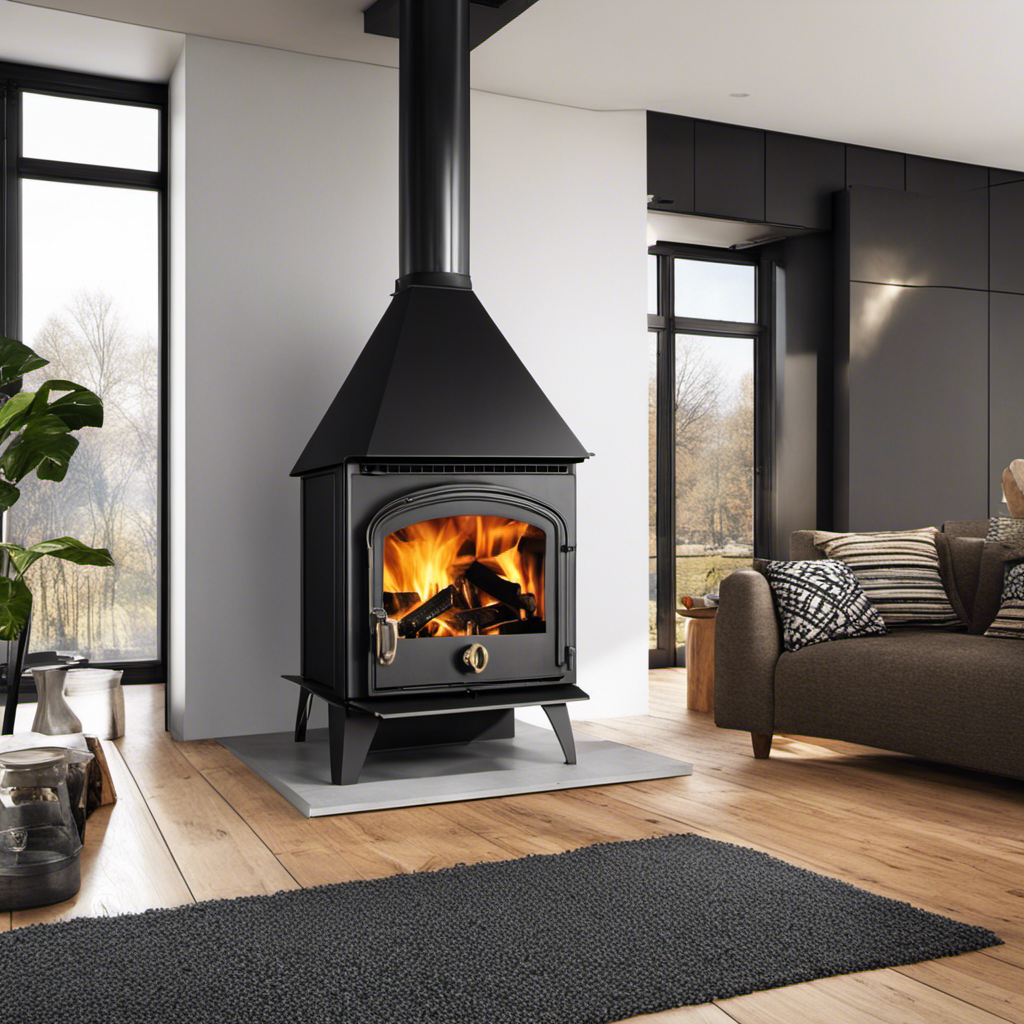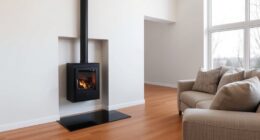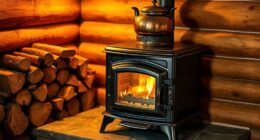
When designing your tiny house wood stove, focus on proper ventilation to guarantee safety and efficient operation. Pick a compact stove with built-in safety features and make sure it’s installed at a safe distance from walls and combustible materials. Incorporate sturdy heat shields and ensure good airflow with vents or chimneys. Using durable materials and meeting safety standards will extend the stove’s lifespan. To create a cozy, safe space, considering these essential design tips is crucial as you plan your setup.
Key Takeaways
- Select a compact, space-efficient stove that fits your tiny home’s size and layout.
- Ensure proper ventilation with adequate fresh air intake and a safe chimney or flue system.
- Incorporate safety features such as heat shields, cool-touch surfaces, and proper clearance from combustibles.
- Use durable, heat-resistant materials for longevity and safety, complying with relevant safety standards.
- Plan placement carefully to optimize airflow, accessibility, and safety while maximizing usable living space.

If you’re living in a tiny house, choosing the right wood stove can make all the difference in keeping your space warm and cozy. Because space is limited, you need a stove that’s efficient, safe, and fits seamlessly into your compact environment. One of the first design considerations is understanding ventilation requirements. Proper ventilation isn’t just about ensuring good airflow; it’s essential for safety and efficient operation. You’ll want to install your stove in a location that allows for adequate fresh air intake and proper exhaust venting. This means planning for a chimney or flue system that directs smoke outside safely, preventing any buildup of harmful gases inside your tiny home.
Choosing a well-ventilated location for your tiny house wood stove is essential for safety and efficiency.
Safety precautions are equally essential. Tiny houses are often built with lightweight materials that can be sensitive to heat, so selecting a stove with built-in safety features is wise. Look for models with cool-to-touch surfaces, sturdy heat shields, and protective barriers around the hot surfaces. You should also ensure that the stove is installed at a safe distance from walls, furniture, and other combustible materials to prevent any fire hazards. Installing a carbon monoxide detector and smoke alarm nearby is a critical safety step, giving you early warning in case of any issues.
When considering design, size matters. You want a stove that’s compact enough to maximize your living space but still powerful enough to heat the entire tiny home efficiently. Many models are designed specifically for small spaces, featuring sleek, space-saving profiles. You might also consider the stove’s weight and portability if you plan to move your tiny house or reconfigure your layout. Additionally, look into the ease of operation and maintenance—stoves that are simple to light, clean, and refill save you time and frustration. It is also important to choose a stove that complies with safety standards and has proper ventilation requirements to ensure safe and efficient operation. Incorporating space-saving design features can further optimize your limited area while maintaining safety and functionality. Understanding the size limitations of tiny houses can help you select a stove that fits comfortably within your space constraints. Moreover, selecting a stove made from durable materials can extend its lifespan and maintain safety over time.

Hot Tent Stove,AVOFOREST Wood Burning Stove,Small Wood Stove with 7 Stainless Chimney Pipes for Outdoor Heating & Cooking, Ice Fishing, Hunting
🔥Detachable Chimney Design :In order to facilitate portability,wood Burning Stove is divided into 7 sections, which are composed…
As an affiliate, we earn on qualifying purchases.
As an affiliate, we earn on qualifying purchases.
Frequently Asked Questions
What Is the Optimal Size for a Tiny House Wood Stove?
You should choose a stove size with a heating capacity of about 3,000 to 4,000 BTUs for your tiny house. This size guarantees efficient warmth without overspending on unnecessary heat or risking overheating. Consider your space’s square footage and insulation quality, as these factors influence the ideal stove size. A properly sized stove provides reliable heat, energy efficiency, and safety, making your tiny house cozy year-round.
How Do I Ensure Proper Ventilation With My Stove?
Think of your tiny house as a living lung—proper ventilation keeps it breathing. To guarantee this, you need to provide adequate ventilation air and carefully plan exhaust placement. Install vents near the stove to allow fresh air in, and position the exhaust outlet to direct fumes outside safely. Regularly check for blockages or leaks, and consider a carbon monoxide detector to keep your tiny home safe and breezy.
Are There Specific Safety Features Recommended for Tiny House Stoves?
You should prioritize safety features like a sturdy, heat-resistant door latch, a reliable chimney connection, and proper clearance from combustible materials. Confirm your stove has fire safety features such as an automatic shut-off or heat sensors. Always choose a stove with proper certification, like EPA or UL approval, to guarantee it meets safety standards. Regular maintenance and inspections are essential for safe operation in your tiny house.
What Maintenance Is Required for Tiny House Wood Stoves?
You need to regularly clean your tiny house wood stove to keep it running safely and efficiently. This includes chimney cleaning to prevent creosote buildup and potential fires. You should also dispose of ash safely, ensuring it’s cooled completely before removal. Check for any signs of wear or damage, and make sure the stove’s components are in good condition. Regular maintenance keeps your stove safe and extends its lifespan.
How Does Insulation Impact Stove Efficiency?
Imagine you’re heating your tiny house with a wood stove; good insulation makes a huge difference. Insulation types like foam or fiberglass trap heat, reducing energy loss. Thermal barriers, such as fire-resistant mats, prevent heat from escaping through walls. This improves stove efficiency by maintaining higher interior temperatures, meaning you burn less wood and stay warmer longer. Proper insulation maximizes your stove’s performance and keeps your tiny home cozy.
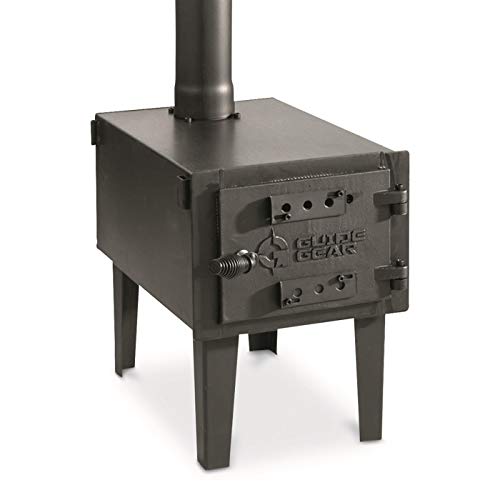
Guide Gear Outdoor Wood Burning Stove; Portable with Chimney Pipe for Cooking and Camping
OUTDOOR WOOD STOVE – We designed our camp stove for use outside. Perfect for use during camping trips…
As an affiliate, we earn on qualifying purchases.
As an affiliate, we earn on qualifying purchases.
Conclusion
Choosing the right wood stove for your tiny house isn’t just about warmth; it’s about creating a cozy, efficient space you love. Some say a well-designed stove can even improve your mental well-being by making your home feel more inviting. While the theory that warmth boosts happiness is widely accepted, pairing it with smart design guarantees you stay cozy and save space. Trust your instincts—your perfect tiny house stove is out there waiting to warm your life.
Guide Gear Outdoor Wood Burning Stove; Portable with Chimney Pipe for Cooking and Camping
OUTDOOR WOOD STOVE – We designed our camp stove for use outside. Perfect for use during camping trips…
As an affiliate, we earn on qualifying purchases.
As an affiliate, we earn on qualifying purchases.
cool-touch wood stove for tiny house
As an affiliate, we earn on qualifying purchases.
As an affiliate, we earn on qualifying purchases.