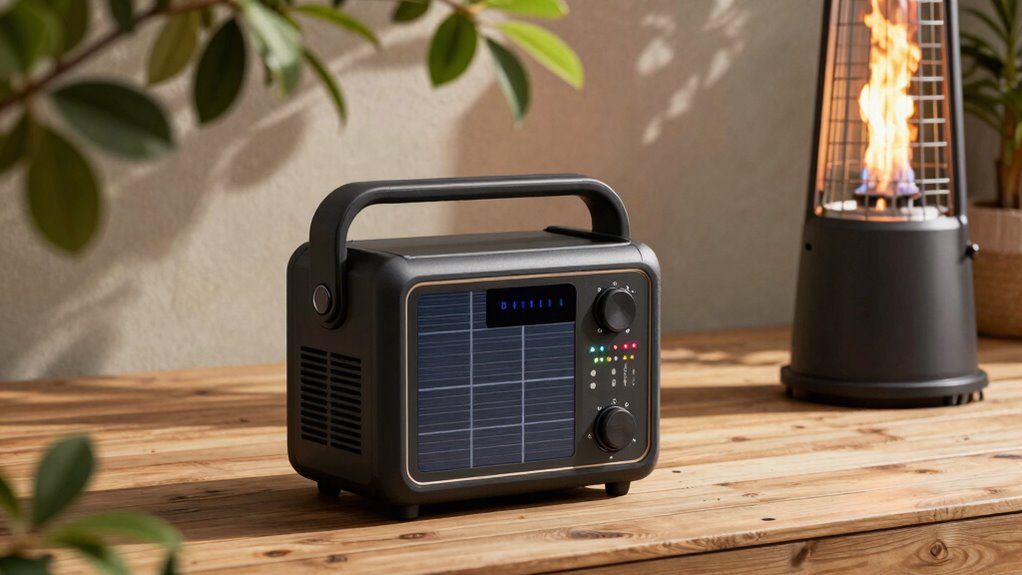
You might think solar generators are a great, eco-friendly way to heat your space because they’re quiet and seem efficient. However, their limited capacity and inconsistent energy production make them unreliable for sustained heating, especially in colder weather or cloudy days. They often fall short during peak demands, leaving you colder than expected. If you want to understand why they often don’t meet expectations, you’ll find useful details ahead.

Get backup power and energy gear delivered free with Prime
- Fast, free delivery on millions of items
- Prime Video, Amazon Music and more included
- Member-only deals all year
Key Takeaways
- Solar generators are marketed as eco-friendly and quiet, creating a positive impression despite limited heating capacity.
- Their silent operation masks their inability to consistently meet high heating demands.
- Promotional materials often emphasize environmental benefits over practical heating performance.
- Misleading marketing suggests solar generators can fully replace traditional heating systems.
- The appeal of renewable energy makes solar generators seem like a perfect solution, even when they underperform in cold weather.
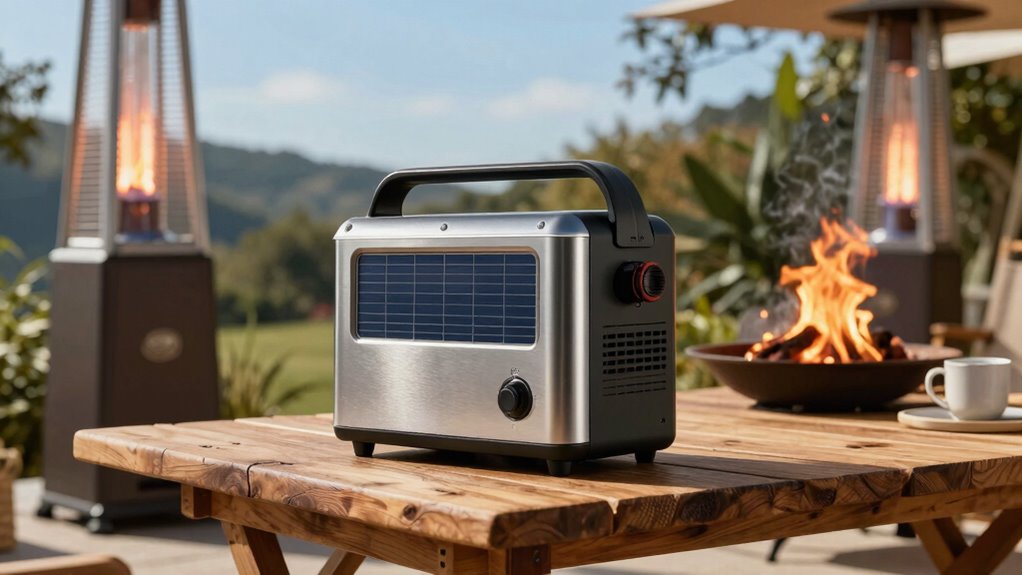
Many homeowners are turning to solar generators and innovative heating setups to reduce energy costs and increase sustainability. It’s a smart move, especially as you seek ways to maximize solar efficiency and enjoy portable power. Solar generators promise a clean, quiet alternative to traditional fuel-based power sources, making them appealing for various heating applications. However, their actual performance often falls short of expectations, leading many to feel like they sound better than they work.
While the idea of having a portable, renewable energy source sounds ideal, the reality can be more complicated. Solar generators are designed to harness sunlight and convert it into usable electricity, but their capacity can be limited. For heating setups that demand consistent, high power—like space heaters or radiant systems—these generators sometimes struggle to deliver enough energy. You might notice the generator’s quiet operation, which is a plus, but then realize that it doesn’t quite keep up when it’s cold outside or during peak usage times. This mismatch between the perceived promise and actual performance is frustrating.
Portable solar generators often fall short for high-demand heating, providing quiet but insufficient power during cold or peak times.
Many people assume that because solar generators are eco-friendly and silent, they automatically make a perfect heating solution. But the truth is, their solar efficiency can vary widely based on weather, time of day, and the size of the solar panels involved. If you’re trying to rely solely on portable power for heating, you’ll notice that cloudy days or extended cloudy periods substantially reduce the energy available. This inconsistency makes it difficult to maintain stable indoor temperatures. And because heating demands are often continuous, the limited capacity of most portable solar options can lead to insufficient warmth, especially in colder climates. Additionally, understanding solar energy limitations is crucial when planning for reliable heating, as it helps set realistic expectations.
Furthermore, you might find that the setup process itself can be more complicated than expected. Connecting solar panels, managing battery storage, and ensuring proper efficiency require careful planning and sometimes technical expertise. It’s also worth noting that solar panel efficiency can decline over time, impacting overall system performance. Considering these factors is essential before investing in a solar-powered heating solution. The initial investment in a high-capacity solar generator and compatible heating systems may seem worthwhile, but the ongoing limitations in power output and the intermittent nature of solar energy mean that comfort isn’t always guaranteed.
portable solar generator for heating
As an affiliate, we earn on qualifying purchases.
As an affiliate, we earn on qualifying purchases.
Frequently Asked Questions
Can Solar Generators Handle High-Temperature Heating Systems?
Solar generators typically can’t handle high-temperature heating systems effectively. They often have limited thermal efficiency, which means they can struggle to produce and sustain the necessary heat levels. Additionally, their energy storage capacity might not be sufficient for continuous, high-demand heating. For high-temperature setups, you’ll need more robust power sources designed specifically for thermal demand, as solar generators are better suited for lower-energy appliances and shorter-term use.
What Is the Average Lifespan of a Solar Generator Used for Heating?
You can expect a solar generator used for heating to last around 8 to 15 years, depending on battery durability and inverter efficiency. High-quality batteries tend to prolong lifespan, while efficient inverters reduce strain on components. Proper maintenance and avoiding overuse also extend your generator’s longevity. Investing in reliable brands with good warranties guarantees you get the most out of your solar setup for heating applications.
Are Solar Generators Cost-Effective for Large-Scale Heating Setups?
You might find solar generators less cost-effective for large-scale heating, as their initial investment can seem like planting a modest seed in a vast field. A thorough cost analysis reveals that, even with efficiency comparisons, they often fall short of traditional systems in large setups. While eco-friendly and quiet, their limited capacity and longer return on investment make them less practical for extensive heating needs.
How Long Can a Solar Generator Power a Heating System During Cloudy Days?
On cloudy days, your solar generator can power a heating system for several hours, depending on its battery capacity and solar efficiency. If the generator has a large battery capacity, it stores more energy, extending run time. Keep in mind, lower solar efficiency during overcast weather reduces energy input, so your heating may run shorter. To maximize performance, consider a generator with high battery capacity and efficient solar panels.
Do Solar Generators Require Special Maintenance for Heating Applications?
You might wonder if your solar generator needs special maintenance for heating. The answer is yes—pay close attention to battery efficiency, ensuring it stays optimized, and monitor cooling requirements to prevent overheating. Regularly check connections and keep vents clear. This proactive approach keeps your system running smoothly, especially during cold months. With proper care, your solar generator will reliably power your heating setup, even when the weather tests your patience.
Conclusion
While solar generators may not always be the most powerful tools in your heating arsenal, they often shine brightest in quiet, dependable support roles. Think of them as the steady heartbeat beneath a roaring storm—less flashy, but essential to the rhythm. For certain setups, their gentle hum and reliable energy are like a warm, persistent ember, quietly fueling your comfort without the chaos of louder alternatives. Sometimes, subtle strength makes all the difference.
Halloween Picks
halloween
As an affiliate, we earn on qualifying purchases.