
You can’t truly “set it and forget it” with wood heat, as regular maintenance and safety checks are essential. Keep ashes cleaned to prevent airflow issues, inspect gaskets, and clean the chimney annually. Follow fire safety precautions, like monitoring for hazards and using proper fuels, to avoid dangerous situations. Proper ventilation and efficiency tips help keep your stove safe and reliable. Stay proactive—doing so guarantees your warmth is safe and trouble-free, and there’s more to learn about keeping your stove in top shape.

Get backup power and energy gear delivered free with Prime
- Fast, free delivery on millions of items
- Prime Video, Amazon Music and more included
- Member-only deals all year
Key Takeaways
- Regular maintenance is essential to ensure safe, efficient wood heat and prevent safety hazards.
- “Set it and forget it” is a myth; routine inspections and cleaning are crucial for safety and performance.
- Proper ventilation and safety precautions reduce risks of harmful gas buildup and fire hazards.
- Using seasoned, dry wood and avoiding overloading optimize burn efficiency and reduce creosote buildup.
- Proactive safety measures and maintenance practices are vital for reliable, trouble-free wood heating.
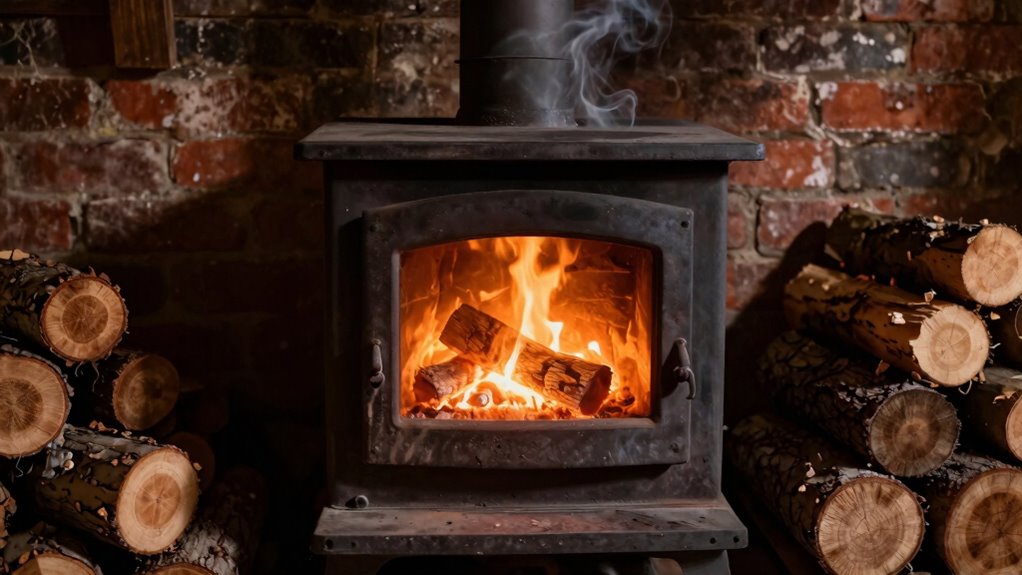
If you’re tired of constantly monitoring your heating system, setting up a wood stove for “set it and forget it” comfort is a smart choice. Modern wood stoves can provide reliable heat with minimal fuss, but it’s essential to understand that truly “set it and forget it” isn’t entirely accurate. To enjoy consistent warmth without constant attention, you still need to stay on top of wood stove maintenance and adhere to fire safety tips. Proper maintenance keeps your stove functioning efficiently and prevents dangerous issues like creosote buildup or chimney fires, while fire safety tips ensure you’re protected from potential hazards.
Regular wood stove maintenance is key to making your heating system as trouble-free as possible. Cleaning out ashes regularly prevents buildup that can block airflow, reducing efficiency and increasing the risk of smoke escaping into your home. It’s also important to inspect the stove’s gaskets and seals periodically, replacing them when they become worn to maintain airtight combustion. Cleaning the chimney at least once a year removes creosote deposits—an essential step because creosote buildup is a leading cause of chimney fires. When done properly, maintenance minimizes the need for emergency repairs and keeps your stove running smoothly. Additionally, understanding the importance of fire safety and proper stove operation can prevent accidents before they happen. Incorporating proper ventilation practices is also crucial to ensure safe operation and prevent harmful buildup of gases inside your home. Staying informed about energy efficiency tips can help you optimize your stove’s performance and reduce fuel consumption. A proactive approach to stove safety can also help you identify potential issues early before they escalate.
Regularly clean ashes, inspect gaskets, and clean the chimney annually to prevent fires and ensure efficient operation.
However, even with diligent maintenance, fire safety tips should never be overlooked. Always keep a fire extinguisher nearby and ensure smoke and carbon monoxide detectors are functioning properly. Never overload your stove with wood or use improper fuels, as this can cause dangerous flare-ups or damage to the stove. When loading wood, choose seasoned, dry logs to promote cleaner burns and reduce creosote formation. Keep combustible materials, like furniture or curtains, at a safe distance from the stove, and never leave it unattended for long periods when a fire is actively burning. These safety precautions help prevent accidental fires and give you peace of mind.
While a well-maintained wood stove can offer a “set it and forget it” experience, it’s important to remember that consistent attention to maintenance and safety is your best defense against issues. Developing a routine for cleaning and inspections, along with following fire safety tips, allows you to enjoy reliable, safe heat without constant worry. Think of it as a balance: a little effort in maintenance and safety practices today ensures you’ll have warm, cozy nights without the stress of unexpected problems tomorrow. That’s the true essence of “set it and forget it”—not neglect, but smart, proactive care.
As an affiliate, we earn on qualifying purchases.
Frequently Asked Questions
How Often Should I Inspect My Wood Stove for Safety?
You should inspect your wood stove at least once a month for safety. Use a maintenance checklist to check for cracks, soot buildup, and proper venting. Regular inspections help you spot safety precautions like damaged gaskets or creosote accumulation early. Keep your stove clean and functioning efficiently by staying vigilant with these routine checks, ensuring safe and effective heating throughout the season.
What Are Common Signs of Wood Stove Inefficiency?
You’ll notice wood stove inefficiency if the fire burns poorly, smoke leaks into your home, or the stove’s surface remains unusually cold. Regular chimney maintenance helps prevent creosote buildup, ensuring better airflow. Also, check stove insulation—if it’s damaged or worn, it reduces heat output. These signs point to the need for maintenance or repairs, so staying attentive helps keep your stove running efficiently and safely.
Can I Leave My Wood Stove Unattended Overnight?
Coincidentally, leaving your wood stove unattended overnight isn’t safe. You shouldn’t do it unless you’ve taken proper precautions, like ensuring safety gear is nearby and a fire extinguisher is accessible. Always double-check that the fire is fully out before sleeping. If you’re unsure, it’s better to turn off the stove completely. Your safety and your home depend on vigilant fire management, not “set it and forget it.”
How Do I Prevent Creosote Buildup in My Chimney?
To prevent creosote buildup in your chimney, prioritize regular chimney maintenance and creosote removal. Always burn seasoned hardwood to produce less soot, and avoid overloading your stove. Guarantee good airflow for efficient combustion. Schedule professional inspections annually, especially if you notice creosote buildup or odors. By maintaining a clean chimney, you reduce fire risks and keep your wood heat safe and efficient.
What Is the Ideal Moisture Content for Firewood?
You should aim for a moisture content of 20% or less in your firewood. Use seasoning techniques like splitting and stacking logs properly, and regularly check moisture levels with a moisture meter. Properly seasoned wood burns cleaner, produces more heat, and reduces creosote buildup. Avoid burning green or wet wood, as it causes inefficient burning and increases chimney hazards. Consistently monitoring moisture helps guarantee safe, efficient wood heating.
Conclusion
So, next time you think “set it and forget it” with your wood stove, remember—your cozy fireplace isn’t a magic lamp. It demands your attention, a dash of patience, and maybe a little bit of common sense. Because, let’s face it, if you wanted a hands-off heating system, you’d buy a space heater and call it a day. Wood heat’s charm lies in the effort—otherwise, you’re just burning cash and risking a fiery surprise.
Halloween Picks
halloween
As an affiliate, we earn on qualifying purchases.