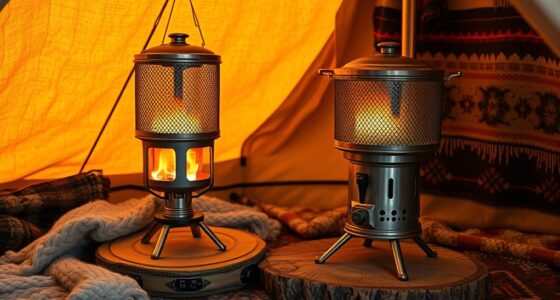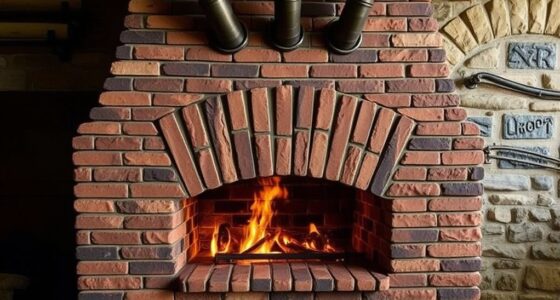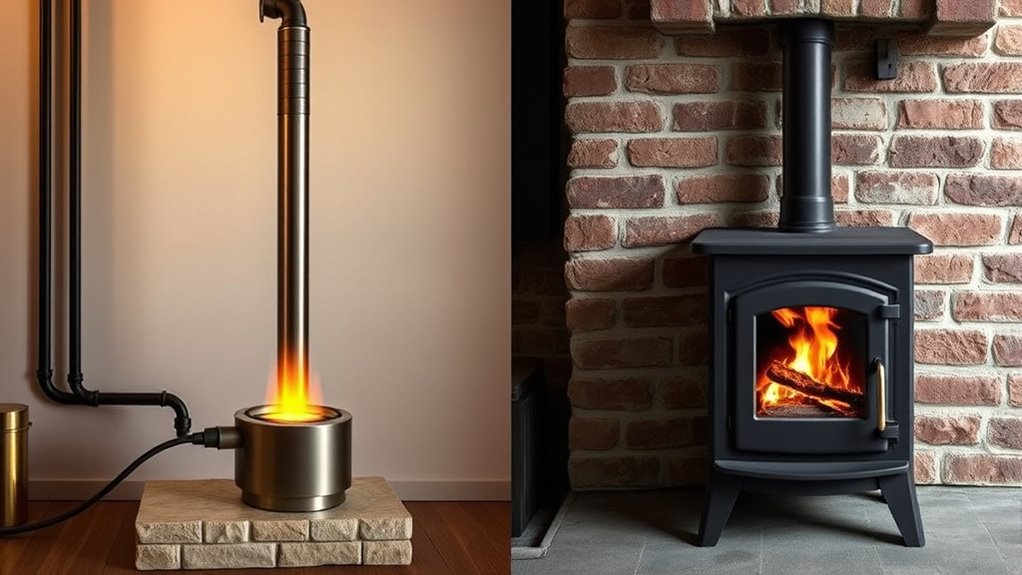

Rocket mass heaters offer better insulation, storing and slowly releasing heat to keep your home warm longer with less wood. They require careful installation and venting but provide efficient, steady warmth and lower emissions. Small wood stoves heat quickly and are easier to install, with a proven safety record. To choose the best for your home and lifestyle, understanding their core differences can help you make a confident decision—explore further to learn more.
Key Takeaways
- Rocket mass heaters offer superior insulation and thermal mass, providing longer-lasting, steady heat compared to small wood stoves.
- Small wood stoves have a well-established safety record and simpler installation, while rocket mass heaters require careful setup to ensure safety.
- Rocket mass heaters are more energy-efficient and environmentally friendly, using less wood for extended heat, unlike smaller stoves with higher fuel consumption.
- Proper venting and adherence to standards are critical for rocket mass heaters, whereas small stoves generally have more straightforward installation requirements.
- Rocket mass heaters are ideal for long-term, efficient heating, while small wood stoves excel in quick, localized warmth with easier operation.
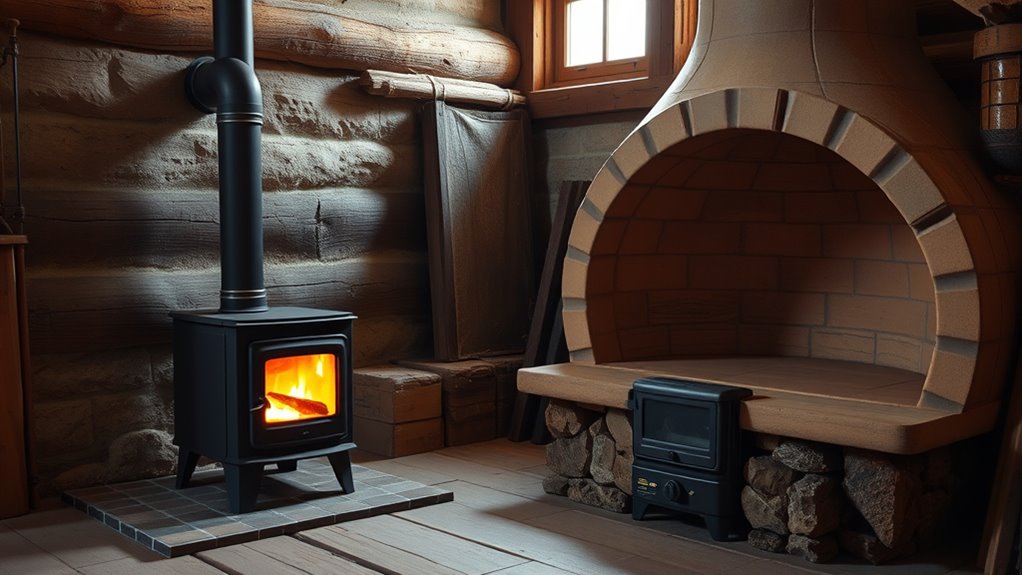
When choosing a heating option for your home, understanding the differences between rocket mass heaters and small wood stoves can help you make an informed decision. One of the key factors to consider is insulation efficiency. Rocket mass heaters are designed to maximize heat retention by incorporating a thermal mass, typically made of materials like cob or concrete, that absorbs and slowly releases heat over time. This means you get longer-lasting warmth even after the fire dies down, reducing the need for continuous fueling. Small wood stoves, on the other hand, usually have less thermal mass, so they heat a space quickly but don’t retain heat as efficiently. If you’re looking for a heating system that maintains a steady temperature with less frequent refueling, a rocket mass heater’s insulation efficiency offers significant advantages.
Rocket mass heaters retain heat longer with thermal mass, reducing refueling needs, unlike small wood stoves that heat quickly but don’t hold heat as well.
Safety considerations are equally important when choosing between these two options. Small wood stoves have a well-established safety record, with clear guidelines for proper installation, clearance, and venting. They can be safely operated in a variety of homes, provided you follow manufacturer instructions and keep combustible materials at a safe distance. Rocket mass heaters, however, require careful construction and installation to prevent fire hazards. Because they contain a large thermal mass that stays hot for hours, improper setup or maintenance could pose safety risks, such as accidental burns or fires. It’s essential to ensure proper insulation around the heater and adequate clearance from flammable materials. Also, since rocket mass heaters use a longer, insulated chimney system, proper venting is critical to prevent smoke buildup and carbon monoxide leaks. Proper venting and insulation are crucial safety considerations for these systems. Proper installation standards and regular maintenance are vital to mitigate risks associated with these heating methods. Additionally, considering the safety features included in modern heating systems can help prevent accidents and improve overall safety.
In addition to safety, you should consider how each system impacts your home’s energy efficiency. Rocket mass heaters are highly efficient because they use less wood to produce the same amount of heat, thanks to their ability to store and radiate heat over an extended period. This not only saves you money but also reduces emissions. Small wood stoves are effective for quick, localized heating but tend to consume more wood, especially if not operated efficiently. Proper insulation in your home complements the efficiency of either system, but the thermal mass of a rocket heater can make your overall home insulation more effective by reducing heat loss.
In essence, if insulation efficiency and long-term safety are priorities, a well-installed rocket mass heater can be a smart choice. Conversely, if you prefer a straightforward, quick-heating solution with a proven safety track record, a small wood stove might suit your needs better. Each has its strengths, but understanding these core differences helps you pick the best fit for your home and lifestyle.

12V Heater Glow Plug Repair Kit and 12V Fuel Metering Pump Heater 22451901 Fit for Eberspacher Espar Airtronic 2KW D2 D4 D4S, Parking Heater Maintenance with Strainer Screen
Precise Fitment: Fit for EBERSPACHER AIRTRONIC D2 12V, fit for EBERSPACHER AIRTRONIC D4 12V. Replace 22451901 252069011300 252069060001…
As an affiliate, we earn on qualifying purchases.
As an affiliate, we earn on qualifying purchases.
Frequently Asked Questions
Which Heater Is More Cost-Effective Long-Term?
A rocket mass heater is more cost-effective long-term because it offers greater cost savings on fuel and installation. Its efficient combustion reduces wood consumption, saving you money over time. Plus, it has a lower environmental impact due to cleaner emissions and better heat retention. While the initial investment may be higher, the long-term benefits make it a smarter choice for saving money and protecting the environment.
How Do Installation Requirements Differ Between the Two?
Imagine opening the door to a cozy fire, but first, you must navigate a maze of installation regulations and ventilation considerations. Rocket mass heaters demand careful planning for proper chimney placement, insulation, and airflow, making installation more intricate. Small wood stoves, while simpler, still require adherence to safety codes and proper venting. You’ll find that rocket mass heaters need a more detailed setup, but both demand attention to detail.
What Are the Maintenance Needs for Each?
You need to regularly clean the chimney to prevent creosote buildup, especially for small wood stoves, which require more frequent chimney cleaning. Both systems demand checking for flammable materials around the unit to reduce fire risks. Rocket mass heaters need less maintenance overall, but you should inspect for blockages and guarantee proper airflow. Regularly removing ash and checking seals helps keep both systems operating safely and efficiently.
Are There Safety Concerns Unique to Either Option?
You might worry about safety, but both options are safe if you follow proper precautions. Rocket mass heaters typically pose ventilation concerns if not properly vented, and fire safety relies on correct installation. Small wood stoves require regular chimney cleaning to prevent creosote buildup. Always confirm good ventilation and keep fire safety measures in place, like smoke detectors and proper clearance, to enjoy warmth without hazards.
Which Heater Performs Better in Extremely Cold Climates?
In extremely cold climates, a rocket mass heater generally performs better because its insulation considerations help retain heat longer, making it more efficient. Its thermal mass stores warmth, keeping your space cozy even during power outages. Plus, its aesthetic appeal adds a rustic charm to your home. A small wood stove may require more frequent tending and heat management, but both options can work effectively with proper insulation and installation.

YRenZ Upgraded Portable Wood Stove for Camping, Compact Tent Stove with Large Firebox, High Airtightness for Outdoor Cooking & Heating
【Upgraded Tent Camping Wood Stove】: Compact yet powerful wood stove for tents and outdoor use, with high airtightness,…
As an affiliate, we earn on qualifying purchases.
As an affiliate, we earn on qualifying purchases.
Conclusion
Choosing between rocket mass heaters and small wood stoves is like picking between a sleek sports car and a rugged jeep—each has its own charm. Rocket mass heaters offer efficiency and a cozy, glowing core that feels like a warm hug. Small wood stoves provide simplicity and quick heat. Think about your space and needs—either way, you’ll be lighting a fire that warms both your home and your heart.

0966373839
As an affiliate, we earn on qualifying purchases.
As an affiliate, we earn on qualifying purchases.

DuraVent 30-Degree Stainless Steel Swiveling Elbow Kit for Wood Stove Venting, 6 Inch, DuraPlus – Home Ducting Accessories for Chimney Exhaust Pipe System
Flexible Venting Solution for Tight Spaces: The 30-degree bend design allows you to install your wood stove venting…
As an affiliate, we earn on qualifying purchases.
As an affiliate, we earn on qualifying purchases.