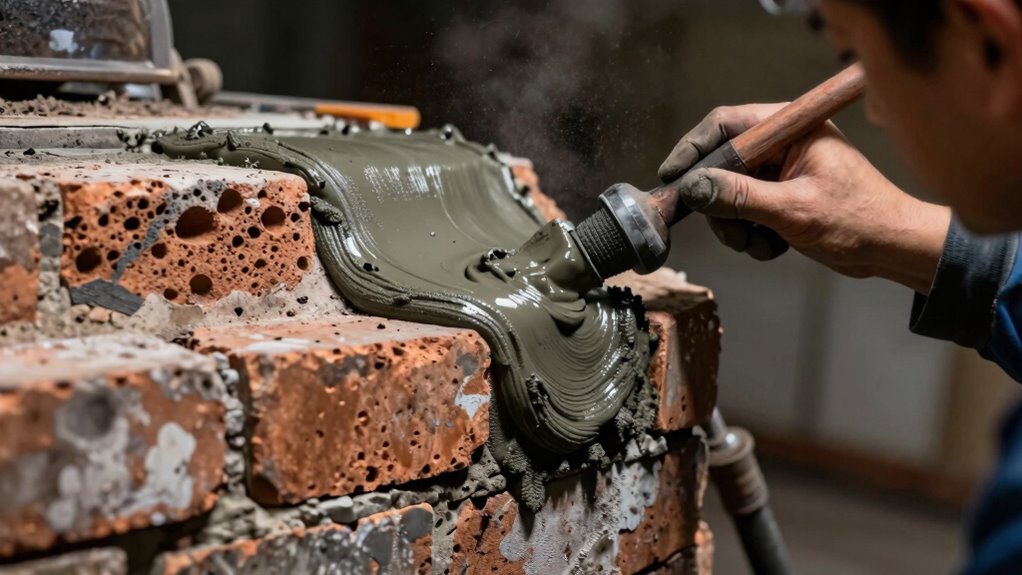
Refractory cement is a crucial repair material you should understand if you deal with high-temperature equipment. It withstands extreme heat and thermal shocks, guaranteeing your structures and appliances stay safe and durable. Proper application enhances performance and prevents failures. Knowing its properties helps you make better repairs, extend equipment life, and reduce costly downtime. To make sure you’re using it effectively and safely, it’s important to learn more about its key features and proper handling techniques.
Key Takeaways
- Refractory cement is essential for high-temperature repairs, maintaining structural integrity in furnaces, kilns, and fireplaces.
- Proper application ensures durability, safety, and resistance to thermal shock in extreme heat environments.
- Understanding its properties helps owners select the right material for long-lasting, effective repairs.
- Safety precautions during handling prevent accidents and ensure optimal performance of the cement.
- Using refractory cement reduces maintenance costs by extending equipment lifespan and preventing heat-related damage.
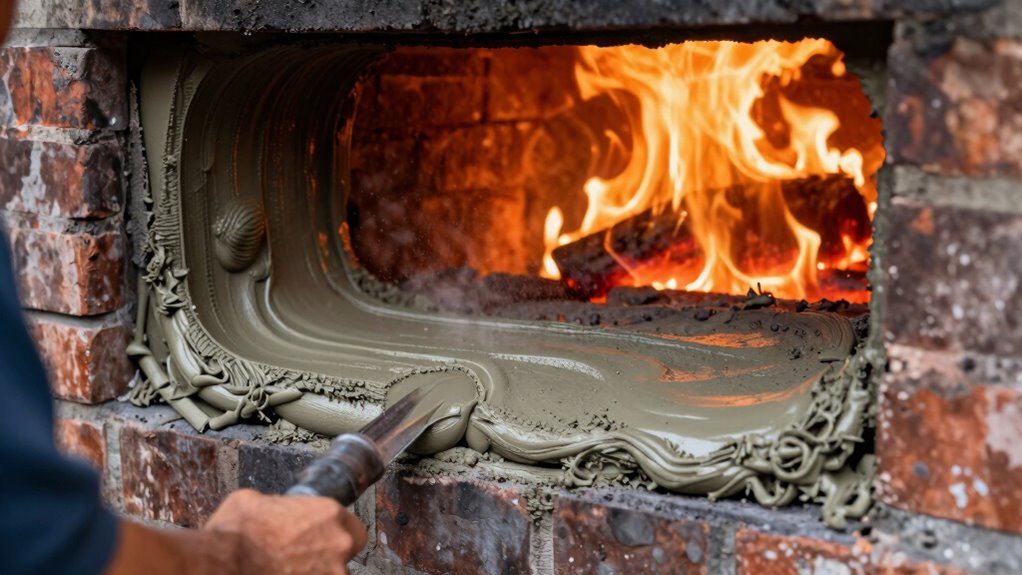
Have you ever wondered what makes certain materials withstand extreme heat? It’s a question that often leads to the discovery of refractory cement, a specialized material designed for high-temperature environments. Refractory cement plays a fundamental role in various industrial applications, such as lining furnaces, kilns, and fireplaces, where temperatures can soar beyond the capabilities of standard construction materials. Its ability to endure intense heat without breaking down or losing strength makes it invaluable in these settings. As an owner, understanding how refractory cement works can help you better appreciate its importance and guarantee you’re using it effectively for repairs or construction projects. Recognizing high-temperature durability is crucial for ensuring effective application and safety when working with refractory cement.
Refractory cement withstands extreme heat, making it essential for high-temperature industrial applications and durable repairs.
When you’re dealing with high-heat structures, safety precautions are essential. Refractory cement, while highly durable, must be handled with care during installation and repair. Always wear protective gloves, goggles, and a mask to avoid inhaling dust or coming into contact with the material, which can cause irritation. Proper ventilation is imperative during mixing and application to prevent dust accumulation in enclosed spaces. Additionally, ensuring the workspace is free of flammable materials is critical, considering the high temperatures involved. Following manufacturer instructions meticulously guarantees that the cement cures properly, which directly impacts its performance and safety. Furthermore, understanding the thermal shock resistance of refractory cement can help prevent unexpected failures during rapid temperature changes.
Industrial applications highlight just how versatile and indispensable refractory cement is. In addition to lining industrial furnaces, it’s used in the construction of blacksmith shops, power plants, and even in some specialized automotive parts. Its capacity to resist thermal shock—rapid temperature changes—makes it especially suitable for environments where heating and cooling occur frequently. By forming a resilient barrier that prevents heat loss and protects structural integrity, refractory cement helps extend the lifespan of equipment and reduces maintenance costs. Its use enhances safety in these settings by minimizing the risk of structural failure due to heat-induced stress, ultimately safeguarding workers and equipment alike. Recognizing these diverse uses emphasizes the importance of proper application and safety precautions when working with refractory cement.
refractory cement for fireplace repair
As an affiliate, we earn on qualifying purchases.
As an affiliate, we earn on qualifying purchases.
Frequently Asked Questions
How Long Does Refractory Cement Typically Last?
Refractory cement typically lasts between 1 to 3 years, depending on usage and maintenance. You should expect durability expectations to decrease if you neglect regular inspections and repairs. Proper maintenance requirements include cleaning, timely repairs, and avoiding excessive heat exposure. By following these practices, you can extend its lifespan, ensuring your equipment stays protected and performs efficiently longer. Regular upkeep is key to maximizing refractory cement‘s durability.
Can Refractory Cement Be Used for Outdoor Repairs?
Yes, refractory cement can be used for outdoor repairs, and it’s a smart choice for durability. Imagine a crack in your outdoor fireplace or oven being sealed with a material that withstands harsh weather and extreme temperatures. Its outdoor durability and weather resistance guarantee your repair lasts through rain, snow, and sun. Just make certain you use a high-quality, outdoor-rated refractory cement to maximize longevity and performance.
Is Refractory Cement Safe for Indoor Use?
Yes, refractory cement is safe for indoor use when you consider its chemical composition and indoor safety measures. It’s designed to withstand high temperatures, making it suitable for fireplaces and stoves. However, guarantee proper ventilation during application and curing, as some formulations may emit fumes. Always follow manufacturer instructions to maintain indoor safety, and choose a product specifically labeled for indoor use to minimize health risks.
How Does Refractory Cement Compare to Traditional Concrete?
Refractory cement differs from traditional concrete by offering higher thermal resistance, making it ideal for extreme heat environments. It also provides better chemical compatibility with high-temperature substances, preventing corrosion and degradation. While traditional concrete suits general construction, refractory cement is specialized for furnaces, kilns, and fireplaces, ensuring durability under intense heat. Its unique properties make it essential for applications requiring sustained high temperatures and chemical stability.
What Are Common Mistakes When Applying Refractory Cement?
You might overlook proper application techniques, leading to common mistakes when applying refractory cement. Rushing the process or neglecting the curing process can cause cracks or weak spots. Always make sure you mix the cement thoroughly, apply it evenly, and follow manufacturer instructions carefully. Skipping proper curing or exposing the cement to rapid temperature changes can undermine its durability, so give it adequate time to set and stabilize before use.
Conclusion
Understanding refractory cement is essential for effective repairs, especially since it can withstand temperatures up to 3,200°F. Did you know that the global refractory cement market is expected to grow by 4.5% annually through 2028? This growth highlights its importance in industries like steelmaking and ceramics. By knowing how to use this durable material, you can save money and extend the life of your equipment. Don’t overlook refractory cement—it’s a repair solution more owners should confidently use.