
Radiant barriers work by reflecting heat away from your home, not by stopping heat conduction like insulation. They’re usually installed as shiny foil or film in your attic, bouncing sunlight and heat back outside to keep your space cooler. Easy to install and long-lasting, they help lower energy bills and reduce the load on your air conditioner. If you want to understand how these simple tools can boost your home comfort, keep exploring the details.

Get backup power and energy gear delivered free with Prime
- Fast, free delivery on millions of items
- Prime Video, Amazon Music and more included
- Member-only deals all year
Key Takeaways
- Radiant barriers reflect heat away, reducing attic and home temperatures during hot months.
- They are lightweight, easy to install, and work alongside traditional insulation.
- Proper installation is essential for maximum effectiveness.
- They lower energy bills by decreasing the need for air conditioning.
- Resistant to moisture and mold, they require minimal maintenance.
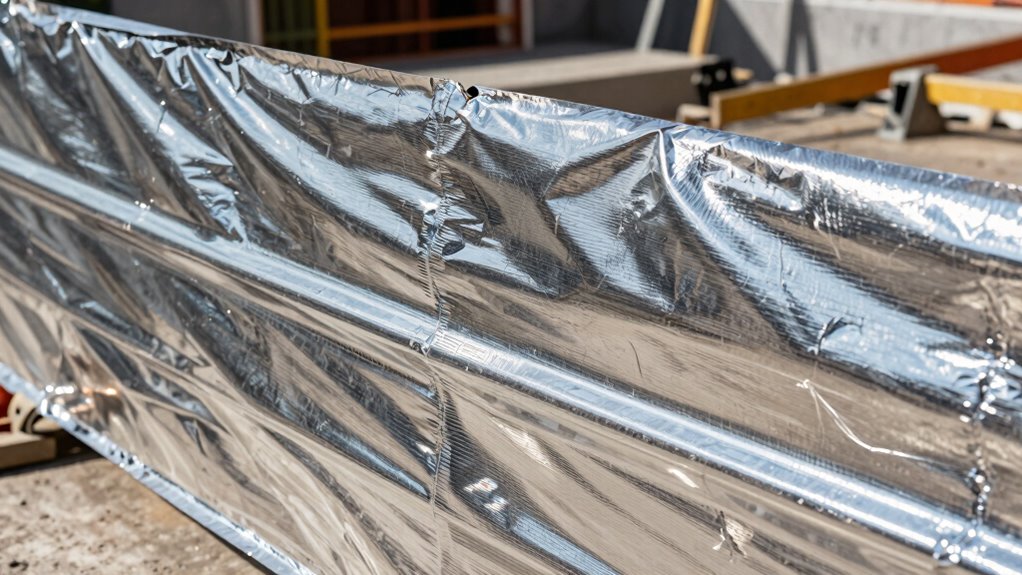
Radiant barriers are gaining popularity as an effective way to improve home energy efficiency, especially in hot climates. You might hear about how they work through thermal reflection, which means they bounce heat away rather than letting it pass through your attic or walls. This simple idea is why many homeowners are considering radiant barriers—they can keep your home cooler and reduce your cooling costs. But the topic can quickly become confusing, with different products, installation methods, and technical jargon floating around. So let’s strip it down to the basics to help you understand how radiant barriers really work and what benefits they offer.
Radiant barriers reflect heat, helping keep your home cooler and reducing energy costs in hot climates.
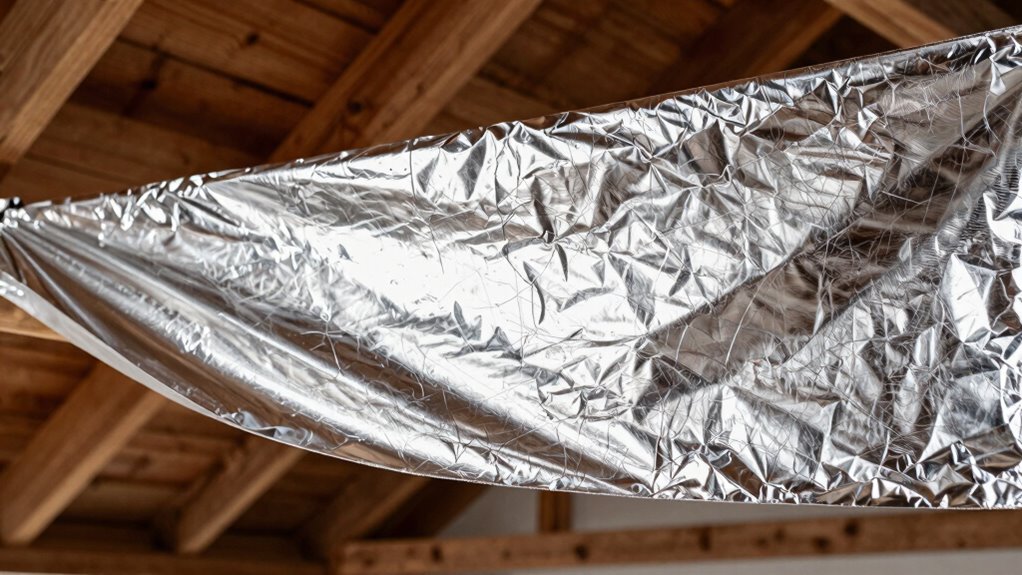
At its core, a radiant barrier is usually a reflective foil or film installed in your attic. Its main job is to reflect radiant heat away from your home, which is especially important during those hot summer months. When sunlight hits your roof, a considerable portion of that heat is transferred into your attic through radiation. A radiant barrier’s reflective surface bounces that heat back outside, preventing it from warming your living space. This process of thermal reflection is what makes radiant barriers so effective in reducing heat gain. Because they work by bouncing heat rather than absorbing it, they do a different job than traditional insulation, which slows heat transfer through conduction. Understanding thermal reflection is key to recognizing how radiant barriers can enhance your home’s energy efficiency.
Installing a radiant barrier isn’t complicated, but it does offer several benefits worth noting. First, it’s lightweight and flexible, so it fits easily into your existing attic space without requiring major modifications. When installed correctly—usually attached to the underside of your roof rafters or on the attic floor—they create a reflective shield that substantially reduces the amount of heat that enters your home. This means your air conditioner doesn’t have to work as hard, and your energy bills will likely go down. Additionally, radiant barriers don’t interfere with other insulation materials, so you can add them alongside traditional insulation to maximize energy efficiency. Proper installation is crucial to ensure they perform as intended.
Using radiant barriers also helps you maximize energy savings by reducing the overall heat transfer, making your home more comfortable during peak summer months. The installation benefits are clear: they’re quick to put up, don’t take much space, and offer a long-lasting solution to heat transfer. Unlike some energy-saving upgrades, radiant barriers don’t need frequent maintenance and are resistant to moisture and mold. Plus, because they reflect rather than absorb heat, they maintain their effectiveness over many years. When you look at the big picture, radiant barriers are a straightforward, cost-effective way to improve your home’s comfort and reduce energy costs—if you understand the basics of thermal reflection and proper installation. That way, you can make an informed decision without getting lost in the confusing details often associated with radiant barrier talk.
As an affiliate, we earn on qualifying purchases.
Frequently Asked Questions
Do Radiant Barriers Work Year-Round?
Yes, radiant barriers work year-round, but their effectiveness depends on proper roof ventilation and attic insulation. In summer, they reflect heat away, keeping your home cooler. In winter, they help retain warmth. To maximize benefits, guarantee your attic is well-ventilated and insulated, which prevents heat transfer and moisture buildup. Proper installation enhances radiant barrier performance, making it a useful year-round energy-saving tool.
Are Radiant Barriers Safe for All Homes?
Radiant barriers are generally safe for all homes, but it’s important to take into account material durability and environmental impact. Did you know that some radiant barrier materials can last over 20 years? They’re designed to withstand various conditions, but lower-quality options might degrade faster. Choosing eco-friendly materials reduces environmental impact and guarantees long-term safety. Always consult a professional to make certain of proper installation and compatibility with your home’s specific needs.
How Much Do Radiant Barriers Cost to Install?
Radiant barrier installation costs typically range from $1,200 to $2,200, depending on your home’s size and the material used. You’ll find the cost comparison helpful to understand value for money. The installation process is straightforward—you’ll need a professional to attach the reflective material to your attic’s underside, ensuring proper ventilation. Remember, investing in radiant barriers can lower cooling costs, making the upfront expense worthwhile.
Can Radiant Barriers Be Installed in Existing Roofs?
Yes, you can install radiant barriers in existing roofs. You’ll want to choose durable materials that withstand installation and weather over time. Common installation methods include attaching the barrier to the underside of the roof deck or installing it in the attic space. Make sure to work with a professional to guarantee proper placement, maximizing energy efficiency and material durability for long-lasting results.
Do Radiant Barriers Improve Energy Efficiency Significantly?
Radiant barriers can remarkably improve energy efficiency by reducing heat transfer, similar to putting on a reflective umbrella to block sunlight. Using reflective technology, they bounce heat away rather than absorb it, helping your home stay cooler. While they aren’t a substitute for thermal insulation, they boost overall efficiency, especially in hot climates. You’ll notice a difference in your energy bills, making your home more comfortable and cost-effective.
Conclusion
So, don’t get lost in the technical chatter about radiant barriers. Keep it simple: they reflect heat, helping your home stay cooler in summer and warmer in winter. Think of it like an umbrella—sometimes, the straightforward solution is the best. As the saying goes, “Keep it simple, silly.” Focus on your needs, weigh the costs, and remember that sometimes, the simplest fix is the smartest one.
Fall Picks
fall essentials
As an affiliate, we earn on qualifying purchases.