
TL;DR

Get backup power and energy gear delivered free with Prime
- Fast, free delivery on millions of items
- Prime Video, Amazon Music and more included
- Member-only deals all year
Qcells plans to open a gigawatt-scale factory in 2029 for solar panels that layer perovskites on silicon, according to its chief technology officer. The company is testing full-size panels, but long-term durability and commercial readiness remain unproven.
Qcells plans to open a gigawatt-scale factory in 2029 to manufacture tandem solar panels that layer perovskite material over silicon, the company’s global chief technology officer, Danielle Merfeld, told Canary Media. The plan would move the technology from pilot production toward large-scale manufacturing, although Qcells and its competitors still need to show that the panels can operate reliably over the long term.
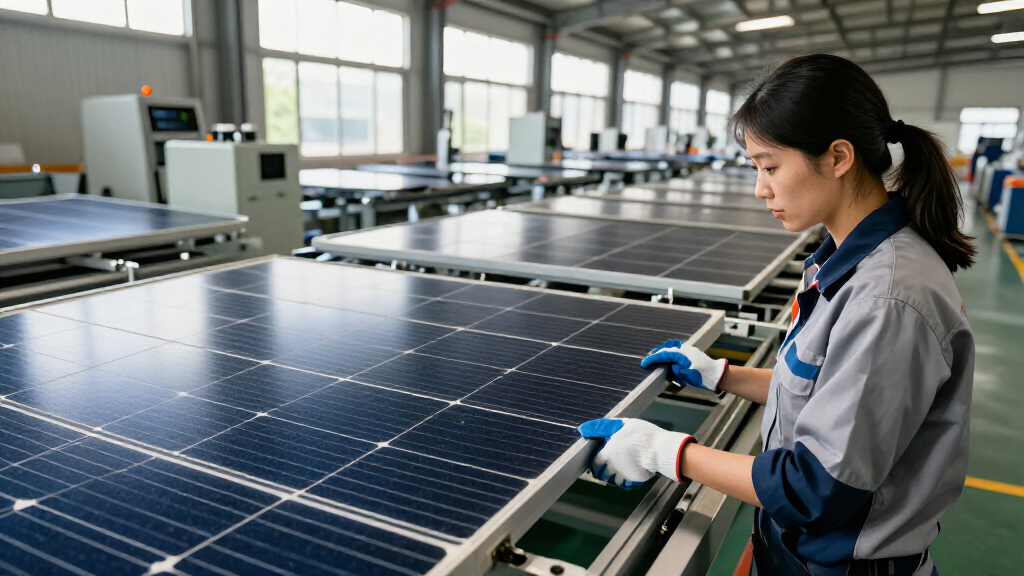
Qcells has been developing tandem cells since 2016. It opened a pilot research and development line in Germany in 2022, then launched a 40-megawatt pilot line in South Korea in 2024 to produce full-size tandem panels. Merfeld said the company is also testing panels at its own field sites. The planned 2029 factory would be a major step beyond those pilot operations, but Qcells has not announced its location, construction schedule or investment cost in the source report.
The technology combines a conventional silicon solar cell with a perovskite layer. The two materials can capture sunlight in ways that allow a tandem panel to produce more electricity from the same area than a silicon panel alone. Qcells achieved a reported 28.6% efficiency for a standard-size silicon cell layered with perovskites in 2024, a result independently confirmed at the time, according to Canary Media. That laboratory efficiency result does not by itself establish how much electricity a mass-produced panel will generate over its lifetime.
Qcells said in July that its tandem panel passed tests against solar-panel quality standards set by UL and the International Electrotechnical Commission. Such tests subject panels to accelerated physical stresses, but they cannot substitute for decades of real-world operation. The company has not shared the perovskite ingredients it uses or degradation data from its field testing, Canary Media reported.
More Power From Each Panel
If tandem panels prove durable and become commercially available, they could generate more electricity within the same rooftop or land area than conventional panels. That could help make limited spaces more productive, or allow a project to generate a given amount of power using a smaller footprint.
Higher output per panel could also reduce some costs beyond the panels themselves. A smaller installation for the same power output may require less land, wiring, labor and supporting equipment. Those potential savings depend on the panels’ price, performance and lifetime, none of which have been established at commercial scale.
The factory plan matters because the solar industry’s next efficiency gains will depend not only on laboratory records but on whether manufacturers can make reliable products in volume. Qcells is betting that its existing manufacturing experience can help it address that challenge. The company’s target also adds to competition with developers pursuing their own routes to large-scale tandem production.
perovskite silicon tandem solar panels
As an affiliate, we earn on qualifying purchases.
As an affiliate, we earn on qualifying purchases.
From Lab Records to Factory Plans
Conventional high-performance panels convert sunlight to electricity at around 24% efficiency, according to the report. Merfeld said panel efficiency has improved by roughly half a percentage point each year over the past decade as manufacturers refined production. A tandem design could deliver a larger step in efficiency, but the advantage has so far been clearer in testing than in long-term commercial operation.
Perovskite tandem cells have posted high laboratory results, but the material’s tendency to degrade under exposure to light, heat and moisture has made durability a central obstacle. Several companies, including Tandem PV, Oxford PV and Caelux, are working to commercialize the technology. Canary Media reported that none was then mass-producing and selling tandem panels with a commercial warranty comparable to conventional solar products.
Other factory plans are also taking shape. Chinese company GCL said it opened a 1-gigawatt factory in Kunshan, near Shanghai, last year, according to the report. U.S.-based Tandem PV is targeting 2028 to build a gigawatt-scale factory, its CEO Scott Wharton told Canary Media. These plans do not by themselves establish that the companies have resolved the technology’s durability or financing challenges.
Durability Still Needs Proof
The central open question is whether tandem panels can keep producing power reliably over the decades expected of commercial solar installations. No tandem panel has yet operated for more than 20 years, Canary Media reported. Accelerated certification tests provide evidence about performance under controlled stress, but long-term field results remain limited.
Qcells has not disclosed the ingredients in its perovskite formulation or data from its field tests. The source report also does not specify the planned factory’s site, cost, expected production ramp or whether Qcells has secured financing and customer commitments. The 2029 date is a company target, not a confirmed opening date.
It is also unclear what warranty Qcells would offer, how the panels would be priced against conventional modules, or how much of their laboratory efficiency advantage would remain in commercially produced units. Those details will shape whether the technology can attract project developers and lenders.
Field Tests Before 2029
Qcells’ next task is to build evidence from its full-size panels in field conditions and demonstrate that the performance holds up over time. The company has said it installed tandem panels at its own test sites over the past year, but the report provides no degradation results or timetable for publishing them.
Before a factory can produce at gigawatt scale, Qcells will also need to clarify where it will be built and how production will be funded and organized. Further milestones may include additional reliability testing, warranty terms, customer agreements and details on manufacturing capacity. The available source material does not give dates for those announcements.
For now, the 2029 plan is a manufacturing ambition rather than proof that tandem solar is ready for widespread deployment. Its progress will depend on whether Qcells can turn promising efficiency results into panels that are durable, financeable and practical to produce in large numbers.
Key Questions
What is Qcells planning to build?
Qcells plans to open a gigawatt-scale factory in 2029 to make tandem solar panels that combine silicon with a perovskite layer. The company has not identified the factory’s location or cost in the source report.
How do tandem solar panels work?
They pair a conventional silicon solar cell with perovskite material, allowing the layers to capture sunlight in ways that may produce more electricity from the same panel area. Results from laboratory cells do not automatically show how a commercial panel will perform over its lifetime.
Are Qcells’ tandem panels already being sold commercially?
The source report describes pilot production and field testing, not commercial sales. Qcells launched a 40-megawatt pilot line in South Korea in 2024; it has not announced a commercial warranty or a mass-market launch date in the material provided.
What is the main obstacle to commercial use?
Long-term durability remains a key concern. Perovskites can degrade when exposed to light, heat and moisture, and no tandem panel has yet operated for more than 20 years, according to Canary Media.
Are other companies pursuing large-scale tandem production?
Yes. The report says GCL announced a 1-gigawatt factory in China, while U.S. developer Tandem PV was targeting a gigawatt-scale factory in 2028. Those plans are separate from Qcells’ 2029 target and do not establish that any company has resolved all commercial-readiness issues.
Source: rss
Fall Picks
fall essentials
As an affiliate, we earn on qualifying purchases.