
To set up proper hearth and floor protection, start by choosing fire-resistant materials like tiles, refractory panels, or metal hearth pads that suit your fireplace or stove. make certain you install protective barriers that extend beyond the heat source and maintain clear safety distances from combustible surfaces, following local codes and manufacturer guidelines. Regularly inspect and replace worn materials to keep your space safe. Keep these steps in mind to ensure long-term safety and discover more expert tips as you go.
Key Takeaways
- Use fire-resistant hearth pads made of durable materials like tile, stone, or metal to protect floors from heat and sparks.
- Install fire-resistant panels or drywall behind the hearth to prevent heat transfer to combustible walls.
- Maintain safety clearances—such as 18 inches above and 36 inches in front of heat sources—according to codes and manufacturer guidelines.
- Ensure protective barriers extend beyond the heat source area and are securely installed for long-term safety.
- Regularly inspect and replace damaged fire-resistant materials to maintain effective hearth and floor protection.
Your hearth and floors face daily risks from sparks, heat, and falling debris, making proper protection vital. When you’re working around a fireplace or stove, using fire resistant materials is essential to prevent accidental fires and damage. These materials are specially designed to withstand high temperatures and resist ignition, giving you peace of mind while enjoying your hearth. Before installing any protective barriers, it’s important to familiarize yourself with safety clearance guidelines. These guidelines specify the minimum distances needed between your heat source and combustible surfaces, helping you maintain a safe environment. Ignoring clearance standards can lead to dangerous situations, so always double-check local building codes and manufacturer recommendations.
Proper fire-resistant materials and safety clearances are essential for hearth protection and safety.
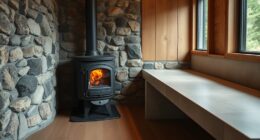
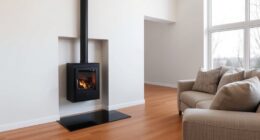
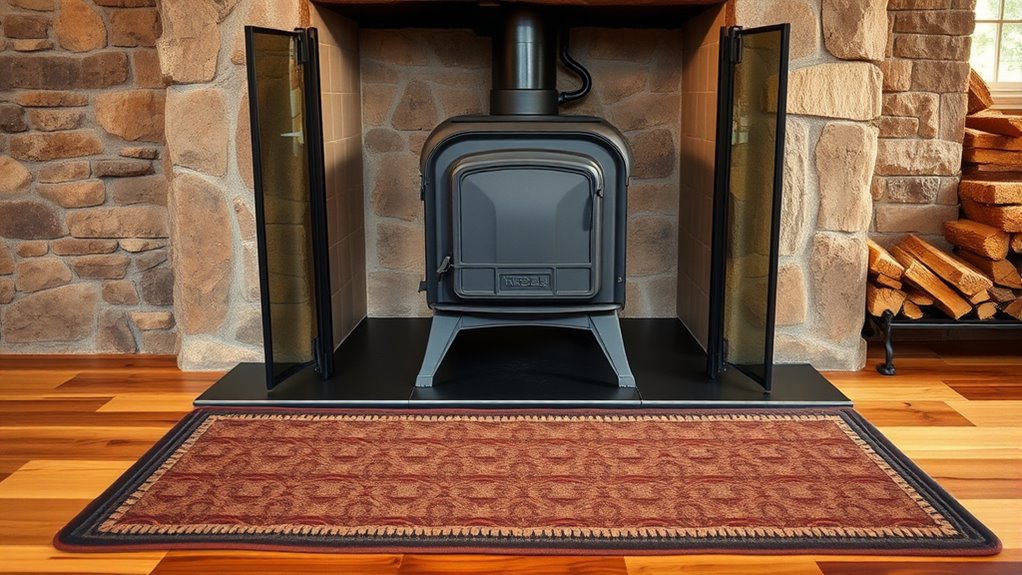
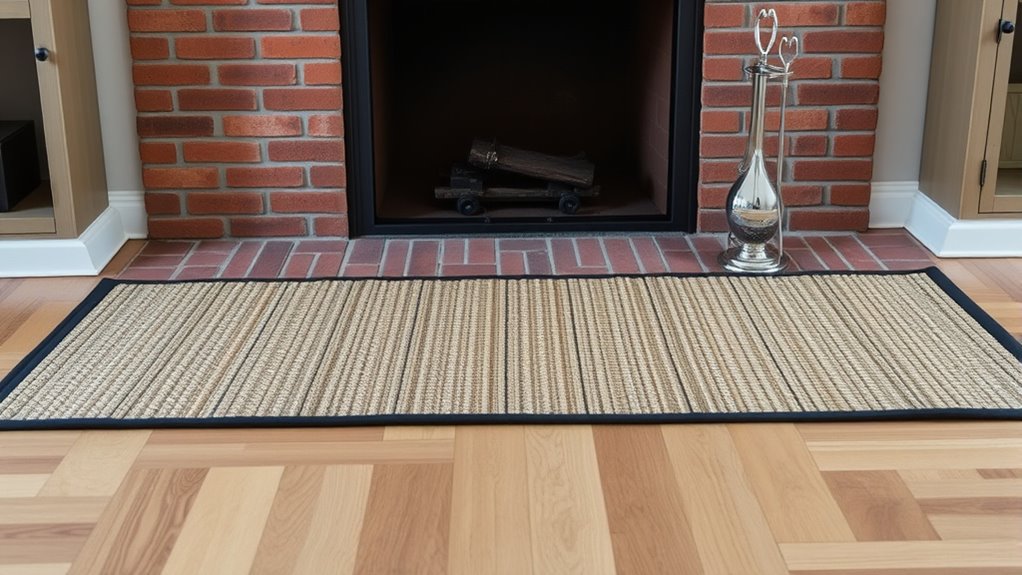
Choosing the right fire resistant materials is your first step. You want durable, non-combustible options like fireproof tiles, refractory panels, or high-temperature-rated mats that can handle the heat without degrading over time. For flooring, consider installing a hearth pad made from fire-resistant stone, tile, or metal that extends beyond the immediate area around your fireplace or stove. This creates a protective barrier that shields your floors from sparks or embers that might escape. When it comes to walls behind the hearth, fire-resistant panels or drywall designed for high temperatures can prevent heat transfer and reduce fire risk. Incorporating fire-resistant coatings can also provide an extra layer of safety by adding durability to existing materials. Regularly inspecting your protective surfaces ensures that any damage or wear is addressed promptly, maintaining safety over time. Additionally, choosing materials with thermal insulation properties can help regulate heat transfer and further enhance safety.
Implementing proper safety clearance guidelines is equally important. These guidelines dictate how far your hearth must be set back from combustible materials, including furniture, curtains, or wood paneling. For example, most codes recommend at least 18 inches of clearance between the top of the firebox and any combustible surfaces, and a minimum of 36 inches of clearance in front of the hearth. Adhering to these standards minimizes the chance of accidental ignition caused by heat or sparks. If your setup involves any custom or unconventional arrangements, consult with a professional to ensure your clearances meet safety standards. Additionally, understanding the safe distances for different heat sources helps optimize both safety and functionality in your space. Using proper installation techniques ensures that protective barriers are securely in place and effective.
Proper hearth and floor protection isn’t just about materials and clearances; it’s about creating a safe environment where you can relax and enjoy your fireplace without worry. Regular inspections and maintenance of your protective barriers are necessary to guarantee they remain effective. Always replace any damaged or worn fire-resistant materials promptly. When setting up your hearth, prioritize quality, durability, and adherence to safety guidelines. This way, you not only protect your home but also guarantee everyone’s safety while keeping the cozy ambiance your fireplace provides. Proper setup and ongoing vigilance turn your hearth into a safe, inviting feature you can enjoy for years to come.
Top picks for "sett proper hearth"
Open Amazon search results for this keyword.
As an affiliate, we earn on qualifying purchases.
Frequently Asked Questions
What Materials Are Best for Temporary Hearth Protection?
For temporary hearth protection, you should use fire-resistant mats and heat shields. Fire-resistant mats are easy to lay down and provide a quick barrier against heat and sparks, making them ideal for short-term use. Heat shields offer better heat deflection and are perfect for protecting flooring during specific tasks. Both materials are essential to prevent damage and guarantee safety while working near the hearth.
How Often Should I Inspect My Hearth and Floor Protection?
Like a trusty knight, you should inspect your hearth and floor protection weekly. Regular inspection schedule helps catch any damage early, ensuring safety and longevity. Look for signs of wear, cracks, or shifting materials. Follow maintenance tips like cleaning debris and checking for heat damage. If you notice issues, address them promptly to prevent bigger problems. A proactive approach keeps your hearth protected and your home safe.
Can I Use DIY Solutions for Hearth and Floor Protection?
Yes, you can use DIY solutions for hearth and floor protection, but proceed with caution. DIY alternatives like fire-resistant coatings can be effective if applied correctly, providing a barrier against heat and sparks. However, guarantee these coatings are rated for high temperatures and follow manufacturer instructions closely. While DIY options might save money, investing in professional-grade materials or consulting experts can offer better safety and durability.
Are There Specific Codes or Regulations for Hearth Protection?
Think of fire safety codes and local regulations like a recipe for a safe hearth; ignoring them risks a disaster. You must follow specific codes for hearth protection, including clearance distances and fire-resistant materials. Local regulations vary, so check with your building department. For example, one homeowner faced fines for non-compliance, highlighting why adhering to these rules is vital for safety and legality. Always prioritize proper codes for peace of mind.
How Do I Choose the Right Size of Protection for My Hearth?
You should measure your hearth area carefully to determine the right size of protection. Use fire-resistant mats or heat-resistant padding that extend at least 18 inches beyond the fireplace opening on all sides. This ensures safety and compliance with codes. Choose materials that are thick and durable enough to withstand high temperatures, and make certain they fit snugly without gaps to prevent any fire hazards.
Conclusion
Now that you know how to set up proper hearth and floor protection, you’re well on your way to a safer space. Remember, a little prevention goes a long way—think of it as guarding your own backyard. By taking these simple steps, you keep accidents at bay and your home cozy and secure. Don’t put off these precautions; they’re the backbone of a safe and warm hearth experience. Stay vigilant, and enjoy your fireside comfort worry-free.