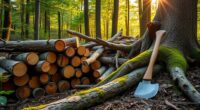
To prepare firewood efficiently, start by splitting logs into uniform pieces using a quality axe or maul, making sure they’re manageable for your stove or fireplace. Stack the wood in a crisscross or alternating pattern in a dry, well-ventilated spot off the ground—cover the top but leave sides open for airflow. Regularly check for moisture or mold, adjusting the covering as needed. Keep going for more tips on ensuring your firewood dries perfectly and burns efficiently.

Get backup power and energy gear delivered free with Prime
- Fast, free delivery on millions of items
- Prime Video, Amazon Music and more included
- Member-only deals all year
Key Takeaways
- Use quality tools like axes or splitting mauls for safe, effective splitting into uniform sizes.
- Stack wood in a crisscross pattern on raised pallets for optimal airflow and faster drying.
- Cover the top of stacks with tarps or roofs, leaving sides open for ventilation and moisture escape.
- Store firewood in a dry, well-ventilated location off the ground to prevent mold and rot.
- Follow sustainable harvesting practices by avoiding overharvesting and respecting local environmental guidelines.

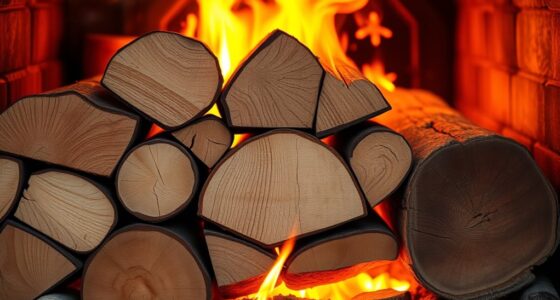
Preparing firewood is an essential step to guarantee efficient and safe heating during the colder months. Properly prepared firewood ensures you get maximum heat output while minimizing smoke and creosote buildup. One of the first things you need to consider is how to store your firewood seasonally. If you want your wood to burn efficiently, you must dry it thoroughly before use. Seasonal storage involves stacking your firewood in a way that promotes airflow and allows it to cure properly over several months. You should choose a dry, well-ventilated spot, preferably off the ground, to prevent moisture absorption from the soil. Cover the top of your stacks with a tarp or a roof but leave the sides open to facilitate airflow, which is crucial for drying. This method ensures your firewood remains dry and ready when you need it, reducing the risk of inefficient burning and excessive smoke. When harvesting your firewood, practicing sustainable harvesting is key to maintaining healthy forests and ensuring a continuous supply. Avoid overharvesting from a single area, and always leave enough wood behind to allow the forest to regenerate naturally. Cut only mature trees, and do so responsibly, respecting local regulations and environmental guidelines. This approach not only helps preserve the ecosystem but also guarantees that your firewood collection remains sustainable long-term.
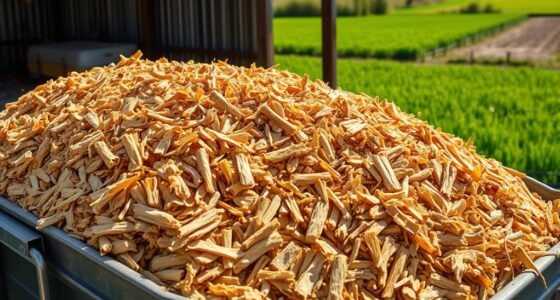
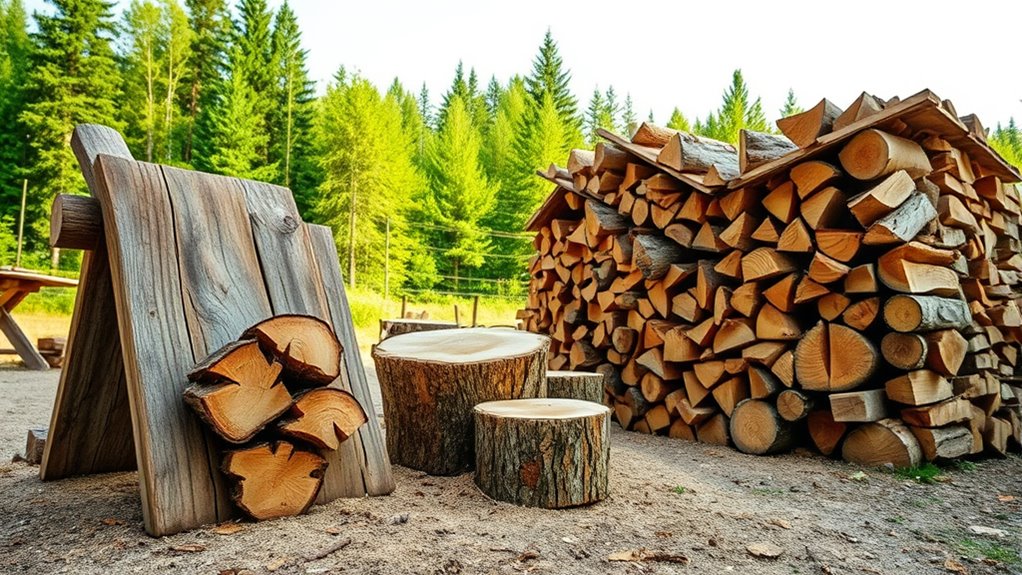
Once you’ve gathered your wood, splitting it into manageable pieces is the next step. Use a quality axe or a splitting maul to break down logs, making sure to aim for uniform sizes that fit comfortably into your stove or fireplace. Proper splitting allows the wood to dry faster and burns more evenly, producing more heat and less smoke. After splitting, stacking your firewood correctly is vital. Stack the pieces in a crisscross or alternating pattern to promote good airflow, and avoid stacking them directly on the ground. Elevate the pile on a pallet or some bricks to prevent moisture absorption. Ensure the stack is stable and not too tightly packed, as good air circulation is essential for drying. Throughout this process, always prioritize safety—wear gloves and eye protection when splitting wood, and stay aware of your surroundings. Regularly check your firewood stacks for signs of moisture or mold, and rearrange or add coverage if needed. Properly prepared firewood, stored seasonally and harvested sustainably, will not only heat your home efficiently but also contribute to responsible forest management. With attention to these details, your firewood will be ready when you need it most, providing warmth and comfort all winter long.
As an affiliate, we earn on qualifying purchases.
Frequently Asked Questions
What Are the Best Tools for Splitting Firewood?
You should use a good-quality splitting axe or maul for the best results. Make sure to maintain your axe by sharpening it regularly and inspecting the handle for damage. When selecting logs, choose seasoned, straight-cut wood for easier splitting. Proper axe maintenance guarantees safety and efficiency, while selecting the right logs helps you split more effectively, making your firewood preparation quicker and less tiring.
How Do I Prevent Mold During Drying?
Think of drying firewood like baking bread—air circulation is key. To prevent mold, guarantee your drying environment is well-ventilated and keep the stack off the ground with pallets or a stand. Cover the top but leave sides exposed for airflow. I once saw a neighbor’s firewood rot because he stacked it flat on damp soil. Proper airflow and mold prevention techniques keep your wood dry and ready.
How Long Should Firewood Be Seasoned?
You should season your firewood for about 6 to 12 months, depending on the wood type and climate. During this seasoning duration, aim for a moisture content of around 20% or less. To check if your wood is ready, use a moisture meter. Proper seasoning guarantees efficient burning, less smoke, and reduces mold risk. Keep the wood stacked in a dry, well-ventilated area for best results.
What’s the Safest Way to Stack Firewood?
You should stack firewood using proper firewood storage techniques to guarantee safety and efficiency. Place the logs in a crisscross pattern or in neat rows, leaving gaps for airflow. Use sturdy, level supports like pallets or firewood racks to keep the stack stable and prevent it from toppling. Keep the stack away from structures or walkways, and cover the top with a breathable tarp to protect against rain while allowing moisture escape.
How Do I Identify When Firewood Is Fully Dry?
Think of dry firewood like a well-aged wine—it’s ready when it’s clear and crisp. You can check moisture content with a moisture meter; ideally, it should be below 20%. Seasonal indicators also help—wood split in summer usually dries faster, while winter-split wood takes longer. Tap the ends; if they sound hollow or crack easily, it’s a sign your firewood is fully dry and ready to burn.
Conclusion
Now that you’ve mastered splitting, stacking, and drying, your firewood journey is like tending a loyal garden—patient effort yields warmth and comfort. Each split is a step toward a cozy glow, and every carefully stacked piece becomes a promise of crackling fires ahead. Think of your firewood as a treasure chest, slowly filling with the warmth of your care. With time and patience, your woodland bounty will ignite your home with the glow of your dedication.
Halloween Picks
halloween
As an affiliate, we earn on qualifying purchases.