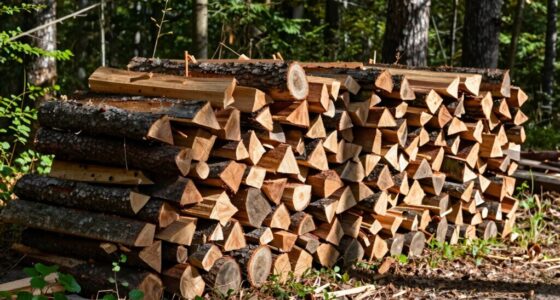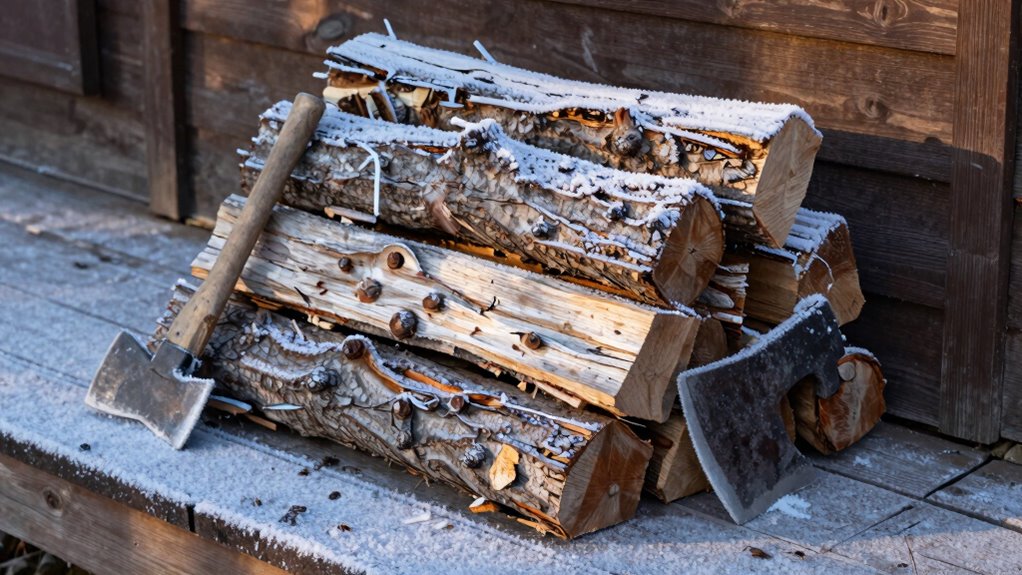

If your firewood was left outside all winter, you should inspect it for signs of pests, mold, or damage. It likely needs to be dried further to reduce moisture, especially if it feels damp or heavy. Splitting larger logs can help speed up drying, and storing it in a well-ventilated, covered area will improve its quality. Continuing with these steps will guarantee your wood burns cleaner and safer later on.

Get backup power and energy gear delivered free with Prime
- Fast, free delivery on millions of items
- Prime Video, Amazon Music and more included
- Member-only deals all year
Key Takeaways
- Check moisture content to ensure the wood has sufficiently dried for safe, efficient burning.
- Inspect for pests, mold, or damage, and remove any infested or decayed pieces.
- Split larger logs to promote faster drying and better airflow around the wood.
- Store the wood in a covered, well-ventilated area away from your home to prevent pest entry.
- Consider bringing some wood indoors or into a sheltered space to accelerate drying before use.
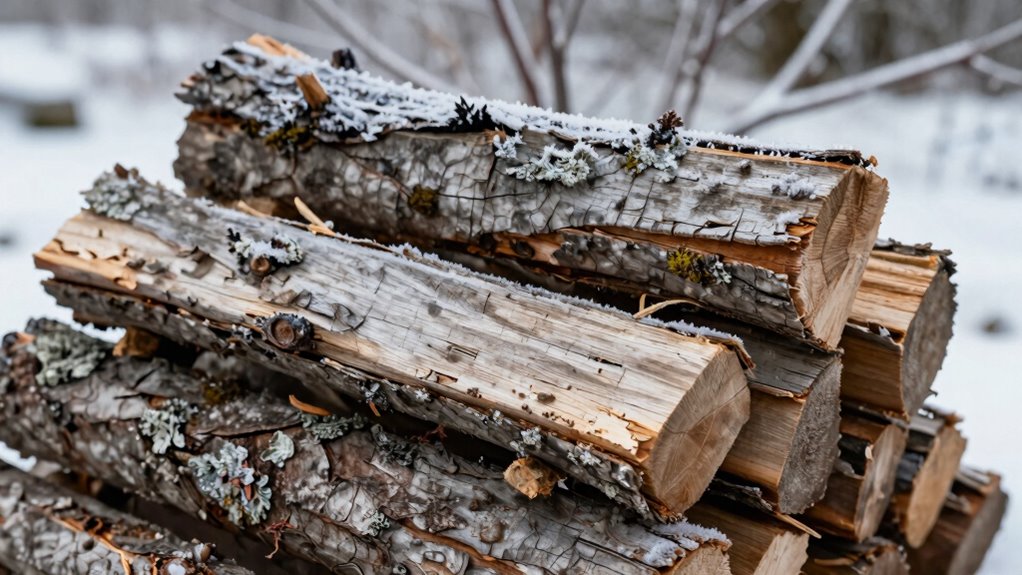
Leaving firewood outside all winter might seem convenient, but it can lead to problems when you’re ready to burn it. The moisture content in your wood is likely higher than you’d like, so now’s the time to consider effective wood drying techniques. Properly drying firewood is essential to ensure it burns efficiently, produces less smoke, and reduces creosote buildup in your chimney. To do this, start by stacking the wood off the ground on a well-ventilated rack or pallet. This allows air to circulate around each piece, helping moisture escape. Cover the top of your stack to shield it from rain and snow, but leave the sides open to maintain airflow. If your wood is particularly damp, you might need to split larger logs into smaller pieces to speed up the drying process. Bringing the wood into a dry, sheltered space for a few weeks can also accelerate drying, especially if outdoor conditions haven’t been ideal. Additionally, moisture content plays a critical role in how well your firewood burns, so measuring it can help determine when the wood is ready. Proper firewood drying techniques not only improve combustion but also prevent mold growth and decay. To enhance the drying process, consider air circulation methods such as using fans or ventilated sheds. Alongside drying, pest prevention strategies are crucial now. Wood left outside during winter can harbor insects, mice, or other pests that may become active once the weather warms. Inspect each piece carefully, looking for signs of insects or nests. Remove any infested or damaged wood to prevent pests from spreading to your home or storage area. You should also consider applying pest deterrents or treatments to your firewood if you notice any issues. Storing wood away from your home’s foundation is another key strategy—keeping it at least 20 feet away minimizes the risk of pests migrating indoors. Using a covered but well-ventilated storage area helps prevent pests from nesting in the wood while protecting it from the elements. Regularly checking your stack for signs of pests or mold can save you trouble down the line. Additionally, ensuring proper ventilation in your storage area can greatly improve the drying process and reduce the risk of mold growth. Proper seasonal storage of firewood is vital for maintaining its quality over time.
In the end, your goal is to have dry, pest-free firewood ready when you need it. You might need to do a bit of work now—stacking, covering, inspecting—but the payoff is clear: cleaner, more efficient fires and fewer pests invading your space. If your wood still feels damp, don’t rush to burn it; giving it extra time to dry ensures safer, better-burning firewood. Taking these steps now guarantees your firewood will be in prime condition when next season’s fires call for it. Proper wood drying techniques combined with pest prevention strategies will make your winter fires safer, cleaner, and more enjoyable.
As an affiliate, we earn on qualifying purchases.
Frequently Asked Questions
How Can I Tell if Firewood Is Still Usable After Winter?
You can tell if firewood is still usable after winter by checking its moisture level; well-seasoned wood should feel dry and have cracks in the ends. Knock on the logs—dull sound indicates moisture, while a clear, ringing sound suggests dryness. Also, inspect for signs of firewood pests, such as holes or sawdust, which could make the wood less safe and less effective for burning.
What Signs Indicate Firewood Has Rotted or Become Moldy?
When checking your firewood, look for signs of rot or mold—like a musty smell or visibly fuzzy, white or greenish patches, which indicate firewood mold. If you notice soft, crumbly wood or signs of firewood pests like holes or sawdust, it’s a sign it’s spoiled. I once found moldy wood that smelled sour, reminding me that bad firewood can be a pest magnet and burns poorly.
Is It Safe to Burn Firewood That Has Been Exposed to Rain?
Burning firewood exposed to rain isn’t recommended because rain damage can make it damp and harder to ignite. Moist wood promotes mold growth, which you want to avoid for mold prevention and safe burning. If you must use rain-soaked wood, make sure it’s thoroughly dried out first—preferably stored in a dry, sunny spot—to reduce risks of smoke, creosote buildup, and health hazards.
How Should I Store Outdoor Firewood for Next Winter?
You should store outdoor firewood off the ground on a raised platform or stack it neatly in a dry, covered area. Make sure proper air circulation for firewood seasoning, which helps it burn better and reduces pests. Cover the top to protect it from rain, but leave sides open for airflow. This way, your firewood stays dry, well-seasoned, and pest-free, ready for next winter’s use.
Can I Refinish or Treat Outdoor Firewood to Improve Its Quality?
You can refinish or treat outdoor firewood to improve its quality, but it’s better to focus on proper firewood seasoning first. Let the wood dry thoroughly to reduce moisture, which enhances burning efficiency. Avoid using chemical treatments, as they can emit harmful fumes when burned and may damage your stove or fireplace. Instead, store your firewood properly and allow it to season naturally for ideal results.
Conclusion
After a winter outside, your firewood might need some attention before use. For example, Sarah stored her firewood outdoors and found it damp and moldy in spring. By thoroughly inspecting and drying it in a well-ventilated area, she guaranteed it burned efficiently and safely. Before lighting up, always check for pests, mold, or moisture. Taking these steps guarantees your firewood is ready, so you can enjoy a warm, crackling fire without surprises.
Halloween Picks
halloween
As an affiliate, we earn on qualifying purchases.