This checklist is for anyone putting together a portable solar setup for home energy or backup power. It covers the panels and accessories that help connect, position, clean, and carry the gear named here.

Get backup power and energy gear delivered free with Prime
- Fast, free delivery on millions of items
- Prime Video, Amazon Music and more included
- Member-only deals all year
The sections follow the setup path: start with a foldable panel, consider cable connections, then look at mounting and cleaning accessories. A carrying case rounds things out for equipment that needs to travel or be stored.
Use the look-for lists to compare each item with your panel and setup before buying. Check connector types, cable length, mounting compatibility, and the dimensions of anything you plan to carry or store.
Foldable Solar Panels
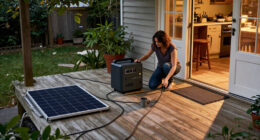
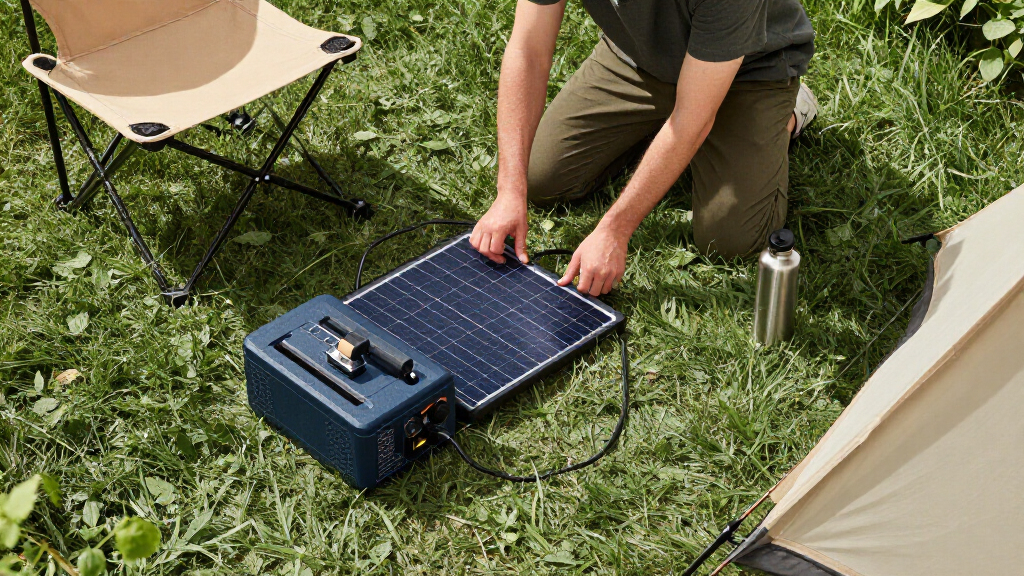
A foldable panel is the starting point for a portable solar setup. The listed pick pairs a 200W foldable solar panel with a 2400W portable power station, so it presents the panel and storage unit together. Before choosing a similar setup, consider whether the included panel and power station fit the way you expect to use and transport them.
A common buying mistake is treating the panel’s wattage as the whole compatibility check. Confirm that the panel connection works with the power station, and review the included equipment and its dimensions. Think through where the panel will be placed during use, how it will be moved between locations, and where both pieces will be stored afterward. A foldable design may make handling simpler, but it does not establish the packed size or weight; check those details in the product information. Also make sure the setup you select includes the components you actually need rather than assuming other cables or accessories are part of the package.
What to look for:
- Confirm the panel connection matches the power station.
- Check the included components and cables.
- Review panel and power station dimensions.
- Consider how the folded panel will be transported and stored.
- Compare the listed 200W panel with your setup needs.
2400W Portable Power Station with 200W Foldable Solar Panel

This portable off-grid kit pairs a 2400W LiFePO4 power station with a 200W foldable monocrystalline solar panel for camping and outdoor use. It includes multiple AC, DC, and USB outputs, wireless charging, an LED light, and a 10ms UPS mode, with safety protections and solar charging support.
Pros:
- Provides 2400W continuous output for multiple camping appliances
- Includes a foldable solar panel for off-grid recharging
- LiFePO4 battery and multiple safety protections
- Built-in UPS, wireless charging pad, and LED camping light
Cons:
- Weighs 58 pounds, which may limit portability
- Solar charging depends on direct sunlight
Best for: People seeking a listed 200W foldable panel paired with a power station
Not ideal for: Buyers who need a panel-only purchase
Bottom line: Check the included components, dimensions, and connection compatibility before choosing this paired setup.
Solar Panel Extension Cables
Extension cables help span the distance between a panel and the rest of a solar setup. The listed pick is a 50-foot twin-wire cable in 10AWG (6mm²), with IP67 stated in its name. That length may suit some layouts, but cable choice should follow the actual route and the connection requirements of your equipment.
A frequent mistake is buying by length alone. Measure the path the cable needs to cover, allowing for how it will be routed, and confirm the ends match the panel and equipment. The product name abbreviates one connector as “Male/Fem,” so verify the exact connector arrangement in the product details before ordering. Check whether a twin-wire cable is appropriate for the setup, and review the manufacturer’s guidance for the equipment it will connect to. Avoid assuming a cable’s rating makes it suitable for every location or condition; confirm the product documentation for your intended use. Leave enough reach for practical placement without choosing a cable that creates unnecessary extra slack.
What to look for:
- Measure the route and confirm 50 feet is suitable.
- Verify both connector ends against your equipment.
- Confirm the 10AWG (6mm²) specification fits the setup guidance.
- Check product documentation for the stated IP67 rating and intended use.
- Plan cable routing and manage extra slack.
Twin Wire 50FT Solar Extension Cable – 10AWG (6mm²) with IP67 Male/Female Connec

This 50-foot solar extension cable features high-quality tinned copper conductors and weather-resistant insulation, suitable for outdoor solar energy systems. It includes IP67-rated male and female connectors, making it compatible with inverters, charge controllers, and batteries for efficient energy transfer over long distances.
Pros:
- High-quality tinned copper conductors for excellent conductivity
- Weather-resistant insulation suitable for outdoor use
- Includes wire stripper for easy installation
- IP67 waterproof connectors ensure durability in harsh environments
Cons:
- Requires proper handling to avoid damage to connectors
- Limited to 10A current capacity, not suitable for high-power applications
Best for: Setups whose measured cable route calls for a 50-foot extension
Not ideal for: Layouts that need different connectors or a shorter run
Bottom line: Match cable length, connector ends, and wire specification to the equipment before ordering.
MC4 Adapter Cables
No specific MC4 adapter cable is listed for this slot, so treat this as a compatibility check rather than a product recommendation. An adapter may be relevant when the panel and the equipment it connects to use different connector arrangements, but the names alone do not establish which adapter a setup needs.
The common mistake is choosing an adapter from a connector label without checking the complete connection path. Inspect the panel and equipment documentation for connector type, polarity, and any stated electrical requirements. Confirm both ends of the adapter match the components it will join, and make sure the product documentation supports the intended connection. If the existing cable already connects the equipment directly, an adapter may not be needed. Do not infer compatibility from a product photo or a broad “MC4” label alone; verify the specific connector configuration and consult the equipment maker’s guidance when details are unclear. Keep the adapter accessible and protected according to its documentation.
What to look for:
- Identify connector types at both ends of the connection.
- Verify polarity and electrical requirements in equipment documentation.
- Match each adapter end to the components being joined.
- Confirm the adapter is needed for the actual connection path.
- Follow the equipment maker’s compatibility guidance.
Solar Panel Ground Mounts
A ground mount can help position panels in a fixed location. The listed pick is a silver Tandefio mounting kit for 12–15 solar panels. That stated panel range is the first compatibility detail to check, along with whether the kit is intended for the type and arrangement of panels in your setup.
A common mistake is assuming a listed panel count guarantees a fit. Confirm your panel dimensions, mounting points, and the kit’s installation requirements in the product information. Consider the ground surface and available space, and check what hardware is included rather than assuming the kit contains every fastener or tool needed. The name does not specify the mount’s footprint or adjustment range, so review those details before planning a location. Follow the manufacturer’s directions for assembly and installation, and verify that your chosen position provides room for the full panel arrangement. If your setup contains fewer than 12 panels or more than 15, check with the manufacturer about fit instead of relying on the name alone.
What to look for:
- Confirm the kit supports your panel count.
- Compare panel dimensions and mounting points with the kit details.
- Check installation requirements for the intended ground surface.
- Review the footprint and included hardware.
- Follow the manufacturer’s assembly and installation directions.
Tandefio Solar Panel Mounting Kit for 12-15 Solar Panels, Silver

This solar panel mounting kit includes rails, connectors, clamps, brackets, bolts, and ground lugs, suitable for installing 12 to 15 solar panels. Made from durable aluminum alloy, it offers weather resistance and adjustable features for versatile installation on various surfaces like roofs, ground, or open spaces.
Pros:
- Durable, weather-resistant aluminum alloy construction
- Adjustable clamps for versatile panel fitting
- Easy to install with straightforward setup process
- Suitable for various installation surfaces and locations
Cons:
- Manual measurement may result in slight size inaccuracies
- Color may vary slightly due to screen display differences
- Includes pointed items requiring careful handling
Best for: Setups with 12–15 panels that match the kit requirements
Not ideal for: Single-panel setups or panel counts outside the stated range
Bottom line: Verify panel dimensions, count, installation needs, and included hardware before choosing this kit.
Solar Panel Cleaning Brushes
Cleaning tools can help with routine panel care, and this listed system features 18-foot dual rotating brushes. Reach is a practical starting point when considering a cleaning tool, but the product name alone does not establish whether it suits a specific panel location or surface.
A common mistake is focusing only on pole length. Check the product details for brush materials, how the rotating brushes operate, and any care guidance for the panel surface. Consider how you will control and store a long tool, and whether the pole can reach the areas you need without awkward handling. Do not assume a brush is safe for every panel coating or that water or cleaning solutions are included. Follow the panel maker’s cleaning instructions and the brush manufacturer’s guidance. If the panels are mounted high, consider whether you can clean them from a stable position and with controlled pressure. Confirm what comes in the system before buying so the listed features align with your cleaning routine.
What to look for:
- Check that 18 feet reaches the panels from a safe position.
- Review brush materials and panel-care compatibility.
- Confirm how the dual rotating brushes operate.
- Check whether water or cleaning supplies are included.
- Follow panel and brush manufacturer care instructions.
Solar Panel Cleaning System with 18 ft Dual Rotating Brushes

This solar panel cleaning system has a telescoping carbon fiber pole with a dual brush head and a flexible connector for adjusting the cleaning angle. Its water-fed hose connects to standard garden hoses or DI water systems, and it is available with AC, battery, or dual power options.
Pros:
- Carbon fiber pole is lightweight and designed to reduce fatigue.
- Telescoping length and adjustable-angle connector accommodate different cleaning positions.
- Connects to standard garden hoses and DI water systems.
- Offers AC, battery, and dual-power configurations.
Cons:
- Battery operation requires a separate battery set, and runtime is about 6 hours per charge.
- The AC option requires access to a power outlet.
Best for: People whose cleaning routine can use an 18-foot brush system
Not ideal for: Setups requiring a different reach or verified surface compatibility not provided
Bottom line: Check reach, brush details, and panel-care guidance before cleaning with this system.
Solar Panel Carrying Cases
A carrying case can make a portable setup easier to move and store. The listed pick is the SolarPlay 2500W portable power station, with 2304Wh and a 200W solar panel. Its name describes a paired power station and panel, not a separate carrying case, so check the product details carefully to see whether a case is included.
A common mistake is treating a product listed in a carrying-case slot as proof that the package contains a case. Confirm the included items and dimensions, then compare the panel and power station with the space available in your vehicle or storage area. Check whether the panel folds and how it is packed, and look for any separate case designed for the specific components if one is needed. The listed 2500W and 2304Wh are product-name specifications; review the manufacturer’s information for the details relevant to your setup. Consider how you will protect each component during transport, and avoid assuming a generic case will fit securely. Confirm that the carrying method is suitable for the equipment’s size and weight as stated by the manufacturer.
What to look for:
- Confirm whether a carrying case is actually included.
- Check the dimensions of the power station and panel.
- Verify the panel’s packed form and storage needs.
- Look for a case sized for the specific components if needed.
- Review manufacturer information for handling and transport.
SolarPlay 2500W Portable Power Station, 2304Wh with 200W Solar Panel

This portable power station has a 2304Wh LiFePO4 battery and provides 2500W of output, with a listed starting wattage of 4800W. It offers 14 ports, adjustable AC charging input, four charging methods, and UPS mode for backup power at home or outdoors.
Pros:
- 2304Wh LiFePO4 battery rated for more than 3,500 cycles
- 14 ports, including four AC outlets and four USB-C ports
- Adjustable AC charging input and multiple charging methods
- UPS mode provides backup power with a listed 0.2-second switchover
Cons:
- The listed UPS switchover time is 0.2 seconds, so the output may not be uninterrupted for every device
- The AC charging specification lists 110V input
Best for: People considering the listed SolarPlay station and panel combination
Not ideal for: Buyers seeking a confirmed standalone carrying case
Bottom line: Verify package contents and dimensions; the product name does not confirm a case is included.
For a budget-first buying order, start by identifying the panel and power station you need, then confirm the cables and connectors required to join them. Add a mount or cleaning tool only after checking your panel count, location, access, and care instructions. Consider carrying and storage needs alongside the actual package contents.
Take the checklist one connection at a time and verify the details against the equipment documentation. A few careful checks on fit and compatibility can help you choose components that work together and suit the way you plan to use your portable setup.