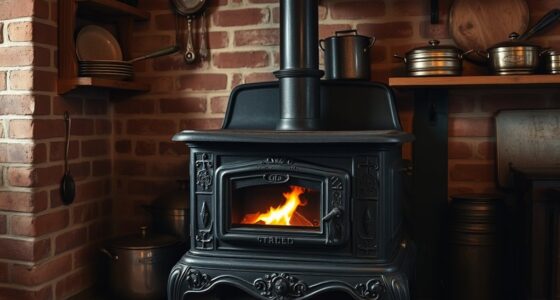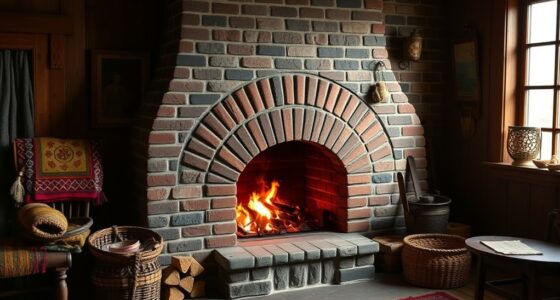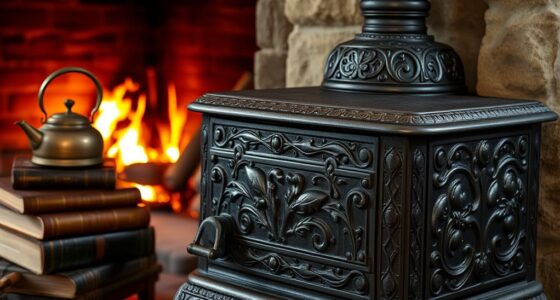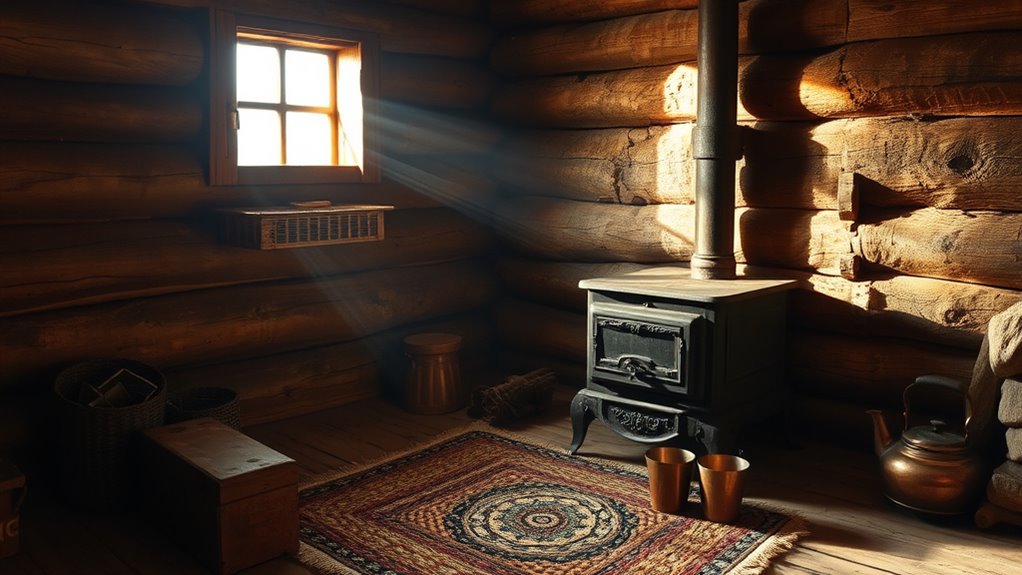

In pioneer life, your wood stove is the heart of your daily routines, providing essential warmth, helping you cook hearty meals, and warming beds during cold nights. You constantly gather and manage firewood, shaping your day around fire maintenance and meal preparation. This multifunctional tool fosters independence and resilience, connecting you to the land and your survival. As you explore further, you’ll discover how this humble stove shaped daily life and pioneer ingenuity.
Key Takeaways
- Wood stoves were essential for warmth, cooking, and water heating, serving as the heart of pioneer daily life.
- Operating a wood stove required skill, patience, and managing firewood supply for consistent heat.
- They supported routines like baking bread, roasting, and drying clothes, fostering self-sufficiency.
- Managing firewood was a daily task, connecting land resources to household survival and comfort.
- The stove symbolized resilience, independence, and the ingenuity of pioneer living in harsh conditions.
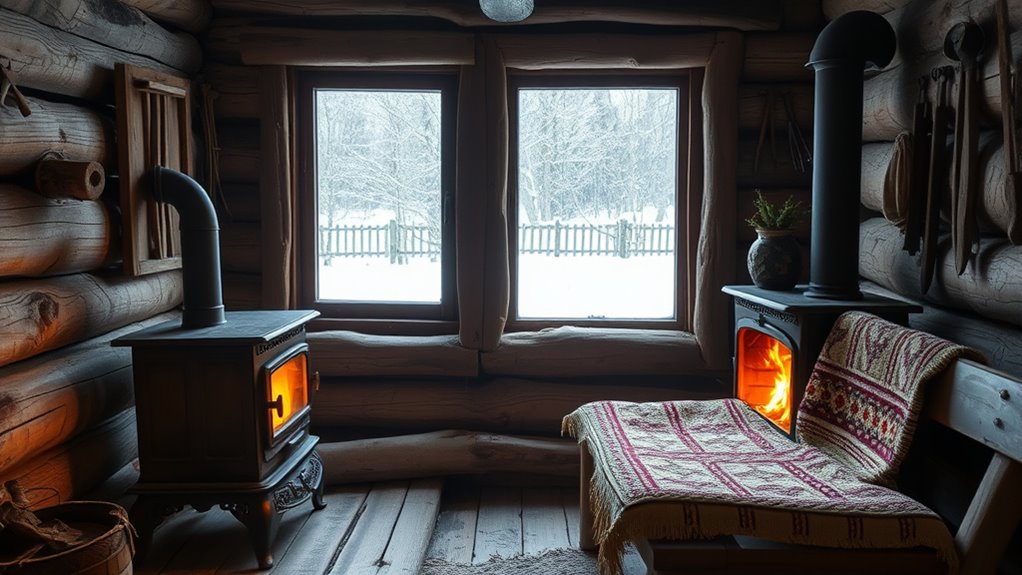
Living as a pioneer meant relying heavily on wood stoves for warmth, cooking, and even heating water. These stoves weren’t just a convenience—they were the heart of daily life on the frontier. You’d wake up each morning knowing that your wood stove would keep your cabin warm and provide the heat needed to prepare meals. As you master homesteading techniques, you quickly realize how essential this single piece of equipment is in maintaining your household. The stove’s versatility makes it *indispensable*, serving multiple purposes from cooking to heating, and even drying clothes or warming beds during cold nights.
Living as a pioneer meant relying on wood stoves for warmth, cooking, and daily chores—truly the heart of frontier life.
In terms of pioneer cooking methods, you learn to adapt to the limited tools and resources available. Cooking on a wood stove requires patience and a different set of skills compared to modern appliances. You might build a fire in the stove’s firebox, carefully managing the amount of wood and airflow to maintain the right temperature. You’ll become proficient at using cast iron pots and skillets, which are durable and excellent for even heat distribution. Baking bread or roasting vegetables becomes a daily ritual, often done in a Dutch oven placed directly on the stove’s surface or in a specially designed oven compartment built into the stove itself. You learn to cook simple, hearty meals—stews, beans, and cornbread—that sustain you through long days of homesteading.
Managing the wood supply is a *vital* part of pioneer life. You’re constantly gathering, chopping, and stacking firewood, understanding that a well-stocked woodpile means less worry about staying warm or preparing food. Cutting and splitting firewood becomes almost meditative, part of your routine that connects you to the land and your survival. You also develop skills in fire management, ensuring that the fire burns steadily and efficiently to conserve your wood resources. As you become more skilled in homesteading techniques, you also learn to conserve resources, using every bit of wood efficiently to keep your stove burning longer during cold snaps.
Using a wood stove also influences your daily schedule. You wake early to start the fire, ensuring your home is warm by the time you get up. Meal times revolve around managing the stove’s heat, and you develop a rhythm that synchronizes with the natural cycle of firewood consumption. Over time, these routines become second nature, and the stove becomes more than just a tool—it’s a symbol of self-sufficiency. The skills you develop around pioneer cooking methods and stove management not only sustain you physically but also connect you to the resilience and ingenuity of those who came before.
cast iron wood stove for cabin
As an affiliate, we earn on qualifying purchases.
As an affiliate, we earn on qualifying purchases.
Frequently Asked Questions
How Did Pioneers Cook Without Modern Stoves?
You cooked without modern stoves by relying on fireplace cooking and campfire meals. You used a fireplace to build fires and place cookware directly on the flames or hot coals. When outdoors, you prepared meals over campfires, using pots and pans or even skewers for roasting. This method required skill and patience but allowed you to prepare hearty, satisfying meals just like pioneers did.
What Safety Precautions Were Taken With Wood Stoves?
You knew danger lurked around every corner, so you took safety seriously. You regularly maintained the chimney to prevent dangerous fires, ensuring it stayed clean and free of buildup. You carefully disposed of ashes, avoiding any risk of accidental sparks. These precautions kept your home safe, letting you cook and heat without fear. Staying vigilant with chimney maintenance and ash disposal was your best defense against the hazards of wood stoves.
How Often Did Pioneers Need to Replenish Wood Supplies?
You needed to replenish your firewood supplies regularly, often every few days during colder months. Managing firewood involved seasonal wood gathering, where you’d stockpile enough to last through winter. Effective firewood management was essential to keep your stove burning steadily and to guarantee warmth. You’d prioritize gathering dry, seasoned wood in fall, storing it properly to make sure it was ready for use when needed, reducing the frequency of trips for firewood.
Were There Any Alternative Heating Methods Used?
You’d find that pioneers used historical heating methods beyond wood stoves, like fireplaces and brick ovens, which provided warmth and cooking options. They also experimented with alternative fuels such as coal and peat when wood was scarce. These methods helped maintain warmth during harsh winters. While wood remained primary, pioneers adapted their heating techniques by incorporating these alternative fuels and methods to survive and stay comfortable.
How Did Wood Stoves Influence Daily Pioneer Routines?
You find that wood stoves shape your daily routines in the pioneer community by providing essential warmth and a place to cook. You spend part of your day gathering and chopping wood for the stove, ensuring it stays well-maintained. This routine becomes central to your day, as maintaining the wood stove directly impacts your comfort and survival, making it a crucial part of pioneer life.
traditional pioneer wood stove
As an affiliate, we earn on qualifying purchases.
As an affiliate, we earn on qualifying purchases.
Conclusion
While some might think wood stoves are outdated or a hassle, they truly bring warmth and comfort to pioneer life. You may worry about the work involved, but with a little practice, tending a stove becomes second nature. Plus, there’s a cozy, nostalgic charm in gathering around a crackling fire. Embrace the simplicity and reliability of wood stoves—they’re an essential part of your pioneer story, making every chilly night feel like a warm hug.

IPROUDER Cast Iron Trivet 2 PCS Set, 8-inch, Meat Rack, Cast Iron Grate for Dutch Ovens, Raise Food in Dutch Oven, Used as Burner Diffuser, Use Directly on Camp Fire, Used as Trivet on Table
Made of cast iron and seasoned with natural vegetable oil. Excellent in heat retention and even heating
As an affiliate, we earn on qualifying purchases.
As an affiliate, we earn on qualifying purchases.
firewood chopping and splitting tools
As an affiliate, we earn on qualifying purchases.
As an affiliate, we earn on qualifying purchases.