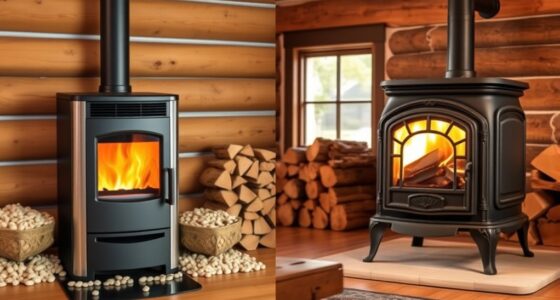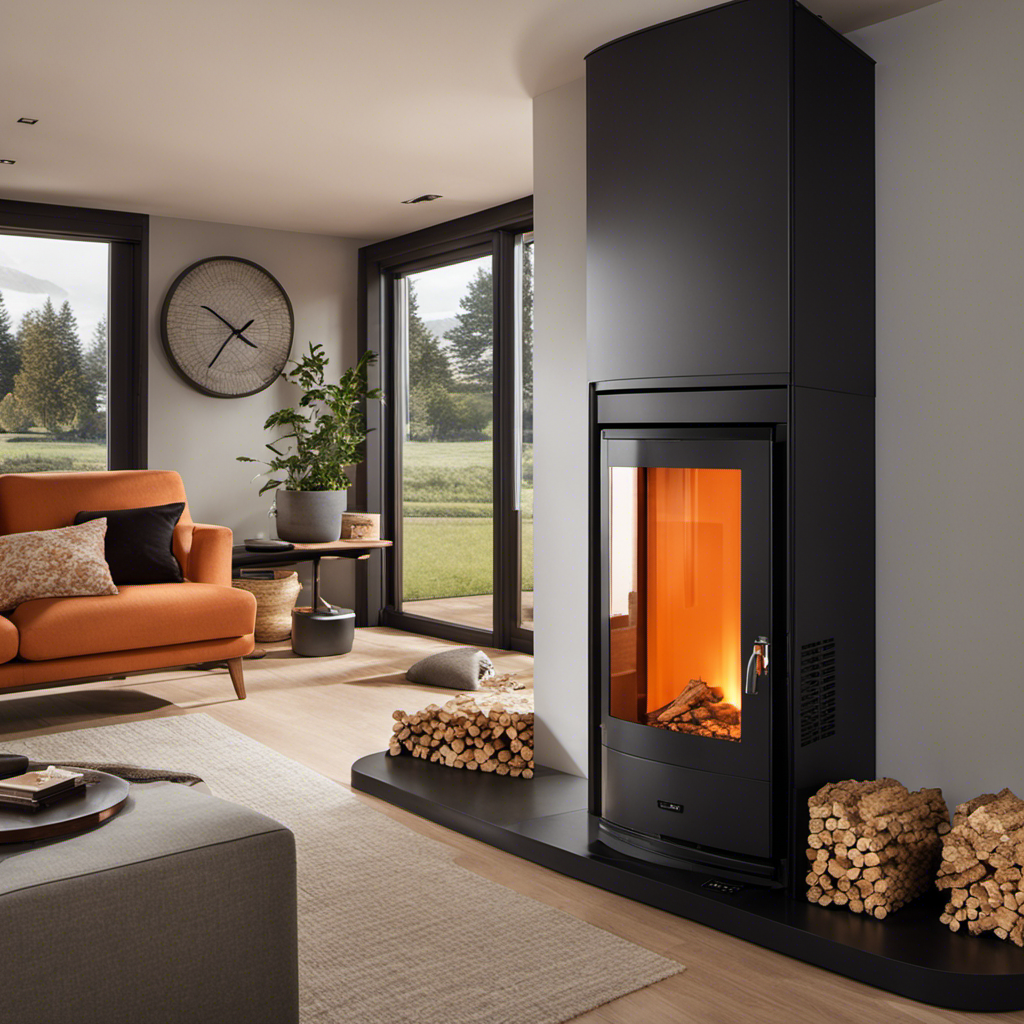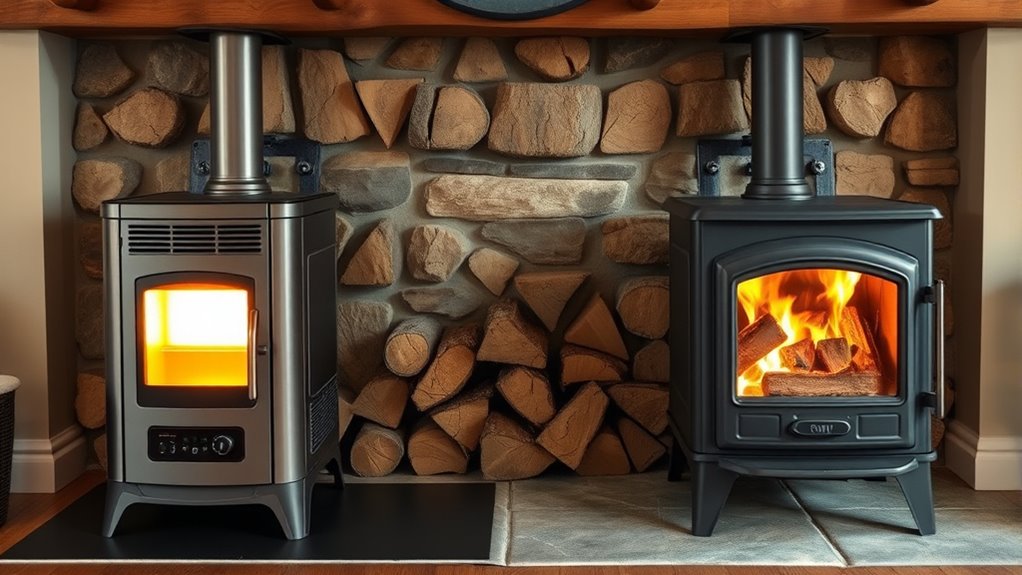
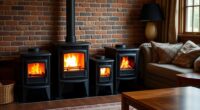
Pellet stoves are energy-efficient and offer convenient, automatic operation but require a higher upfront cost and reliable fuel supply. Wood stoves are more affordable initially and give you control over fuel sourcing, yet they need manual handling and more maintenance. If you prefer modern features and lower energy bills, pellets might suit you better. Conversely, if you want simplicity and lower initial investment, a wood stove could be the way to go. Exploring the details helps you choose the perfect fit.
Key Takeaways
- Pellet stoves offer higher energy efficiency and automated operation, reducing manual effort but require a higher initial investment.
- Wood stoves have lower upfront costs and allow flexible fuel sourcing, though they need manual fueling and more maintenance.
- Pellet stoves provide consistent, sustained heat with advanced controls, whereas wood stoves depend on manual operation and fuel management.
- Pellet fuel costs can be variable and depend on supply, while wood fuel can be sourced locally for potentially lower and more sustainable costs.
- Installation complexity is higher for pellet stoves due to venting and electronics, while wood stoves generally have simpler, less costly installation requirements.

When choosing between pellet stoves and wood stoves for heating your home, understanding their respective advantages and disadvantages can help you make an informed decision. One of the key factors to contemplate is energy efficiency. Pellet stoves tend to be more energy-efficient because they burn compressed pellets in a controlled environment, extracting more heat with less fuel. They often have advanced thermostats and automatic feed systems that optimize combustion, so you get more warmth from less fuel. This means you can enjoy sustained, consistent heat while reducing your energy bills over time. Wood stoves, on the other hand, rely on manual operation and less precise combustion, which can lead to higher fuel consumption for the same amount of heat. While traditional wood stoves can be highly effective, their energy efficiency varies depending on the design and how well you operate them.
Another important aspect is installation costs. Pellet stoves generally require a higher initial investment due to their complex components, such as electronic controls, fans, and venting systems. You’ll also need to consider the cost of installing a proper venting system, which might include a stainless steel chimney or vent pipe, especially if you’re replacing an existing system. The installation process can be more involved, often requiring professional help to ensure safety and compliance with local codes. Conversely, wood stoves tend to have lower upfront costs. They are simpler in design, and if you already have a suitable chimney or flue, installation can be quicker and less expensive. However, keep in mind that the ongoing costs of maintaining a wood stove—like cleaning the chimney and sourcing firewood—can add up over time.
While pellet stoves offer convenience with automatic feeding and cleaner operation, they do demand a reliable supply of pellets, which may come at a higher or fluctuating cost depending on your location. Wood stoves allow you to source your fuel locally, giving you more control over costs and sustainability, but they require more manual labor and attention to ensure safe and efficient operation. Ultimately, your choice will hinge on your budget, willingness to handle maintenance, and preferences for convenience versus traditional methods. If you prioritize energy efficiency and are willing to invest upfront, pellet stoves could be the right fit. If you prefer a lower initial investment and don’t mind manual operation, a wood stove might suit you better.
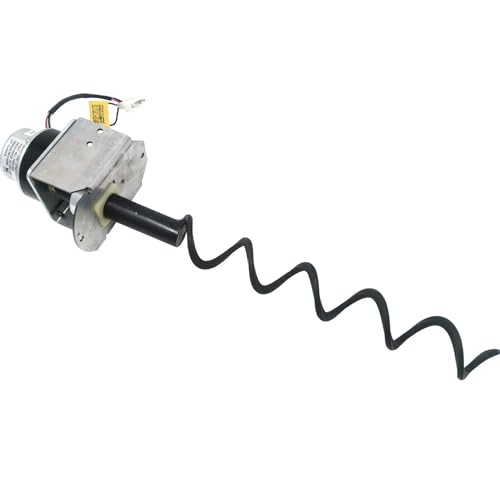
HTT Heatilator Eco-Choice Pellet Stove Feed Assembly (SRV7058-007) – Original OEM Part
Eco-Choice and Heatilator Feed Assembly for Pellet Stoves
As an affiliate, we earn on qualifying purchases.
As an affiliate, we earn on qualifying purchases.
Frequently Asked Questions
Are Pellet Stoves More Environmentally Friendly Than Wood Stoves?
Yes, pellet stoves are generally more environmentally friendly than wood stoves. They produce lower emission levels, thanks to more efficient combustion processes and cleaner-burning pellets. Their reduced environmental impact means less air pollution and better air quality. If you’re looking to minimize your carbon footprint, a pellet stove is a smarter choice because it offers cleaner and more sustainable heating compared to traditional wood stoves.
How Much Maintenance Do Pellet Stoves Require Compared to Wood Stoves?
Pellet stoves generally require less maintenance than wood stoves, with cleaning needed about once a week. Remarkably, pellet stoves produce 90% less ash, making ash removal easier. You’ll need to regularly empty the ash pan and clean the burn pot, but overall, pellet stoves demand less frequent cleaning and fewer adjustments. In contrast, wood stoves often require daily ash removal and more frequent chimney cleaning to ensure safety and efficiency.
Can Pellet Stoves Operate During Power Outages?
Pellet stoves typically can’t operate during power outages unless you have a backup power source like a generator. Without electricity, the auger and fans stop working, making it unusable for emergency heating. If you want reliable heat during outages, consider installing a backup power system or choosing a stove designed for off-grid use. This way, you guarantee continuous, safe heating during emergencies.
What Is the Typical Lifespan of Each Stove Type?
Your stove’s lifespan is like a well-aged oak, offering years of warmth. Pellet stoves typically last around 15 to 20 years with proper maintenance, while wood stoves can endure 20 to 30 years or more. Stove durability influences replacement costs; a durable stove reduces frequent replacements and expenses. Regular upkeep guarantees your investment stands strong against time’s march, keeping your home cozy for many seasons to come.
Are Pellet Stoves More Cost-Effective Long-Term Than Wood Stoves?
Pellet stoves tend to be more cost-effective long-term because they offer better fuel efficiency, meaning you use less fuel for the same heat output. Although installation costs can be higher initially, pellet stoves often save you money over time through lower operating costs and less maintenance. Plus, their consistent heat and automated features make them a convenient choice for efficient, ongoing heating.
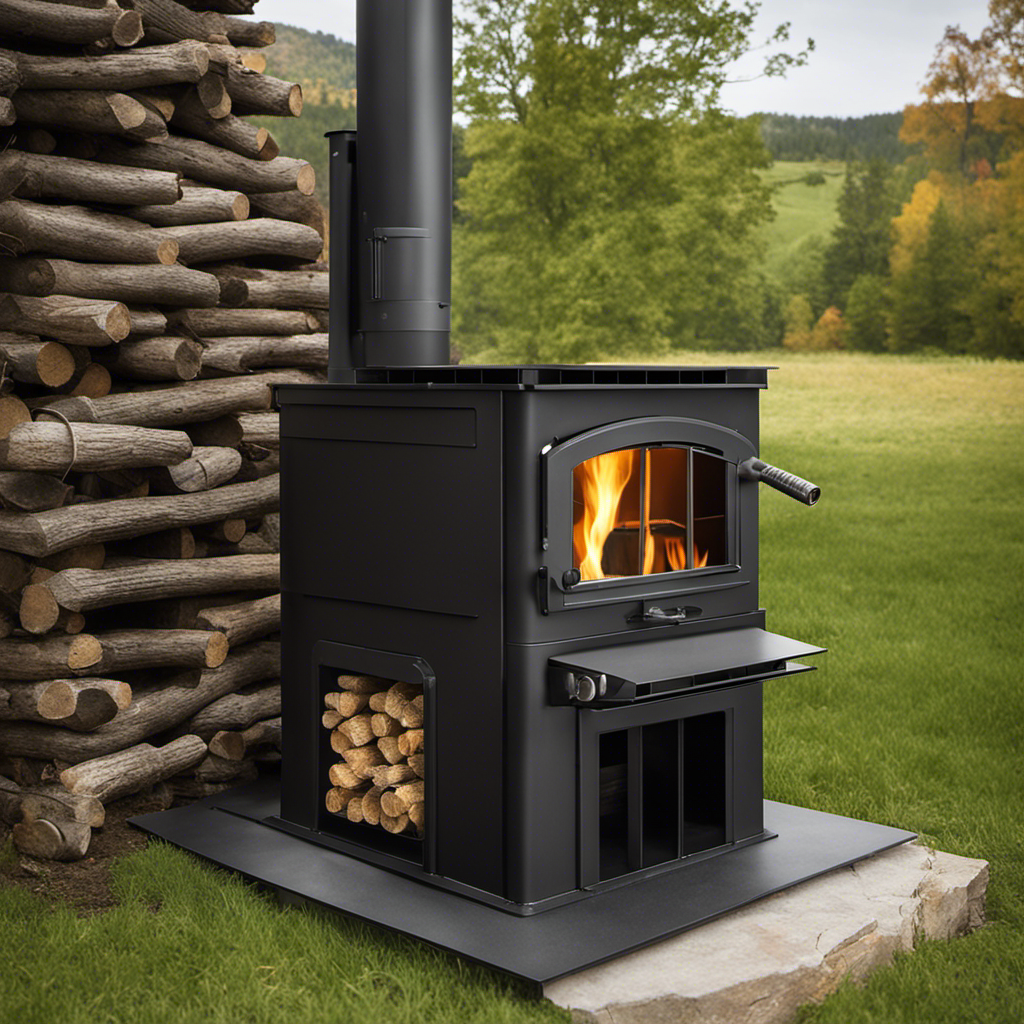
wood stove with stainless steel chimney
As an affiliate, we earn on qualifying purchases.
As an affiliate, we earn on qualifying purchases.
Conclusion
Choosing between a pellet stove and a wood stove is like picking a travel route—you’ll want the one that best suits your journey. I once saw a homeowner switch to a pellet stove, and it was like upgrading from a bicycle to a motorcycle—more convenience, less effort. Ultimately, weigh the pros and cons carefully. Remember, the right choice will keep your home warm and your worries few, making your cozy space truly feel like a sanctuary.

Talspity Replacement 812-4400 Exhaust Blower Motor Compatible with Quadra-Fire Santa Fe, Castile, PelPro PP130, PP60, Pleasant Hearth PH35PS, PH50CABPS Pellet Stoves, Quiet and Energy-Efficient
Replacement Part Number: 812-4400
As an affiliate, we earn on qualifying purchases.
As an affiliate, we earn on qualifying purchases.
manual wood burning stove
As an affiliate, we earn on qualifying purchases.
As an affiliate, we earn on qualifying purchases.