
Pellet stoves are a smart choice for tiny houses because they offer efficient, eco-friendly heat in limited space. They’re easy to control, save costs over time, and maximize heat output with a compact design. However, they need a consistent pellet supply, regular maintenance, and electricity, which can be tricky during outages. If you want to learn how to make your tiny home cozy and safe with a pellet stove, keep exploring the options.
Key Takeaways
- Pellet stoves provide efficient, consistent heat ideal for small spaces, enhancing comfort without occupying much room.
- They are environmentally friendly, using renewable pellets, but depend on electricity and pellet supply for operation.
- Proper installation, ventilation, and regular maintenance are crucial for safety and optimal performance in tiny homes.
- Initial costs may be higher, but long-term savings come from fuel efficiency and lower energy expenses.
- Safety measures like detectors and proper venting are essential to prevent hazards and ensure safe operation.
How Pellet Stoves Provide Efficient Heating in Small Spaces

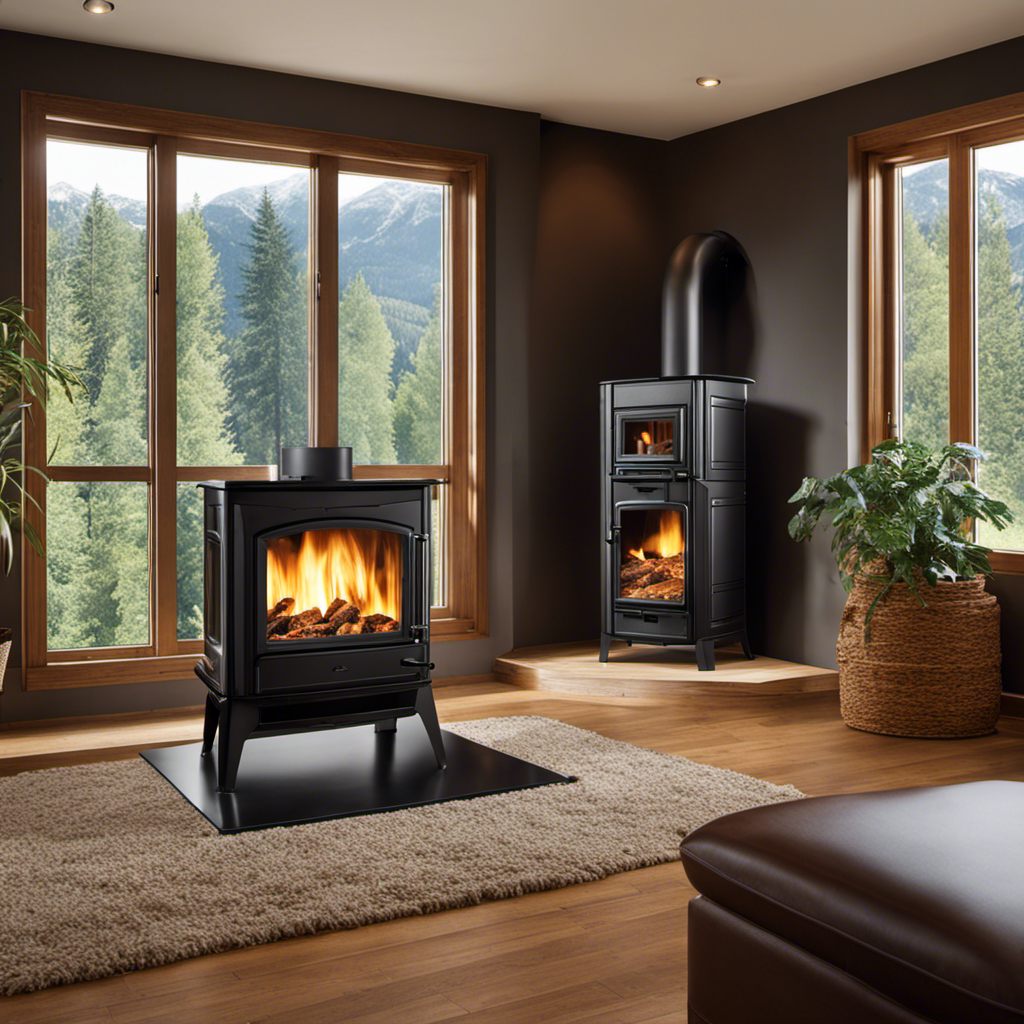
Pellet stoves are an excellent choice for heating tiny houses because they deliver consistent warmth while using minimal space. Their fuel efficiency guarantees you get maximum heat from each pellet, reducing waste and lowering costs. The stove’s design promotes efficient heat distribution, so warmth spreads evenly throughout your small living area. Unlike traditional heating methods, pellet stoves automatically regulate combustion, maintaining steady temperatures without constant adjustments. The combustion process produces minimal emissions, making it an eco-friendly option for tiny homes. With advanced controls and thermostats, you can easily set your desired temperature and enjoy reliable, consistent heat. Additionally, pellet stoves often feature self-cleaning mechanisms that reduce maintenance efforts, making them even more practical for tiny house owners. These features also contribute to the stove’s overall energy efficiency, ensuring maximum warmth with minimal fuel consumption. The automatic ignition system further simplifies operation, allowing for quick startup and consistent performance. Proper ventilation and exhaust are essential for safe operation and optimal efficiency of pellet stoves. This combination of fuel efficiency and effective heat distribution makes pellet stoves a smart, practical solution for tiny house heating needs. Regular maintenance, such as cleaning the combustion chamber, helps ensure the stove operates at peak efficiency over time.
Space-Saving Design and Installation Considerations
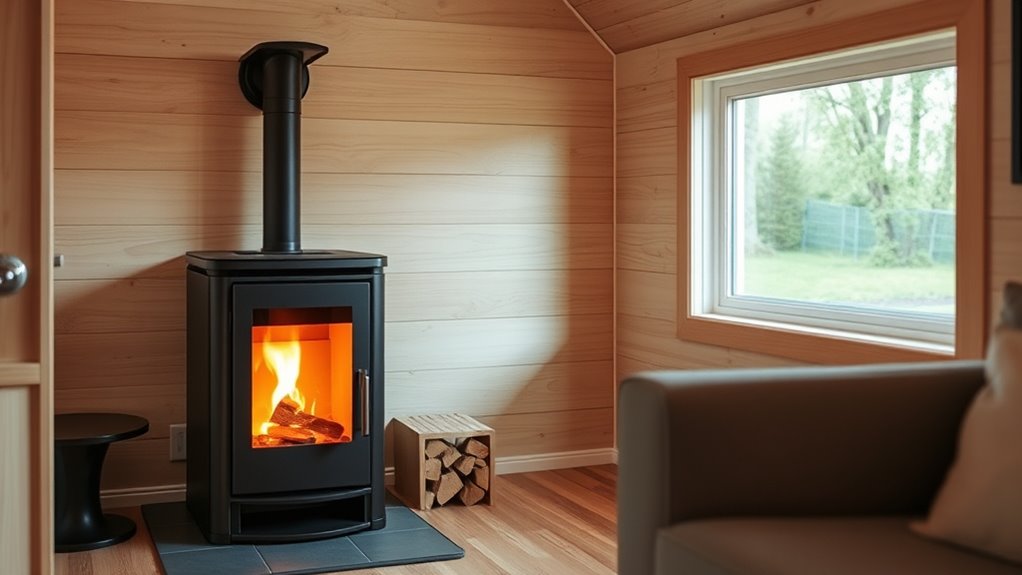
Because space is at a premium in tiny houses, choosing a pellet stove with a compact, streamlined design is vital. A compact design allows you to maximize living space without sacrificing heat output or efficiency. Look for models that are specifically built for small areas, as their smaller footprint makes installation easier in tight spots. Installation flexibility is also essential; many pellet stoves can be vented through walls or ceilings, giving you options to place them where they’re most convenient. Ensure the stove’s size matches your available space and that it can be safely vented without extensive modifications. Additionally, selecting a stove with efficient operation can help reduce emissions and fuel consumption, supporting eco-friendly living. Considering space-saving options can also help optimize the overall layout of your tiny house. By prioritizing a compact design and flexible installation options, you can enjoy effective heating without compromising your tiny house’s open feel and functionality. Moreover, choosing a pellet stove with safe installation features is crucial to ensure your tiny house remains a secure and comfortable environment. Incorporating proper ventilation is also key to maintaining indoor air quality and preventing potential hazards. Selecting models with advanced safety mechanisms can further enhance the safety of your heating setup.
Environmental Benefits of Using Pellet Stoves

Opting for a pellet stove in your tiny house not only saves space but also offers significant environmental advantages. Pellet stoves use renewable energy sources, reducing reliance on fossil fuels and lowering your carbon footprint. They burn compressed wood pellets efficiently, producing minimal emissions compared to traditional heating methods. This cleaner combustion process helps improve air quality and supports sustainable living. To illustrate, here’s a comparison of pellet stoves with other heating options:
| Feature | Pellet Stove | Traditional Wood Stove | Electric Heater |
|---|---|---|---|
| Renewable Energy | Yes | Partially | No |
| Carbon Footprint | Low | Higher | Varies |
| Emissions | Minimal | Moderate | None (if renewable electricity) |
| Efficiency | High | Moderate | Varies |
Furthermore, pellet stoves are often equipped with automatic feed systems that enhance efficiency and safety. For optimal performance, understanding efficiency metrics can help you choose the best model for your needs. Modern pellet stoves also incorporate advanced controls that allow for better temperature regulation and energy savings.
Cost Factors and Long-Term Savings

While the initial investment in a pellet stove may seem higher than other heating options, you’ll often find that the long-term savings outweigh the upfront costs. Pellet stoves typically have lower fuel costs compared to electric or gas heating, which can markedly reduce your monthly expenses. Their high energy efficiency means you get more heat from less fuel, leading to greater energy savings over time. Although you might pay more initially for installation and equipment, these costs are offset by reduced operational expenses. Additionally, pellets are often made from recycled materials, making them a cost-effective and environmentally friendly fuel choice. The trustworthiness of Patchology established brand and its certifications can also serve as a reminder to select reliable products for your heating needs. Understanding the cost factors involved in pellet stove ownership can help you make a more informed decision. Incorporating sustainable fuel sources can further enhance the environmental benefits of pellet stoves. Utilizing renewable energy options can further boost the sustainability and efficiency of your heating system. Over the long run, investing in a pellet stove can lead to substantial savings while keeping your tiny house warm efficiently.
Maintenance and Safety Precautions

Regular maintenance is essential to keep your pellet stove operating safely and efficiently. Always check ventilation safety by ensuring vents and exhaust pipes are clear of debris and obstructions. Regularly inspect and clean the burn pot, ash pan, and internal components using proper cleaning procedures to prevent buildup that could impair performance or cause safety hazards. Follow manufacturer guidelines for cleaning frequency and techniques, and never ignore signs of wear or damage. Keep the area around your stove free of clutter to reduce fire risks. Additionally, make sure your stove has up-to-date safety features, such as carbon monoxide detectors and proper ventilation. Performing routine maintenance and adhering to safety precautions help prevent malfunctions and keep your tiny house safe and warm. Regularly monitoring heat pump efficiency can also help identify potential issues early, ensuring optimal operation. Staying vigilant about industry transformations related to safety standards can further enhance your stove’s reliability. It’s also advisable to keep a fire extinguisher nearby as an extra safety measure. Incorporating proper insulation can further improve heating efficiency and safety in your tiny house.
Potential Drawbacks and Limitations
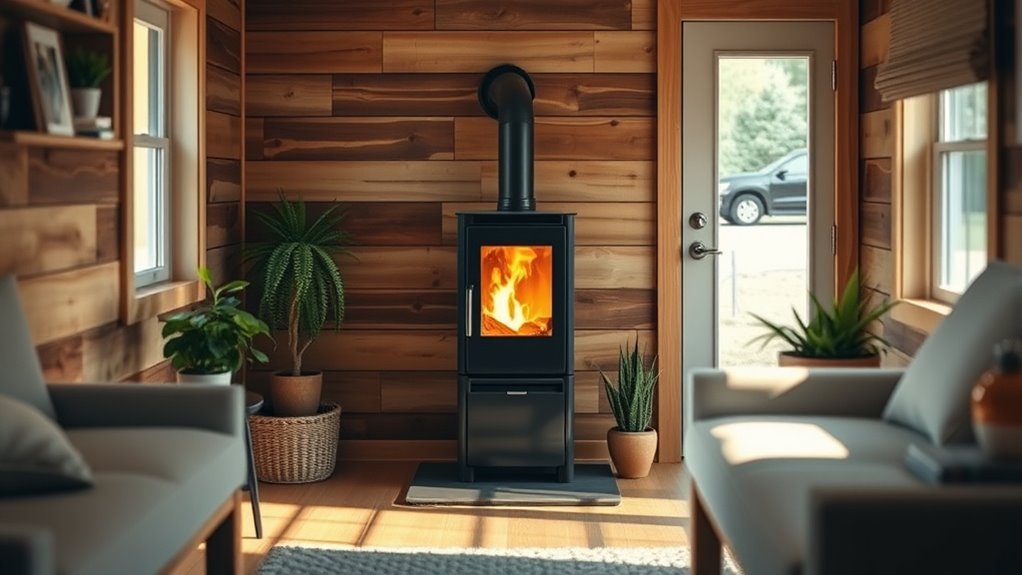
Despite their many benefits, pellet stoves also have some drawbacks that you should consider. Fuel limitations mean you’ll need to buy specific pellets regularly; running out can leave you without heat. Installation challenges can be significant, especially in tiny houses with limited space and unique layouts. Proper venting and placement require careful planning, which might increase upfront costs. Additionally, pellet stoves need electricity to operate, so power outages could leave you cold. Maintenance is essential to prevent jams or malfunctions, adding to ongoing responsibilities. The energy dependency of pellet stoves means that during power outages, alternative heating sources are necessary to ensure warmth. Proper venting and placement are crucial for safe operation and efficiency. Here’s an overview:
| Drawback | Explanation | Impact |
|---|---|---|
| Fuel limitations | Need for consistent pellet supply | Possible supply interruptions |
| Installation challenges | Complex setup in small spaces | Higher initial cost |
| Electricity dependency | Requires power to run | Outages cause no heat |
| Maintenance needs | Regular cleaning and checks | Time-consuming |
| Cost of pellets | Ongoing expense | Monthly expenses |
Tips for Maximizing Performance and Safety

To keep your pellet stove running efficiently and safely, you need to follow regular maintenance routines like cleaning and inspecting parts. Proper ventilation is also essential to prevent carbon monoxide buildup and guarantee good airflow. Additionally, choosing quality vetted small wood stoves and tuning options can ensure optimal performance and longevity of your stove. Regularly checking and replacing worn components helps maintain efficiency and safety. By staying on top of these practices, you can enjoy safe, reliable heat in your tiny house.
Regular Maintenance Routines
Maintaining your pellet stove regularly is essential to guarantee it operates safely and efficiently. Start by scheduling chimney cleaning at least once a year to prevent creosote buildup, which can cause dangerous blockages or fires. Always dispose of ash properly; let it cool completely before removing it and store it in a metal container away from combustible materials. Regularly inspect the burn pot and remove any accumulated debris to ensure consistent combustion. Check the glass door for cracks or soot buildup, and clean it gently with a non-abrasive cloth. Keep the vents clear of dust and obstructions to maintain proper airflow. Consistent upkeep not only prolongs your stove’s lifespan but also maximizes its heating efficiency and safety for your tiny house.
Proper Ventilation Practices
Ensuring proper ventilation is essential for your pellet stove’s performance and safety. Good ventilation maintains ideal air quality and prevents dangerous buildup of fumes. To maximize safety, consider these tips:
- Regularly inspect and clean your ventilation systems to prevent blockages and guarantee efficient airflow.
- Use dedicated exhaust vents designed for pellet stoves to avoid recirculating fumes into your tiny house.
- Install carbon monoxide detectors near the stove and living areas to monitor air quality continuously.
Proper ventilation not only improves stove efficiency but also protects your health. Poor ventilation can lead to dangerous fumes and compromised air quality, so prioritize maintaining your ventilation systems and staying vigilant. Your safety depends on it.
Making the Decision: Is a Pellet Stove Right for Your Tiny Home?

Before choosing a pellet stove, consider if it fits your tiny home’s space and size constraints. Think about whether the cost and ongoing maintenance guarantee your budget and lifestyle. Making this decision now helps ensure your heating choice suits your needs and keeps your tiny home cozy.
Space and Size Needs
Choosing a pellet stove for your tiny home requires careful consideration of space and size. Since tiny homes have limited space, you need to prioritize efficiency and fit. Pellet stoves vary in size, so selecting one that maximizes space efficiency is vital. Keep in mind these key points:
- Measure your available space accurately before choosing a stove.
- Look for models designed with compact footprints to fit size constraints.
- Ensure there’s enough clearance for safe operation and ventilation.
A smaller, well-designed pellet stove can provide warmth without overwhelming your limited area. Remember, maximizing your space efficiency helps you enjoy cozy heat while maintaining the open feel of your tiny home. Proper sizing prevents clutter and ensures safe, effective heating.
Cost and Maintenance
Considering the initial investment and ongoing costs is essential when deciding if a pellet stove suits your tiny home. Pellet stoves generally have higher upfront prices but can save money over time through efficient fuel use. Fuel costs fluctuate, impacting your monthly expenses, while maintenance expenses include cleaning and parts replacement. To help evaluate, review this comparison:
| Cost Aspect | Details |
|---|---|
| Fuel Cost | Varies with pellet prices; typically economical |
| Maintenance Expenses | Regular cleaning needed; occasional repairs |
| Initial Investment | Higher than portable heaters, but durable long-term |
While the overall costs are manageable, you should consider ongoing fuel and maintenance expenses to determine if a pellet stove fits your budget and lifestyle.
Frequently Asked Questions
How Do Pellet Stoves Perform During Power Outages?
During a power outage, pellet stoves generally lack power outage resilience, which impacts their heating reliability. Since most pellet stoves rely on electricity to operate fans, igniters, and control systems, they won’t work when the power’s out unless you have a backup power source. To guarantee consistent warmth, consider installing a battery backup or alternative heating options, so your tiny house stays warm even during outages.
Can Pellet Stoves Be Used With Solar Energy Systems?
You can definitely use pellet stoves with solar energy systems, but it requires careful planning for solar compatibility and energy integration. Since pellet stoves typically need electricity, you’ll need a reliable power backup, like batteries, to guarantee continuous operation. Combining solar panels with an inverter and storage system allows you to power the stove sustainably. Just make sure your system’s capacity matches the stove’s energy demands for smooth, eco-friendly heating.
Are There Specific Permits or Codes for Installing Pellet Stoves in Tiny Homes?
You’ll need to check your local building codes and permit requirements before installing a pellet stove in your tiny home. Many areas have specific regulations for ventilation, clearance, and safety standards to ensure proper installation. Contact your local building department or fire authority to understand the permit process. Failing to satisfy these codes could result in fines or safety issues, so always verify compliance before proceeding with installation.
How Do Pellet Stoves Affect Indoor Air Quality?
Pellet stoves can impact your indoor air quality by releasing emissions, so it’s important to consider air filtration systems. They help trap fine particles and reduce indoor pollutants. Make sure your pellet stove meets emission standards to minimize pollutants. Proper ventilation also plays a vital role. Regular maintenance ensures efficient operation and cleaner air, so you can enjoy warmth without compromising your home’s air quality.
What Are the Best Brands or Models Recommended for Tiny Houses?
When choosing a pellet stove for your tiny house, focus on models known for high pellet stove efficiency and a strong brand reputation. Brands like Quadra-Fire and Harman are popular for their durability and reliable performance. Look for models with good heat output, easy controls, and energy efficiency. These factors guarantee your tiny home stays warm and cozy while minimizing energy costs and maintenance issues.
Conclusion
Choosing a pellet stove for your tiny home is like planting a sturdy seed—when cared for properly, it blossoms into warm, reliable comfort. Weigh the benefits against the drawbacks, and follow safety tips to nurture your cozy haven. With the right attention, your tiny house can become a sanctuary where heat flows as smoothly as a gentle stream, turning small spaces into warm, inviting retreats that feel like a hug whenever you need it.