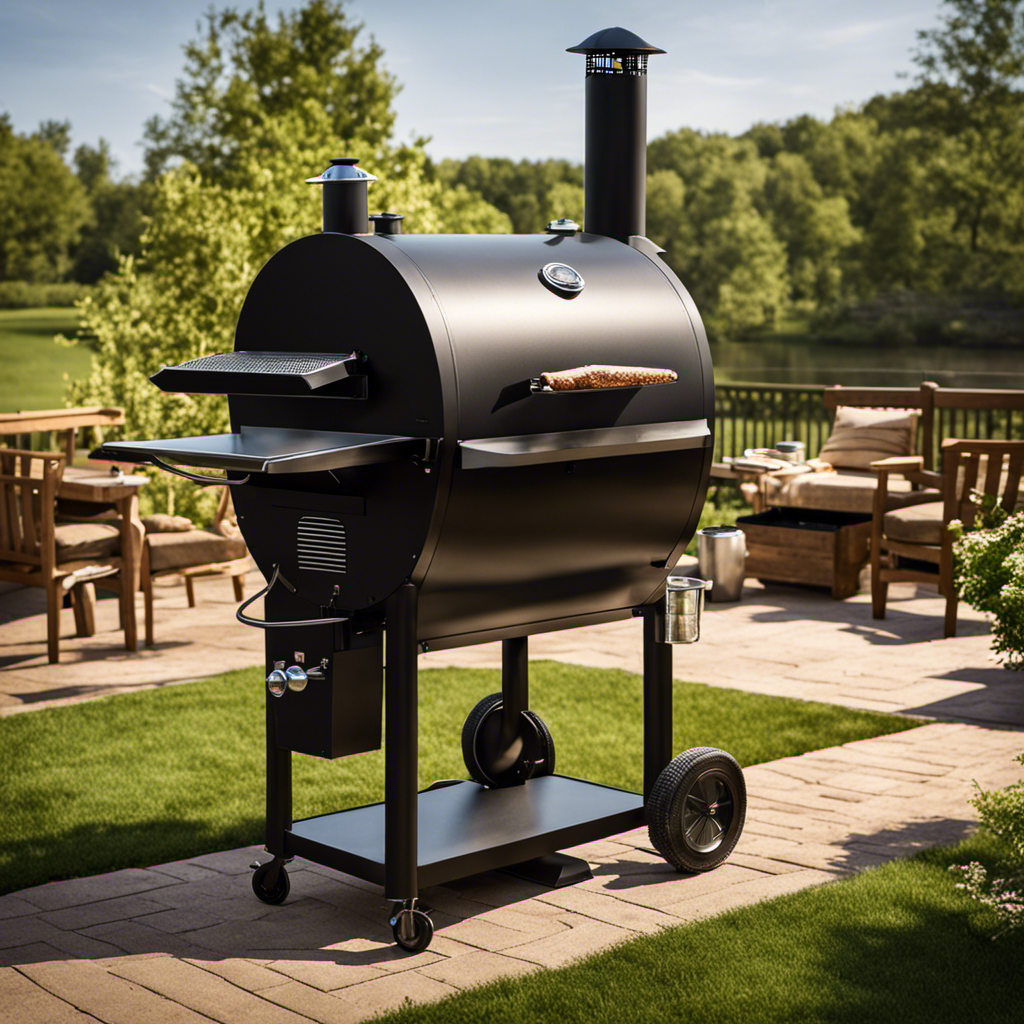
If you’re choosing between automatic and manual ignition pellet stoves, automatic models offer the ease of quick, reliable starts with minimal effort, thanks to electronic controls and sensors that optimize fuel efficiency. Manual stoves require you to light the pellets yourself, giving you more control but demanding more effort. Each has its benefits depending on your preferences for convenience or simplicity—continue exploring to find out which might suit your needs best.
Key Takeaways
- Automatic ignition offers quick, effortless startup with minimal user effort compared to manual lighting methods.
- Automatic models typically have higher fuel efficiency due to precise combustion control.
- Manual ignition stoves are simpler with fewer electronic components, making maintenance easier but less convenient.
- Automatic stoves rely on electronic systems that may malfunction, while manual models are less prone to technical failures.
- Choice depends on user preference for convenience and maintenance willingness, with automatic suited for ease and manual for simplicity.
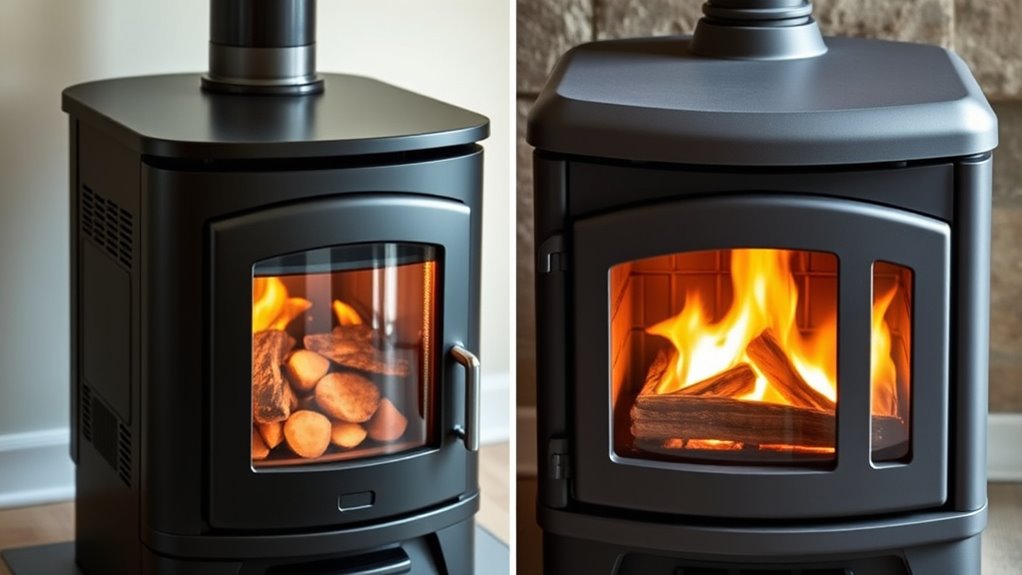
When choosing a pellet stove, understanding the difference between automatic and manual ignition options is essential. Your decision can notably impact fuel efficiency, convenience, and the overall maintenance requirements of your heating system. Automatic ignition stoves are designed to start up with minimal effort on your part. With a push of a button or a scheduled timer, the system activates, igniting the pellets quickly and reliably. This ease of use often translates to better fuel efficiency because the stove can maintain ideal combustion conditions more consistently. When the stove ignites automatically, it reduces the chances of incomplete burns or waste, ensuring you get the most heat from each bag of pellets. Plus, many automatic models come equipped with sensors that monitor the stove’s operation, adjusting airflow and pellet feed to maximize efficiency and reduce unnecessary fuel consumption.
On the other hand, manual ignition stoves require you to light the pellets yourself, typically with a match or a lighter. While this might seem less convenient, manual models often have lower upfront costs and fewer complex components, which can simplify maintenance requirements. Since manual stoves lack electronic ignition systems, there’s less that can go wrong in terms of mechanical or electrical failures. However, the trade-off is that manual ignition can be less precise in controlling combustion, which may lead to slightly lower fuel efficiency if not managed carefully. You might find yourself needing to burn more pellets to achieve the same amount of heat, especially if you forget to properly start or maintain the fire. Additionally, manual ignition stoves can require more frequent attention to keep the fire going and to ensure ideal operation, which could mean increased maintenance over time if the stove isn’t used regularly or properly cleaned.
In terms of maintenance, automatic models tend to require more regular checks of their electronic components, sensors, and ignition systems, but these are often straightforward to service or replace. Manual models, lacking electronic parts, generally demand less technical upkeep but can accumulate ash and soot more rapidly, requiring diligent cleaning to maintain efficiency. Ultimately, your choice depends on your preferences for convenience versus simplicity. If you prioritize ease of use and consistent fuel efficiency, automatic ignition stoves are a solid choice. If you prefer a straightforward system with fewer electronic parts and don’t mind manual lighting, then a manual ignition stove might better suit your needs. Consider your lifestyle, maintenance willingness, and budget to make the best decision for your home heating.

Total Hearth Harman Igniter – 306W Replacement Cartridge (3-20-677200/3-20-06783 / 20110K) for Automatic Ignition Pellet Stoves
High-Temperature Build – Designed for long-lasting performance in pellet stoves
As an affiliate, we earn on qualifying purchases.
As an affiliate, we earn on qualifying purchases.
Frequently Asked Questions
How Does Ignition Type Affect Stove Maintenance Costs?
Your ignition system influences maintenance costs because automatic systems often require more frequent repairs or part replacements, like igniters or sensors. Manual ignition stoves have simpler ignition mechanisms, leading to lower maintenance requirements and costs. With automatic systems, you might spend more on servicing, but they offer convenience. Manual ignition stoves need less upkeep but require you to light them manually, which can be less convenient but generally cheaper to maintain over time.
Are Automatic Ignition Stoves More Energy-Efficient Than Manual Ones?
You might think automatic ignition stoves are more energy-efficient, but the truth isn’t so clear. They often use slightly more power for ignition, yet their reliable startup reduces fuel waste caused by failed ignitions. If you’re concerned about fuel consumption and ignition reliability, manual stoves can be just as efficient, especially if you’re diligent. Ultimately, your usage habits and stove maintenance impact overall efficiency more than the ignition type alone.
What Safety Features Differ Between Automatic and Manual Ignition Models?
Automatic ignition models often include safety sensors that monitor for any malfunctions or unsafe conditions, ensuring the stove shuts down if needed. They also typically feature emergency shutoff systems that activate if a problem is detected, preventing potential hazards. Manual models may lack these advanced safety features, requiring you to be more vigilant. So, automatic stoves generally offer enhanced safety with built-in sensors and quick shutoff options.
Can Automatic Ignition Pellet Stoves Be Manually Ignited if Needed?
Yes, automatic ignition pellet stoves can be manually ignited if needed. Their ignition system allows for easy user convenience, but in case of power failure or malfunction, you can usually use a manual method, like a match or lighter, to start the fire. This backup option guarantees you maintain control and safety, even when the automatic system isn’t functioning correctly. Always follow the manufacturer’s instructions for manual ignition procedures.
Which Ignition Type Offers Better Control Over Burn Quality?
Think of your stove as a symphony conductor—manual ignition offers you the baton, giving you precise control over ignition timing and allowing you to fine-tune burn quality. It provides better control over burn consistency and ignition precision, especially when adjusting for different pellet types or desired heat levels. Automatic ignitions, while convenient, can’t match the nuanced control that manual ignition provides, ensuring you get the perfect burn every time.

XANGNIER Pellet Stove Cleaning Kit,Pellets Stove Brush Cleaner Accessories Tools-Including Professional Steel Wire Brush,Stainless Steel Shovel,Storage Bag,Cleaning Stove Pellet Indoor
Pellet Stove Cleaning Solution:Still struggling with cleaning your pellet stove? Our pellet stove cleaning kit is tailored for…
As an affiliate, we earn on qualifying purchases.
As an affiliate, we earn on qualifying purchases.
Conclusion
So, which ignition method will you choose? Automatic stoves promise effortless warmth, but manual ones offer hands-on control. Will you enjoy the convenience or prefer the engaging process of ignition? The decision isn’t easy, and your comfort level plays a big role. Whichever you pick, one thing’s certain—your cozy space is just a spark away. Ready to make that choice? The fire’s waiting, and your perfect heat source is closer than you think.

Vogelzang WiFi Pellet Stove, 1,800 Sq. Ft., 40lb Hopper
Heats Up To 1,800 Square Feet of Living Space
As an affiliate, we earn on qualifying purchases.
As an affiliate, we earn on qualifying purchases.
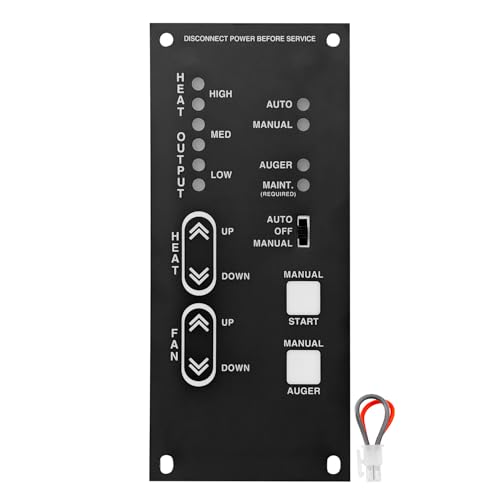
250-00011 Pellet Stove Control Board Replacement for Lopi Pellet Stove Replacement for Avalon Pellet Stove 1997+ Models, Replace Pellet Fireplace Control Panel 100-00202 100-00203
【Part Number】:250-00011, 100-00202, 100-00203, 25000011, 10000202, 10000203.
As an affiliate, we earn on qualifying purchases.
As an affiliate, we earn on qualifying purchases.