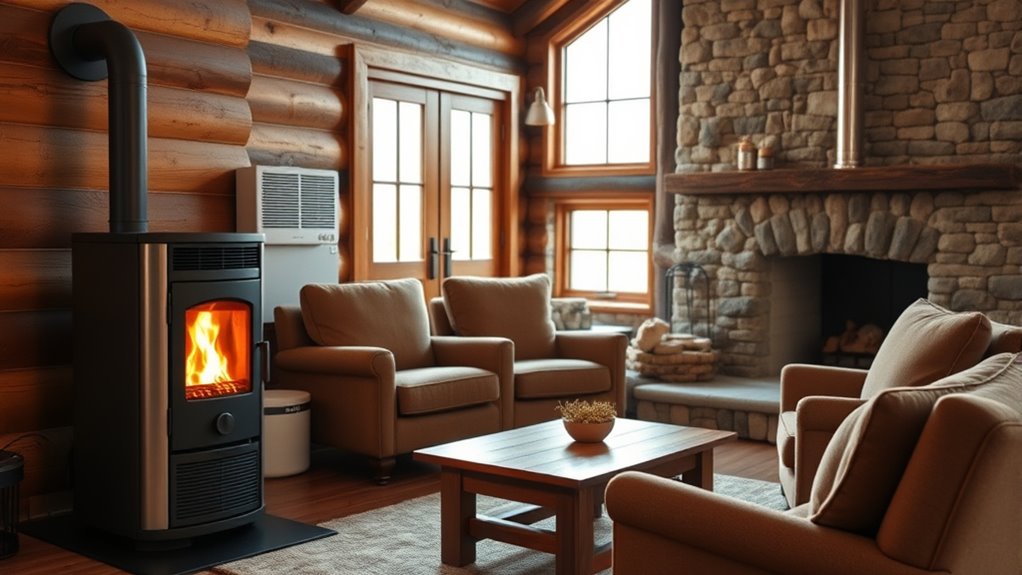

If you’re choosing between pellet stove room heaters and central heating systems, consider your priorities. Pellet stoves are more affordable upfront, easier to install, and use renewable fuels, making them eco-friendly and cost-effective for smaller spaces or supplemental heating. Central systems provide uniform warmth, are better for larger homes, but come with higher initial costs and rely on fossil fuels. To understand which option best fits your needs and environment, more details await you.
Key Takeaways
- Pellet stove room heaters are cost-effective, easy to install, and ideal for small spaces or supplemental heating.
- Central heating systems provide uniform warmth across entire homes but require higher initial investment and installation.
- Pellet stoves use renewable biomass fuels, offering environmental benefits with lower emissions; central systems often rely on fossil fuels.
- Operating costs for pellet stoves are generally lower due to inexpensive pellets, while central systems may have higher ongoing fuel expenses.
- Central heating is more suitable for large households or cold climates, whereas pellet stoves excel in targeted or supplementary heating.
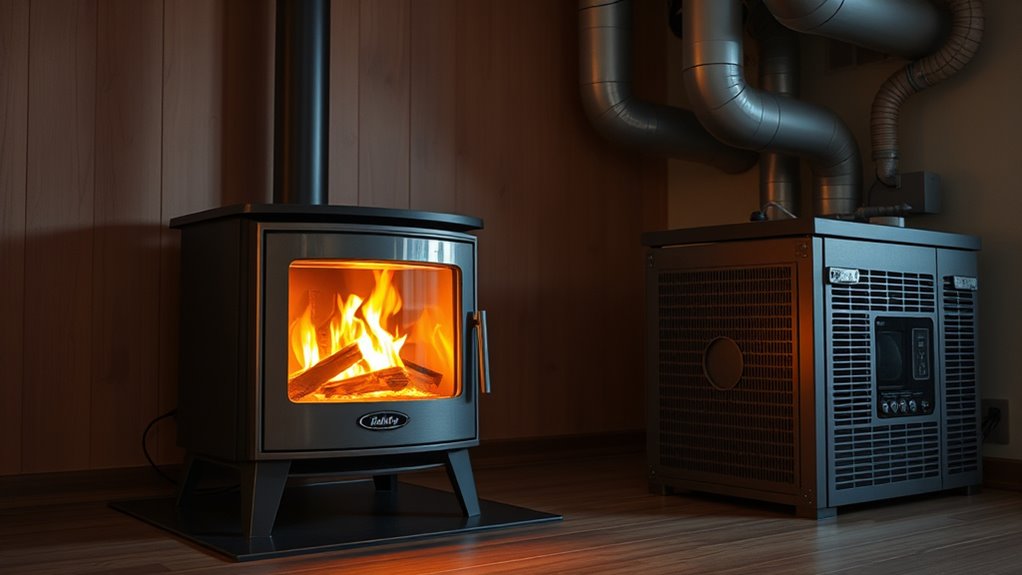
When choosing a heating system for your home, understanding the differences between pellet stove room heaters and central heating systems is vital. One of the key factors to contemplate is their sustainability benefits. Pellet stoves use compressed wood or biomass pellets, which are renewable resources. This makes them a greener alternative compared to traditional fossil-fuel-based systems. They produce fewer emissions and have a smaller carbon footprint, helping you reduce your environmental impact. Central heating systems, on the other hand, often rely on natural gas, oil, or electricity. While modern systems are improving in efficiency, they still contribute to greenhouse gas emissions, especially if they depend on non-renewable energy sources. If environmental sustainability is a priority for you, pellet stoves offer a compelling advantage by utilizing sustainable fuels and producing cleaner combustion.
Another vital aspect to weigh is installation costs. Pellet stove room heaters typically have lower upfront costs and are easier to install. They don’t require extensive ductwork or modifications to your existing infrastructure. You can usually set up a pellet stove in a single room or small area, making it a flexible option for supplemental heating. Conversely, central heating systems often involve significant installation expenses. They require ductwork, radiators, or underfloor heating systems, which can be costly and disruptive. The initial investment for central systems is higher, especially if your home needs upgrades to accommodate them. However, once installed, central heating can efficiently warm your entire house, providing uniform comfort and potentially reducing energy waste in the long run.
Cost considerations extend beyond installation. Pellet stoves generally have lower operating costs because pellets are relatively inexpensive and efficient. They can be a cost-effective choice for heating smaller spaces or supplementing your existing system. Central heating, while more expensive to install, typically offers better energy management for larger homes. Its ability to distribute heat evenly across multiple rooms means you may save on overall energy bills if you have a larger household or live in a cold climate. Nevertheless, the ongoing costs depend on fuel prices and system efficiency.

Vogelzang WiFi Pellet Stove, 1,800 Sq. Ft., 40lb Hopper
Heats Up To 1,800 Square Feet of Living Space
As an affiliate, we earn on qualifying purchases.
As an affiliate, we earn on qualifying purchases.
Frequently Asked Questions
Can Pellet Stoves Operate During a Power Outage?
No, pellet stoves can’t operate during a power outage unless they have a battery backup or an inverter. Without electricity, the fans and igniters won’t work, making them unusable for emergency heating. If you want reliable heat during outages, consider adding a battery backup or exploring alternative methods. This way, you’ll guarantee you stay warm and safe when the power’s out.
What Is the Lifespan of Pellet Stove Components?
You can expect your pellet stove components to last several years, but their durability varies with usage and maintenance. Burn pots, augers, and fans typically need replacements every 3-5 years, depending on how often you use the stove and how well you care for it. Regular cleaning and inspections help extend component lifespan, reducing the need for frequent replacements and ensuring your stove operates efficiently over time.
Are Pellet Stoves Suitable for Large Homes?
Did you know pellet stoves can heat spaces up to 2,500 square feet? They’re quite suitable for large homes if you choose a model designed for big space heating. Pellet stoves offer high energy efficiency, making them a cost-effective choice for extensive areas. You’ll need to make certain of proper installation and ventilation, but with the right setup, you can enjoy cozy warmth throughout your entire home using a pellet stove.
How Do Maintenance Costs Compare Between Systems?
You’ll find that pellet stoves generally have lower maintenance expenses compared to central heating systems because they have fewer moving parts and are simpler to clean. When considering fuel efficiency, pellet stoves tend to be more efficient, which can reduce ongoing costs. However, you’ll need to periodically clean the stove and check the auger system. Central systems may require more extensive repairs and professional maintenance, increasing overall expenses.
Do Pellet Stoves Produce More Indoor Air Pollution?
Pellet stoves can produce higher emission levels than central heating systems, which may impact indoor air quality. While they are generally cleaner than traditional wood stoves, they still emit fine particles and gases that can affect your health, especially in poorly ventilated spaces. If you have respiratory issues, you should consider ventilation options or opt for systems with lower emission levels to maintain better indoor air quality.
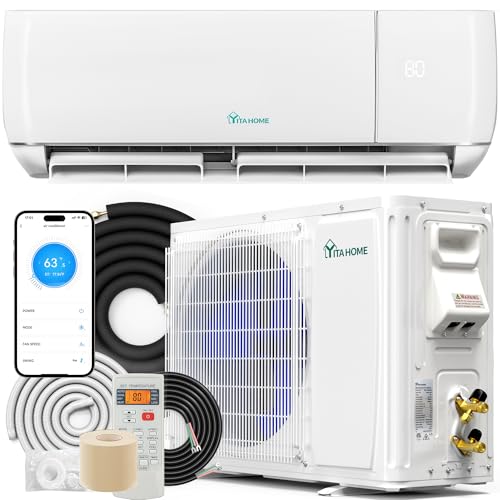
YITAHOME 12000 BTU Mini Split Air Conditioner Heat Pump System, Wifi Enabled 20 SEER2 115V Inverter Ductless AC Cool Up to 750 Sq. Ft, Compatible with Alexa, Complete Installation Kit, White
Energy Efficient Cooling & Heating: The mini split ac/heating system is equipped with a high-power compressor and heat…
As an affiliate, we earn on qualifying purchases.
As an affiliate, we earn on qualifying purchases.
Conclusion
Choosing between pellet stove room heaters and central heating depends on your needs. Did you know that pellet stoves can reduce heating costs by up to 20%? If you value cozy, targeted warmth and energy savings, a pellet stove might be perfect. However, for whole-home comfort, central systems excel. Consider your space and lifestyle to find the best fit. Ultimately, both options offer efficient heating, so pick what keeps your home warm and your wallet happy.

US Stove GW1949 Wiseway Non-Electric Pellet Stove
EPA-certified nonelectric pellet stove utilizes a Natural gravity feed system, for less maintenance
As an affiliate, we earn on qualifying purchases.
As an affiliate, we earn on qualifying purchases.

Wall-Mounted Space Heater with ECO Thermostat and Remote Control, LED Display, 60°/90°/120° Oscillation Modes, 24-Hour Timer, Indoor Electric Space Heater
ECO Energy-Saving Thermostat Mode: This wall-mounted heater features an intelligent ECO mode that automatically adjusts heating power based…
As an affiliate, we earn on qualifying purchases.
As an affiliate, we earn on qualifying purchases.