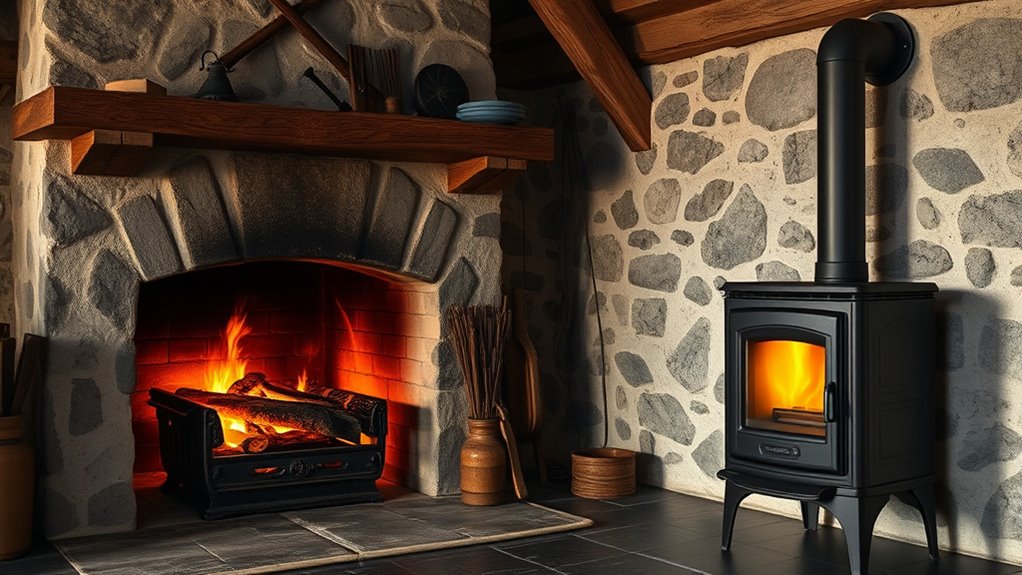

The origins of wood stoves trace back to simple open hearths used for centuries, providing basic warmth but wasting fuel and causing smoke. Over time, enclosed stoves were developed in the 17th and 18th centuries, offering better control, efficiency, and less smoke. The Industrial Revolution introduced materials like cast iron, enhancing durability and features for efficient burning. Today’s stoves continue to evolve toward cleaner, more environmentally friendly heating solutions; learning more about this journey reveals how technology has shaped modern comfort.
Key Takeaways
- Early open hearths and fireplaces provided basic warmth but wasted fuel and emitted smoke with little control.
- Enclosed stoves emerged in the 17th and 18th centuries, improving fuel efficiency and reducing indoor smoke.
- Industrial advancements introduced cast iron and adjustable features, enhancing stove durability and combustion control.
- Modern stoves incorporate technology to maximize efficiency, meet environmental standards, and emit fewer pollutants.
- The evolution reflects a shift from simple open fires to sophisticated, eco-friendly closed fireplaces for better heating and safety.
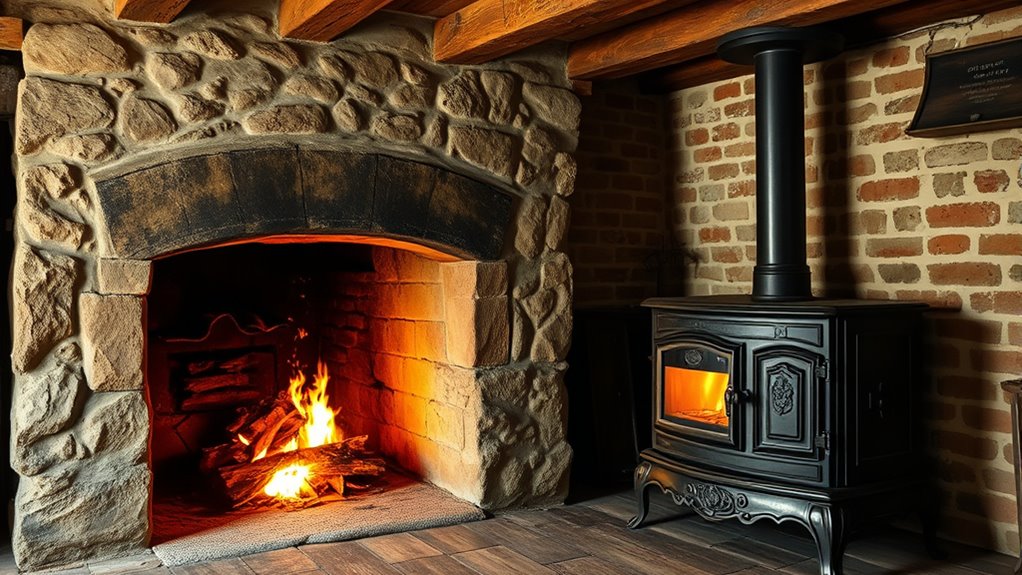
Wood stoves have a long history that dates back thousands of years, serving as essential heating devices for homes and communities. Over time, their design and function have evolved notably, reflecting advancements in technology and changing needs. One key aspect of this evolution is fuel efficiency, which has been a driving force behind innovations in wood stove design. Early open hearths and fireplaces were simple structures that provided heat but often wasted a lot of fuel and emitted smoke poorly controlled. As societies progressed, people recognized the importance of conserving fuel and reducing smoke, leading to the development of more efficient heating solutions.
The historical evolution of wood stoves was marked by a series of innovations aimed at improving fuel efficiency and safety. In the 17th and 18th centuries, the introduction of enclosed stoves marked a major breakthrough. These early enclosed designs allowed for better control of airflow, which meant you could burn wood more completely and get more heat from less fuel. This not only saved resources but also made heating safer and cleaner, reducing indoor smoke and soot buildup. The shift from open hearths to enclosed stoves was driven by the desire to maximize fuel efficiency while minimizing waste and health hazards.
As the industrial revolution gained momentum, new materials and manufacturing techniques further transformed wood stoves. Cast iron and steel became common, allowing for sturdier and more durable designs. Stoves became more sophisticated, with features like adjustable air vents and thermostats, giving you greater control over combustion and heat output. These improvements meant you could get more heat from less wood, making stoves more economical and environmentally friendly. The focus on fuel efficiency also led to the development of catalytic and non-catalytic stoves, which burn wood more completely and emit fewer pollutants.
Today, the legacy of these innovations continues as modern wood stoves incorporate advanced technology to maximize fuel efficiency while reducing emissions. You now have options like EPA-certified stoves that meet strict environmental standards, ensuring you’re heating your home efficiently and responsibly. The historical evolution of wood stoves shows a clear trend toward maximizing fuel efficiency, driven by both environmental concerns and the practical desire to stretch every piece of wood further. From humble open fireplaces to sophisticated, closed combustion units, the journey reflects humanity’s ongoing quest for better, cleaner, and more efficient ways to harness the warmth of wood. Additionally, sound science principles are increasingly integrated into modern designs to optimize combustion and minimize pollutants.
Frequently Asked Questions
How Did Early Civilizations Manage Indoor Air Quality With Open Hearths?
You’d find early civilizations managing indoor air quality through basic ventilation strategies like chimneys, vents, or open windows to help with smoke management. They often built fires in hearths or open fires that allowed smoke to escape naturally, reducing indoor pollution. Some cultures used adjustable vents or hoods to control airflow, improving ventilation and minimizing smoke buildup, making indoor spaces safer and more comfortable despite the limited technology available.
What Materials Were Used in the Earliest Wood Stoves?
You might think early wood stoves were simple, but they actually used durable metal alloys like cast iron for strength and heat retention. Insulating materials such as clay or firebricks lined the interiors to improve efficiency and safety. These materials helped contain heat better than open hearths, making cooking and heating more effective. So, even in their infancy, wood stoves incorporated advanced materials to enhance performance and safety.
How Did the Design of Wood Stoves Evolve Over Centuries?
Over centuries, you see wood stove designs evolve markedly. Chimney innovations improved smoke venting, making stoves safer and more efficient. The focus shifted toward fuel efficiency, with innovations like airtight doors and controlled air supply reducing wood consumption. These advancements transformed wood stoves from simple open hearths into efficient, closed systems, providing better heating and safety, and reflecting ongoing efforts to optimize their performance over time.
Who Were the Key Inventors Behind the First Closed Fireplaces?
You might think inventors like Benjamin Franklin revolutionized heating, but the key innovators behind the first closed fireplaces include François Cuvilliés and others who advanced technological innovations. These inventors didn’t just improve heat efficiency—they transformed fireplaces into controlled, safer environments. Their innovations marked a significant shift, making fireplaces more practical and less smoky, proving that even small technological advancements can redefine how we heat our homes.
What Cultural Influences Shaped the Development of Wood Stove Technology?
You’re influenced by cultural traditions and artistic influences that shaped wood stove development. Traditional heating methods from various cultures inspired innovations, blending practicality with aesthetic appeal. Artistic designs and craftsmanship reflected local values, making stoves not just functional but also cultural symbols. This blend of tradition and art drove technological advances, ensuring that wood stoves became integral to homes worldwide, embodying both cultural identity and evolving heating needs.
Conclusion
You’ve seen how wood stoves evolved from simple open hearths to efficient closed fireplaces, transforming home heating. Remarkably, today, about 70% of households in rural areas worldwide still rely on traditional biomass stoves, highlighting their ongoing importance. This journey from basic fire pits to modern stoves shows how innovation continues to impact daily life. So, next time you cozy up by your stove, remember you’re part of a long history of humans harnessing fire for comfort and survival.