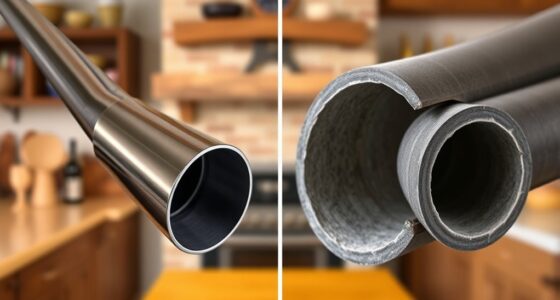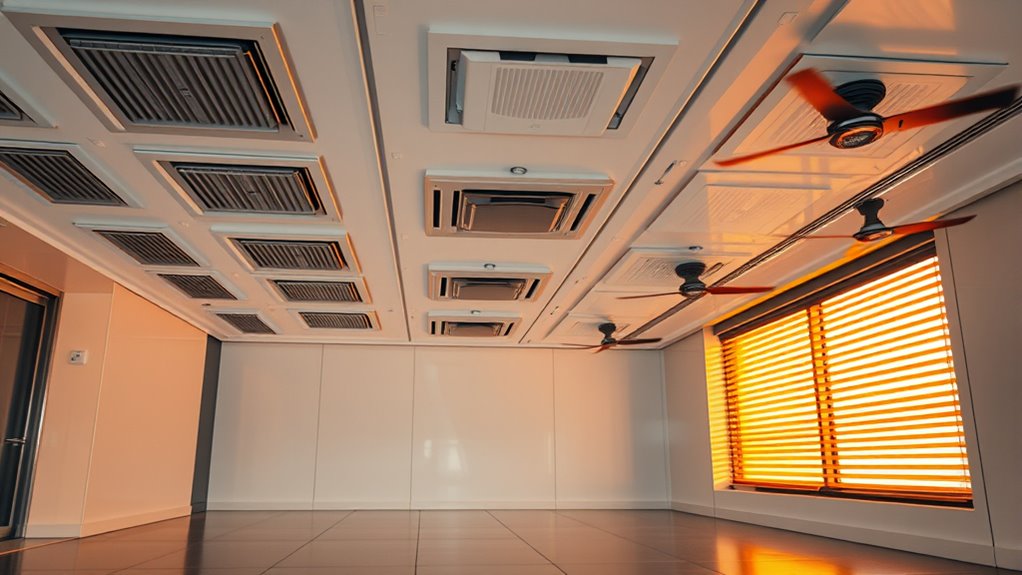

To optimize heat distribution with fans and vents, position vents near windows or exterior walls to promote even airflow, and avoid blocking them with furniture. Use ceiling fans set to clockwise to push warm air downward, and adjust vent angles for better circulation. Keep vents clean, and consider adding strategically placed vents or fans to boost airflow where needed. When you implement these tips, you’ll improve comfort and energy efficiency—keep exploring for more ways to enhance your system.
Key Takeaways
- Position vents near heat-loss areas like windows and exterior walls for balanced airflow.
- Use ceiling fans set to clockwise to push warm air downward and promote circulation.
- Adjust vent angles and add strategically placed vents to enhance airflow distribution.
- Keep vents clean and unobstructed to maintain optimal airflow and heat transfer.
- Regularly maintain filters and consider vent design for improved efficiency and consistent warmth.
Effective heat distribution is essential for maintaining comfort and energy efficiency in any space. When your heating system works well, you stay warm without wasting energy or increasing your bills. One key factor in achieving this is understanding airflow efficiency. Proper airflow ensures warm air reaches every corner of the room evenly, preventing cold spots and hot zones. If the airflow is weak or uneven, you might notice areas that stay chilly even when the heater is on full blast. To improve this, focus on optimizing vent placement, which plays a vital role in directing heat where it’s needed most.
Optimizing vent placement enhances airflow and ensures even, efficient heat distribution throughout your space.
Vents should be strategically positioned to maximize airflow efficiency. Ideally, they’re placed near windows, exterior walls, or in areas that tend to lose heat. For example, in a living room, vents along the walls can help circulate warm air across the entire space. Avoid blocking vents with furniture or curtains, as this can restrict airflow and reduce the effectiveness of your heating system. If vents are poorly placed—such as being tucked away in corners or behind large objects—warm air may not circulate properly, leading to uneven heating and increased energy consumption.
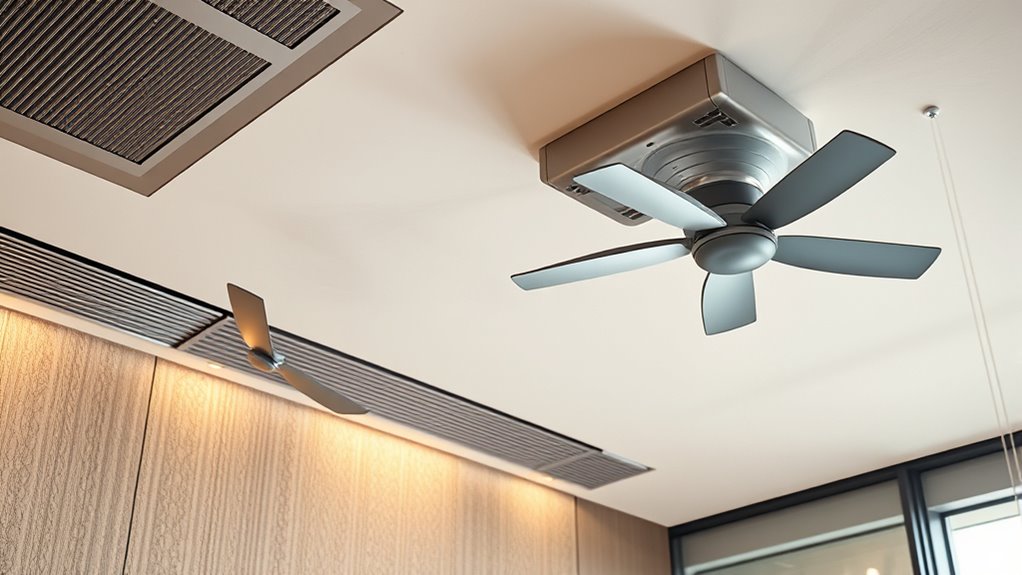
When installing or adjusting vents, consider the room’s layout. High or ceiling-mounted vents are effective for warm air to descend naturally, especially in spaces with high ceilings. Conversely, low vents work well in standard rooms, helping to push warm air across the room at ground level. The goal is to create a balanced airflow pattern that circulates heat evenly throughout the entire space. Using fans in conjunction with vents can further enhance airflow efficiency. Ceiling fans set to rotate clockwise can push warm air downward, supplementing the vents and promoting better heat distribution. Additionally, selecting proper vent sizes can significantly improve airflow and overall efficiency. Ensuring your vents are correctly designed for your space can make a noticeable difference in comfort and energy savings.
Another tip is to make certain your vents are clean and unobstructed. Dust and debris can block airflow, reducing efficiency and causing the system to work harder. Regular maintenance, like cleaning or replacing filters, helps keep the air moving smoothly. If you notice persistent cold spots, you might need to adjust vent angles or add additional vents in strategic locations to promote better circulation. Additionally, understanding the importance of airflow efficiency can help you make smarter decisions about your heating setup and improve overall comfort.
Top picks for "optimiz heat distribution"
Open Amazon search results for this keyword.
As an affiliate, we earn on qualifying purchases.
Frequently Asked Questions
How Do I Choose the Right Fan Size for My Space?
To select the right fan size, consider your space’s size and heat load. A fan with appropriate fan capacity ensures efficient airflow without wasting energy. For larger rooms, opt for a higher-capacity fan, and make sure vent placement optimizes air circulation. Proper vent positioning helps distribute heat evenly, so measure your room accurately and choose a fan that matches these needs for ideal heat distribution.
What Are the Best Vent Placements for Uniform Heating?
Did you know that proper vent placement can improve airflow efficiency by up to 30%? To achieve uniform heating, place vents strategically—near the ceiling for rising warm air, and at lower levels for cooler air. Focus on airflow optimization by evenly spacing vents across the room, avoiding blockages, and ensuring they direct heat toward the center. This setup promotes consistent warmth and maximizes heating system performance.
How Can I Reduce Noise From Fans and Vents?
You can reduce noise from fans and vents by applying soundproofing techniques like installing acoustic panels or using foam insulation around vents. Choose fans with quiet motors, and add noise reduction materials such as rubber mounts or vibration dampers to minimize sound transmission. Regular maintenance, like cleaning blades and tightening fittings, also helps prevent excessive noise. These steps create a quieter environment while maintaining effective heat distribution.
Are There Energy-Efficient Options for Heating Fans and Vents?
Yes, you can choose energy-efficient heating fans and vents made from eco-friendly materials that reduce environmental impact. Opt for models with smart automation features, allowing you to control heating precisely when needed, saving energy. These systems often include timers and motion sensors, ensuring efficient operation. By selecting eco-conscious options and integrating smart automation, you’ll lower energy bills and minimize your carbon footprint while maintaining comfortable heat distribution in your space.
How Often Should I Maintain or Replace My Heating System Components?
Think of your heating system like a finely tuned orchestra; regular tune-ups keep it performing smoothly. You should schedule system inspections annually to catch wear and tear early, and replace components as needed—typically every 10-15 years for major parts. Stay proactive, listen for strange noises, and maintain your system to guarantee efficient heat distribution and avoid costly repairs down the line.
Conclusion
So, after all this, it’s funny how something as simple as fans and vents can make such a difference in heat distribution. You’d think we’d have mastered heating by now, but instead, we keep tweaking and adjusting, hoping for perfection. It’s almost ironic that a little air movement can do what complex systems often fail to achieve. Sometimes, the simplest solutions remind us that the best answers are right in front of us—if we’re willing to see them.