TL;DR

Get backup power and energy gear delivered free — and shop member deals
- Fast, free delivery on millions of items
- Access to Prime Big Deal Days deals on October 6–7
- Prime Video, Amazon Music and more included
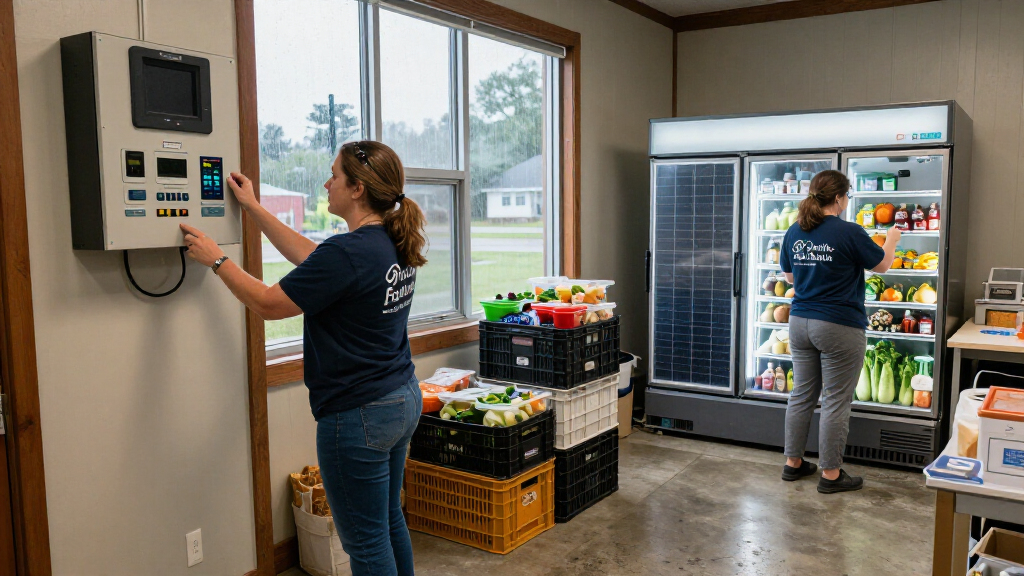
Beacon of Hope Food Pantry in Marshall, North Carolina, has installed a microgrid with 56 rooftop solar panels and three batteries. The state-backed project is designed to keep internet, lighting, and heating, cooling and refrigeration in its food distribution area working during power outages.
Beacon of Hope Food Pantry in Marshall, North Carolina, has installed a microgrid with 56 rooftop solar panels and three batteries, adding backup power for key food distribution operations during future outages. The project is largely funded through a state grant program created to put sustainable microgrids in counties affected by Hurricane Helene.
The system is designed to power the pantry’s internet, lighting, heating, cooling and refrigeration in its food distribution area. Solar panels generate electricity when sunlight is available, while the batteries store power for use at night or on cloudy days. The report does not specify how long the batteries can supply the listed equipment during an outage.
Executive Director Jessi Koontz said the project cost $100,000 and that Beacon paid nothing toward it. The state grant is the main funding source; philanthropic foundation BuildUS also contributed, and regional economic development fund Invest Appalachia provided a bridge loan. The report notes that nonprofits can seek federal rebates covering 30% of solar installations, but receiving that money can take more than a year.
The state initiative was established with $5 million in federal infrastructure-law funds to support 24 sustainable microgrids in Helene-impacted counties. Sara Nichols of the Land of Sky Regional Council said Beacon was among the first sites selected and was rated highly because of its community location. A microgrid at Bill’s Creek Community Center in Lake Lure was also close to completion, according to the report.
Keeping Food Distribution Powered
The microgrid is intended to help the pantry continue key services when a local power outage disrupts the wider community. Keeping refrigeration and climate control available can support food handling, while power for internet and lighting can help staff carry out distribution work. Those functions matter at an organization that serves about 1,700 Madison County families each month.
Beacon was spared major damage during Helene because it sits at a higher elevation, about a five-minute drive from downtown Marshall. The installation is not presented as protection against flooding or all storm damage; it addresses a different vulnerability: loss of grid electricity. Invest Appalachia’s Lauren Sowers said even brief outages in rural western North Carolina can have a large impact.
The project also illustrates how public funding and short-term financing can help a nonprofit cover upfront costs while awaiting potential federal rebates. Its reported $100,000 cost and zero outlay for Beacon reflect this project’s funding arrangement, not necessarily the terms available to other sites.
As an affiliate, we earn on qualifying purchases.
Helene Recovery Drives State Grants
Hurricane Helene’s floods devastated parts of Marshall in 2024, leaving businesses and community spaces without water or electricity and forcing some to close for months. Beacon of Hope was spared: Koontz said the pantry had water and power, with only a small puddle in its thrift store. The organization continued assisting people after the storm.
In the days after Helene, Footprint Project and regional partners helped set up temporary or clean-energy microgrids at sites including fire stations, nursing homes and mobile home parks, the source report said. Beacon’s rooftop solar-and-battery installation is distinct within the state initiative because it is financed primarily through the grant program rather than being one of those earlier emergency deployments.
North Carolina announced the initiative last August, using funds from the Biden-era bipartisan infrastructure law and working with Land of Sky and nongovernmental organizations. Federal sourcing rules have complicated some larger projects that rely on components the rules do not allow. The Department of Energy can grant waivers case by case, but the process takes time, Nichols said. The initiative is scheduled to end by next summer, and officials are shifting attention toward smaller, more rural projects.
“We were one of the lucky ones.”
— Jessi Koontz, executive director of Beacon of Hope Food Pantry
Switch-On and Backup Duration
The source report says Beacon’s array had been installed but that it could be the first or second project in the initiative to reach completion, depending on when it switched on. It does not confirm the date the system began operating. It also does not give the batteries’ storage capacity, the length of time they can power pantry equipment, or the precise share of the $100,000 cost supplied by each funder.
The state program’s final project list and the number of systems that will be completed by its planned end next summer remain unsettled in the report. Officials had received interest in larger projects, but federal procurement rules and possible waiver delays were affecting the schedule and project mix.
More Rural Sites Under Review
Land of Sky and state partners are continuing work on projects funded through the initiative. Nichols said the program’s focus is moving toward smaller, more rural microgrids, with other possible sites still under consideration. The Bill’s Creek Community Center project in Lake Lure was also nearing completion at the time of the report.
The state program is scheduled to wrap up by next summer. The source report does not provide a confirmed date for Beacon’s system to begin service or a public schedule for the remaining installations. Further updates would establish which projects advance and how many of the planned 24 microgrids are completed.
Key Questions
What has Beacon of Hope installed?
The Marshall pantry installed a microgrid made up of 56 rooftop solar panels and three batteries.
What can the microgrid power?
It is designed to support the pantry’s internet, lighting, heating, cooling and refrigeration in the food distribution area. The source report does not state how long backup power will last.
Who paid for the project?
The project was funded mainly through a North Carolina grant initiative using federal infrastructure-law funds. BuildUS also contributed, and Invest Appalachia provided a bridge loan. Koontz said Beacon paid nothing toward the reported $100,000 project cost.
Was Beacon of Hope damaged by Hurricane Helene?
Koontz said the pantry was largely spared because it sits at a higher elevation than downtown Marshall. She reported that the building had water and power and only a small puddle in its thrift store.
When will the microgrid be switched on?
The source report does not confirm an operating date. It said Beacon could be the first or second initiative site to reach completion, depending on when its system was switched on.
Source: rss
Fall Picks
fall essentials
As an affiliate, we earn on qualifying purchases.