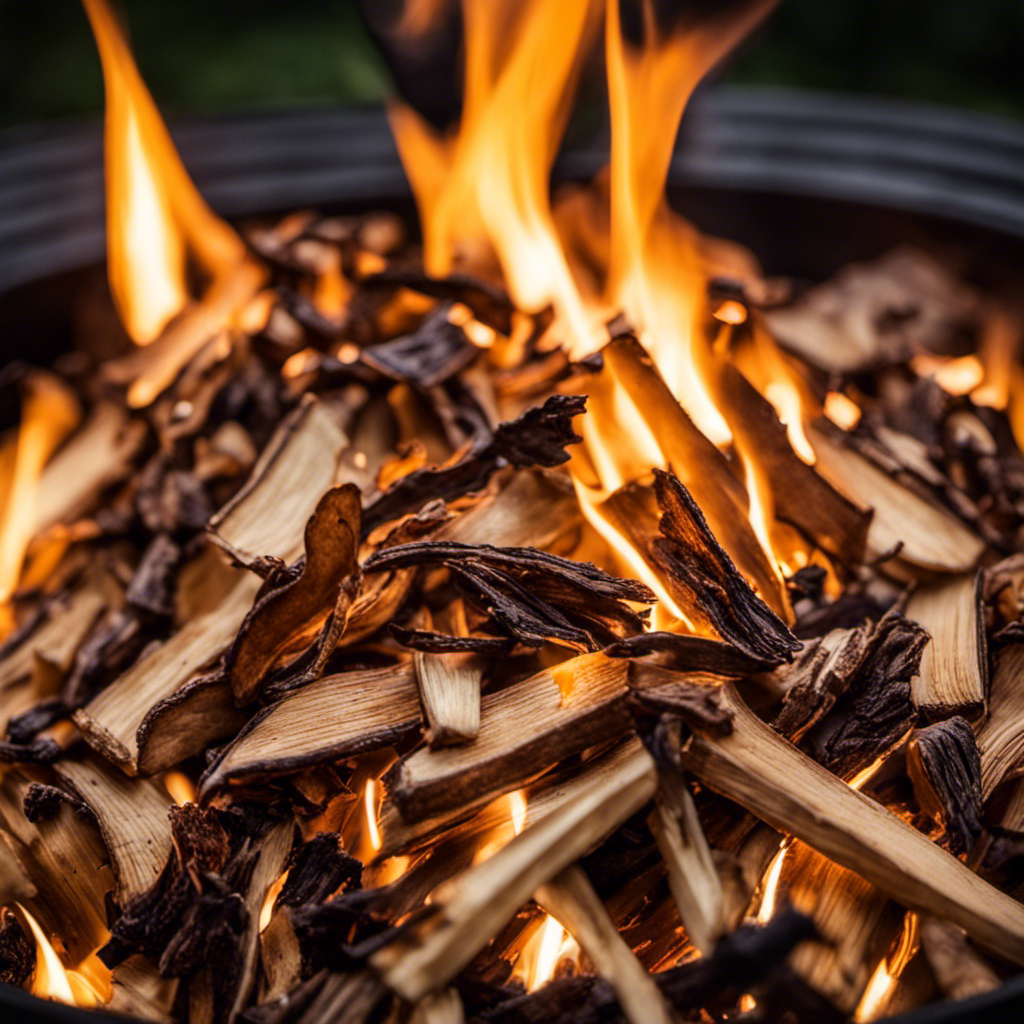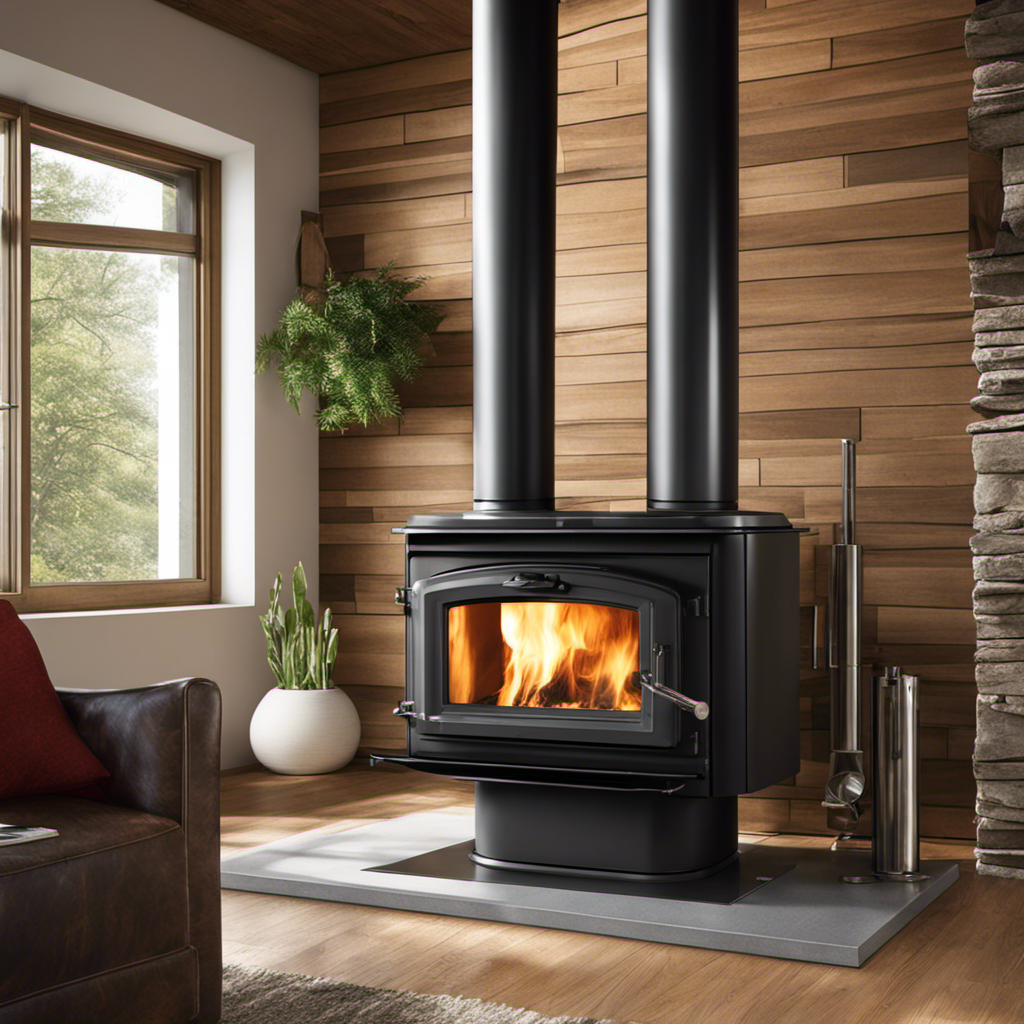
Multi-fuel stoves work by burning different types of fuels like wood, coal, and peat, giving you flexibility and control over your heating. They are designed to adapt to various fuel qualities and maximize efficiency, often featuring adjustable grates and ash pans. Proper installation and venting are essential for safe operation and peak performance. If you want to learn more about how these versatile stoves adapt to your needs, there’s plenty more to discover.
Key Takeaways
- Multi-fuel stoves burn various fuels like wood, coal, and peat, offering flexibility in heating options.
- They are designed with specific grates and ash pans to accommodate different fuel types efficiently.
- Proper installation, including a suitable chimney and ventilation, ensures safe operation and optimal performance.
- Switching fuels requires compatible stove features and may involve adjusting airflow and combustion settings.
- Professional installation guarantees safety, compliance, and maximum efficiency when operating multi-fuel stoves.
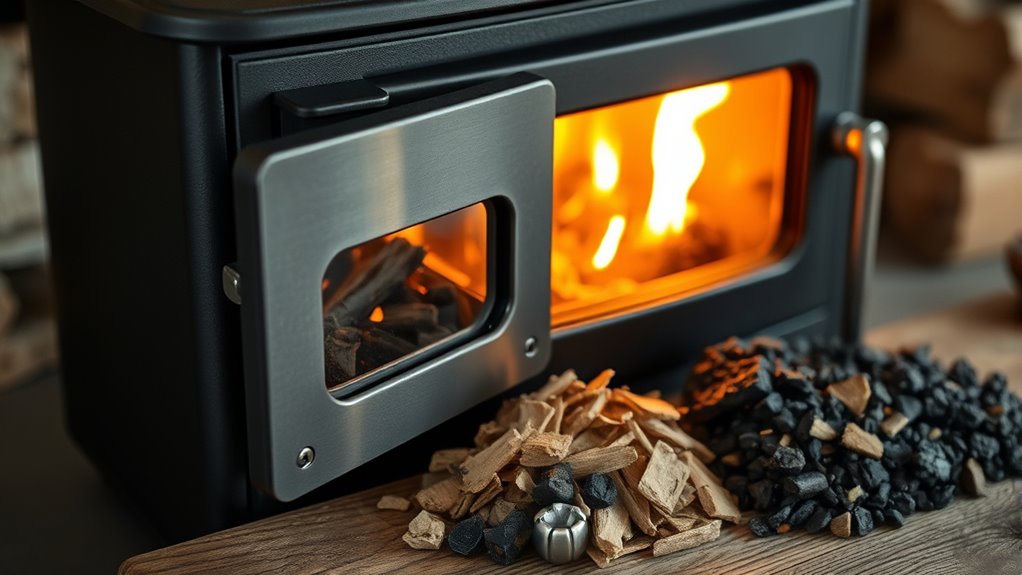
Multi-fuel stoves are versatile heating appliances that let you burn different types of fuel, such as wood, coal, or peat, giving you flexibility and control over your heating options. This adaptability makes them a popular choice for those seeking a reliable, cost-effective way to heat their home. One of the key advantages of these stoves is their fuel efficiency, which varies depending on the fuel you choose and how well you operate the stove. Burning seasoned wood, for instance, can produce a high heat output with minimal waste, while coal tends to burn longer and hotter, offering a steady heat source. Your ability to switch fuels allows you to optimize fuel efficiency based on availability and cost, helping you save money over time.
However, to get the most out of a multi-fuel stove, you need to understand the installation requirements. Proper setup is essential not only for safety but also to guarantee you maximize the stove’s performance. Most multi-fuel stoves require a solid, non-combustible hearth that extends beyond the stove’s base to catch any stray embers or ash. It’s important to install a suitable flue or chimney system that complies with local building codes, as this allows for safe venting of smoke and gases. Adequate ventilation and clearance space around the stove are vital to prevent overheating or fire hazards. You might also need to install a heat shield or protective barriers if your stove is placed near combustible materials. Additionally, understanding the WWE Raw’s Financial Impact can help you appreciate the importance of proper setup and investment in quality installations, as they contribute to safety and efficiency. Proper installation techniques are crucial to ensure optimal performance and safety, especially when switching between different fuels. When installing a multi-fuel stove, you should consider the type of fuel you plan to use most frequently. Some models are optimized for specific fuels, which can influence your choice. For example, stoves designed for coal might require a different grate or ash pan compared to wood-burning models. Ensuring the stove is properly vented and has appropriate airflow will help improve fuel efficiency, so you burn less fuel to generate the same amount of heat. Additionally, advancements in automation technologies can assist in controlling airflow and combustion, further enhancing efficiency. It’s often best to work with a certified professional who can assess your space, recommend suitable installation options, and guarantee everything complies with safety standards.
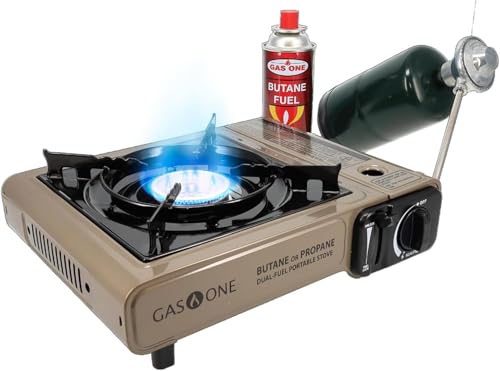
Gas One GS-3400P Propane or Butane Stove Dual Fuel Stove Portable Camping Stove – Patented – with Carrying Case Great for Emergency Preparedness Kit
Duel Fuel – Compatible With Both Butane (Fuel Not Included) And Propane Fuel (Fuel Not Included), Operates On…
As an affiliate, we earn on qualifying purchases.
As an affiliate, we earn on qualifying purchases.
Frequently Asked Questions
Can Multi-Fuel Stoves Burn Non-Traditional Fuels Like Bioethanol?
Yes, some multi-fuel stoves are compatible with bioethanol, offering an eco-friendly alternative fuel option. You should check your stove’s bioethanol compatibility before attempting to burn it, as not all models support this fuel type. Using bioethanol can provide a cleaner burn and reduce emissions. Always follow the manufacturer’s guidelines for safe use and proper fuel selection to enjoy your stove’s full benefits safely.
How Do Multi-Fuel Stoves Handle Different Fuel Burn Temperatures?
You handle different fuel burn temperatures with ease through effective temperature regulation. Multi-fuel stoves are designed for fuel compatibility, allowing you to switch fuels seamlessly. Their adjustable controls help you manage heat levels, ensuring safe, efficient burning regardless of the fuel type. This flexibility gives you peace of mind, enabling you to enjoy consistent warmth and optimize your stove’s performance for any fuel you choose to burn.
Are There Safety Concerns With Switching Fuels Mid-Operation?
Switching fuels mid-operation can pose safety concerns if you’re not careful. Always check fuel compatibility and follow safety precautions, like allowing the stove to cool before refueling and ensuring proper ventilation. Using incompatible fuels may cause flare-ups or dangerous fumes. To stay safe, read your stove’s manual thoroughly, avoid mixing fuels, and keep a fire extinguisher nearby. Proper handling minimizes risks and keeps your stove safe to operate.
What Maintenance Is Required for Multi-Fuel Stove Components?
You need to regularly inspect your stove’s chimney and remove ash to keep it running smoothly. Schedule chimney inspections to prevent creosote buildup and ensure safe operation. Clean out ash after each use to improve airflow and efficiency. Check seals and gaskets for wear, replacing them as needed. These simple maintenance tasks keep your multi-fuel stove safe, efficient, and ready to heat your home whenever you need it.
How Does Fuel Type Affect the Stove’s Emission Levels?
Your choice of fuel type directly impacts your stove’s emission levels and fuel efficiency. Burning dry, seasoned wood produces fewer emissions and meets strict emission standards, while wet or low-quality fuels increase pollutants and reduce efficiency. Opting for cleaner fuels helps you stay compliant with emission standards and minimizes environmental impact. Using the right fuel guarantees your stove operates efficiently, saving you money and reducing harmful emissions.
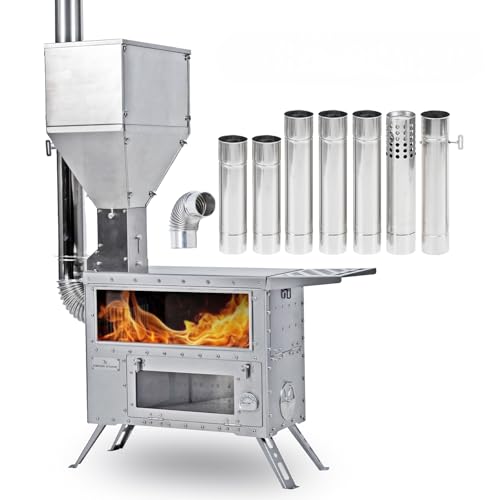
Green Stove Outdoor Camping Stove with Oven, Multi-Fuel Tent Stove Compatible with Wood or Pellets, Portable Stove with Chimney Pipes for Outdoor Use Only(Model: GreenStovehori 5 Max)
Power Adjustment : Matching the pellet control knob setting with the chimney damper opening is absolutely critical. Failure…
As an affiliate, we earn on qualifying purchases.
As an affiliate, we earn on qualifying purchases.
Conclusion
Now that you know how multi-fuel stoves work, you can see they’re truly versatile and efficient. Whether you’re burning coal, wood, or other fuels, these stoves adapt to your needs. Think of them as the Swiss Army knives of heating—reliable and ready for any situation. Just like the trusty steed in a knight’s arsenal, a multi-fuel stove keeps your home warm through thick and thin, blending modern tech with timeless practicality.

Total Hearth Ash Pan – US Stove & Vogelzang 67444 | OEM Steel Replacement | Fits Ashley, Wonderwood, Wonderluxe, Hot Blast, and More
US Stove Company
As an affiliate, we earn on qualifying purchases.
As an affiliate, we earn on qualifying purchases.

AMI PARTS 48" Flexible Gas Line Kit Yellow Coated, Gas Hose Connector Kit for Dryer, Stove, Water Heater,5/8" OD(1/2" ID) Stainless Steel Gas Line with Connector 1/2" MIP &1/2"FIP & 3/4"MIP Fitting
[PACKAGE INCLUDES]: 48" Flexible Gas Line with 5/8" outside dimensions and 1/2" inside diameter, Gas line connector adapters:…
As an affiliate, we earn on qualifying purchases.
As an affiliate, we earn on qualifying purchases.