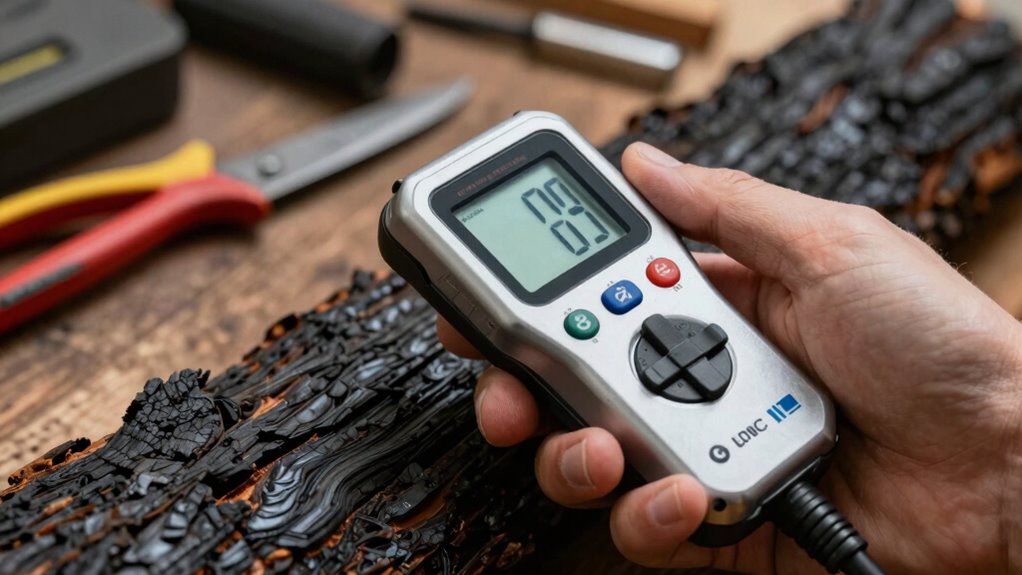

To make cleaner burning almost automatic, develop the habit of regularly testing your firewood’s moisture content with a moisture meter before each use. Check multiple spots to guarantee consistency and only burn wood that’s properly dried—around 20% moisture or less. This routine prevents excess smoke, creosote buildup, and inefficient fires. Staying consistent with moisture checks simplifies your firewood prep and keeps your burns cleaner. Keep going, and you’ll discover how environmental factors and storage strategies boost your drying process even more.
Key Takeaways
- Regularly test wood moisture content before burning to ensure it reaches ideal levels for cleaner combustion.
- Test multiple spots in a batch to account for moisture variation and confirm consistency.
- Incorporate moisture testing into routine wood handling, making it a habitual step.
- Adjust storage and drying methods based on moisture readings to optimize wood quality.
- Use moisture data to select properly dried wood, automatically promoting cleaner, more efficient burning.

Developing a moisture meter habit can considerably improve your ability to maintain healthy, durable wood and other materials. When it comes to wood drying, monitoring moisture levels is essential to prevent issues like warping, cracking, or mold growth. By regularly checking moisture content with a moisture meter, you gain a clear understanding of how dry your wood truly is. This, in turn, helps you make informed decisions about when to use, store, or process your wood, guaranteeing it reaches the ideal moisture content for your project or burning needs.
Monitoring moisture levels ensures healthy, durable wood and better burning efficiency.
You might not realize how much the moisture levels in your wood influence the burning process. If wood is too moist, it produces more smoke, creosote buildup, and inefficient heat. On the other hand, properly dried wood burns cleaner and hotter, reducing the risk of chimney fires and improving overall efficiency. Developing a habit of checking moisture levels before lighting a fire means you’re actively preventing these issues rather than reacting after the fact. It’s a simple step that saves you time, effort, and money in the long run.
Using a moisture meter isn’t complicated, but consistency is key. You should test different pieces of wood, especially if you’re gathering firewood from various sources or storing it outdoors. Moisture content can vary within a single batch or stack, so testing multiple spots ensures you’re getting an accurate picture of overall dryness. Once you develop the habit of testing, it becomes second nature — you’ll automatically reach for your meter before fueling your fire. This small routine ensures that only wood with the right moisture levels makes it into your firebox, making burning cleaner almost automatic. Regularly monitoring moisture content also helps you identify patterns or environmental factors that impact drying, allowing for better planning. Additionally, understanding water chemistry and how it interacts with your wood and environment can further optimize your drying process and prevent issues like mold or decay. Furthermore, being aware of environmental factors such as humidity and temperature can help you better control the drying process and improve the overall quality of your wood supply. Incorporating climate considerations into your drying routine can lead to more consistent results and reduce the time needed to properly dry your firewood.
You’ll also find that maintaining this habit helps with wood drying overall. If you notice moisture levels aren’t dropping as expected, you can take steps like re-stacking, increasing airflow, or using a drying shed. Over time, this proactive approach helps you better understand how environmental factors influence wood drying, allowing you to plan ahead and prepare your wood supply more efficiently. Ultimately, integrating regular moisture level checks into your routine transforms what could be a guessing game into a precise science, resulting in cleaner, more efficient fires that require less maintenance and produce fewer pollutants. This simple habit, once ingrained, makes burning cleaner almost automatic, giving you peace of mind and a more enjoyable, eco-friendly fire experience. Additionally, understanding moisture content can help you optimize your wood storage practices, ensuring your wood remains properly dried over time.
As an affiliate, we earn on qualifying purchases.
Frequently Asked Questions
What Types of Materials Can I Test With a Moisture Meter?
You can test various materials with a moisture meter, including different types of wood, drywall, and even some textiles. When testing wood, you’ll assess its moisture absorption and density, which helps determine its suitability for burning or construction. This tool quickly reveals if moisture levels are high, reducing creosote buildup and ensuring cleaner, safer fires. Always calibrate your meter for specific materials for the most accurate readings.
How Often Should I Check Moisture Levels During Burning?
Think of checking moisture levels like tuning a finely crafted instrument—you want it just right. You should monitor moisture content regularly, ideally every few hours during burning, to optimize combustion efficiency. Consistent checks help you catch fluctuations early, preventing inefficient burning and excessive smoke. This habit guarantees your fuel burns cleaner and longer, turning a simple task into an essential step for better performance and a healthier environment.
Are There Specific Brands of Moisture Meters Recommended?
You should choose reputable brands like Wagner, Protimeter, or General Tools for moisture meters, ensuring reliable moisture meter calibration. These brands are known for maintaining moisture content accuracy, which is essential for effective burning. Regular calibration checks help keep your device precise, preventing inaccurate readings that could affect your process. Investing in a quality moisture meter from these trusted brands makes monitoring moisture levels easier, leading to cleaner, more efficient burns.
Can Moisture Meters Detect Hidden Moisture Pockets?
A stitch in time saves nine, and that’s true with moisture detection. Moisture meters can detect hidden moisture pockets if you use proper calibration techniques and probe thoroughly. They measure surface and deep moisture levels, but some models are better at finding concealed areas than others. Regular calibration guarantees accuracy, especially when hunting for hidden moisture. So, yes, with the right tools and techniques, you can spot hidden moisture effectively.
What Is the Ideal Moisture Level for Efficient Burning?
The ideal moisture content for efficient burning is around 20% or lower, which results from proper wood seasoning. You should regularly check your wood’s moisture level with a moisture meter to guarantee it’s within this range. When your wood has the correct moisture content, it burns cleaner, produces less smoke, and generates more heat. Maintaining proper wood seasoning habits makes your firewood more efficient and environmentally friendly.
Conclusion
By embracing the moisture meter habit, you’re like the skilled alchemist turning raw wood into clean-burning fuel. Just as a master craftsman carefully measures and adjusts, you guarantee your fire’s perfection with each reading. This simple practice transforms your routine into a ritual of precision, making cleaner burns almost automatic. Keep this habit alive, and you’ll find yourself wielding the power of a seasoned artisan—turning everyday wood into a masterpiece of efficiency and cleanliness.