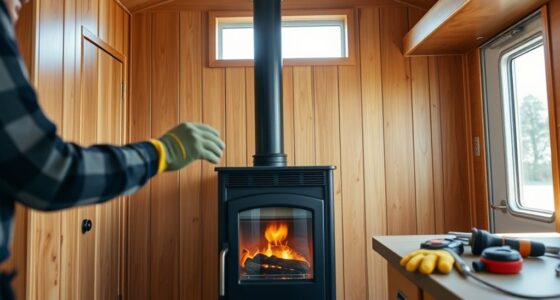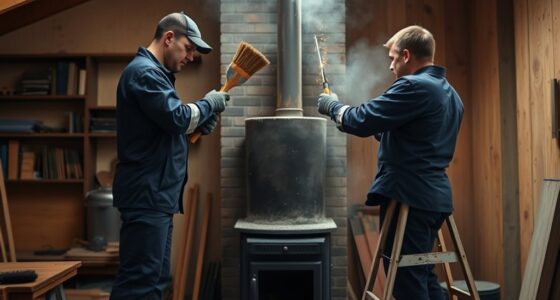
To maintain your flue, schedule professional inspections and cleanings at least once a year to prevent creosote buildup and detect damage early. Regular cleaning involves creosote removal and checking for cracks or gaps in the liner, which can cause safety hazards. Use responsible burning practices, like avoiding wet or unseasoned wood, to reduce creosote formation. Staying proactive guarantees safety and efficiency—continue exploring ways to keep your flue in top shape.
Key Takeaways
- Schedule professional chimney inspections and cleanings at least once a year to prevent creosote buildup and identify potential issues early.
- Use specialized tools and techniques, such as brushes and vacuums, during cleaning to effectively remove creosote and debris from the flue.
- Follow manufacturer guidelines and local codes for cleaning frequency, especially if burning unseasoned or wet wood.
- Monitor signs like smoke backdrafts, odors, or reduced airflow to determine if additional cleaning or inspection is needed.
- Address any flue liner damage or cracks promptly through professional repairs to ensure safe and efficient venting.

Have you checked your flue lately? If not, it’s time to take a closer look. Your flue plays a vital role in venting out smoke, gases, and other byproducts from your fireplace or stove. Over time, creosote buildup, debris, or damage can compromise its efficiency and safety. Regular chimney inspection is essential to catch problems early, especially since issues like flue liner repair might be needed if the liner becomes cracked, crumbled, or otherwise compromised. Ignoring these signs can lead to dangerous situations, including carbon monoxide leaks or chimney fires.
Check your flue regularly to prevent dangerous buildup and ensure safe, efficient chimney operation.
A thorough chimney inspection should be part of your routine maintenance schedule. Professionals can evaluate the condition of your chimney, identify any creosote accumulation, and check for structural issues. During an inspection, they’ll pay close attention to the flue liner, which lines the inside of your chimney. The liner protects the chimney walls from heat and corrosion, and if it’s damaged, it can cause dangerous leaks of gases or fire hazards. If your inspector discovers cracks, gaps, or deterioration, flue liner repair becomes necessary. This repair not only restores the integrity of your chimney but also improves efficiency, ensuring your system vents properly and safely.
Cleaning your flue regularly is just as important as inspecting it. Depending on your usage, you should schedule a professional cleaning at least once a year. During cleaning, creosote — a highly combustible substance — is removed from the flue walls. This buildup is a leading cause of chimney fires and can also restrict airflow, making your fireplace less effective. A professional chimney sweep uses specialized tools to scrub the flue interior, ensuring no creosote remains that could ignite during use. Additionally, understanding chimney maintenance can help you extend the lifespan of your system and prevent costly repairs.
In addition to professional inspections and cleanings, you can take steps to maintain your flue between visits. Keep an eye out for signs of trouble, such as smoke backing into your room, unpleasant odors, or a decrease in draft. These symptoms often indicate blockages or damage that needs immediate attention. Avoid burning wet or unseasoned wood, which produces more creosote, and always use your fireplace responsibly. When you notice any issues, don’t delay in calling a chimney specialist. They can perform necessary repairs, including flue liner repair, to keep your chimney functioning safely and efficiently.
Top picks for "maintain flue clean"
Open Amazon search results for this keyword.
As an affiliate, we earn on qualifying purchases.
Frequently Asked Questions
How Often Should I Schedule Professional Flue Inspections?
You should schedule professional flue inspections at least once a year to guarantee proper chimney maintenance and safety precautions. Regular inspections help identify creosote buildup, blockages, or damage that could pose fire hazards. If you use your fireplace frequently or notice issues like smoke backdrafts, consider more frequent checks. Staying proactive with inspections keeps your chimney safe, efficient, and prolongs its lifespan, giving you peace of mind during colder months.
Can I Clean the Flue Myself Safely?
Yes, you can clean your flue safely yourself if you follow DIY safety precautions and proper cleaning techniques. Wear protective gear like gloves and goggles, make sure the fireplace is cool, and use a sturdy chimney brush to scrub away soot and creosote. Avoid using harsh chemicals and work carefully to prevent damage. If you’re unsure or uncomfortable, it’s best to call a professional to handle the job safely.
What Tools Are Best for DIY Flue Cleaning?
Ever wondered what tools make DIY flue cleaning easier? You’ll want a sturdy chimney brush to scrub away soot and creosote buildup effectively. Pair it with a vacuum cleaner designed for ash and debris to keep your workspace clean and safe. Do you have the right size chimney brush? Make certain it fits snugly inside your flue for thorough cleaning. Using these tools, you can maintain your chimney safely and efficiently.
How Do I Identify Signs of Flue Blockage?
You can spot signs of a flue blockage by noticing chimney smoke backing up or lingering around your home. Soot buildup on your fireplace or stove indicates restricted airflow, often caused by blockages. If you see excessive smoke, strange odors, or a noticeable decrease in heating efficiency, it’s time to inspect for soot buildup and potential obstructions. Addressing these signs promptly helps maintain safe, efficient operation.
Are There Specific Cleaning Products Recommended for Flues?
While you shouldn’t rely solely on chemical cleaners or natural remedies, choosing the right products helps maintain your flue’s health. For gentle cleaning, natural remedies like vinegar and baking soda can work well, but if you face stubborn buildup, specialized chemical cleaners designed for flues may be necessary. Always follow manufacturer instructions and consider consulting a professional to guarantee safe and effective cleaning.
Conclusion
Remember, a clean flue keeps your fireplace safe and efficient. Stick to a regular cleaning schedule and use proper methods to prevent chimney fires and ensure good airflow. Don’t wait until problems arise—an ounce of prevention is worth a pound of cure. By taking care of your flue, you’ll enjoy cozy fires all season long. After all, an ounce of prevention is worth a pound of cure, so stay proactive and keep your home safe.