Leonardo da Vinci’s early stove designs aimed to improve indoor heating by making it more efficient and cleaner. He envisioned enclosed chambers to control airflow and retain heat better, reducing smoke and heat loss common in medieval fireplaces. His sketches show a surprisingly advanced understanding of combustion and heat management for his time. If you explore further, you’ll discover how his ideas influenced future stove innovations and modern heating techniques.
Key Takeaways
- Da Vinci envisioned enclosed combustion chambers to improve heat retention and reduce smoke in stove designs.
- His sketches focused on controlling airflow for more efficient and cleaner burning.
- The designs marked an early move toward modern, enclosed stoves, improving indoor heating.
- They reflected Renaissance scientific principles, emphasizing rational design over traditional methods.
- Da Vinci’s concepts laid foundational ideas for future stove innovations and heating technology.
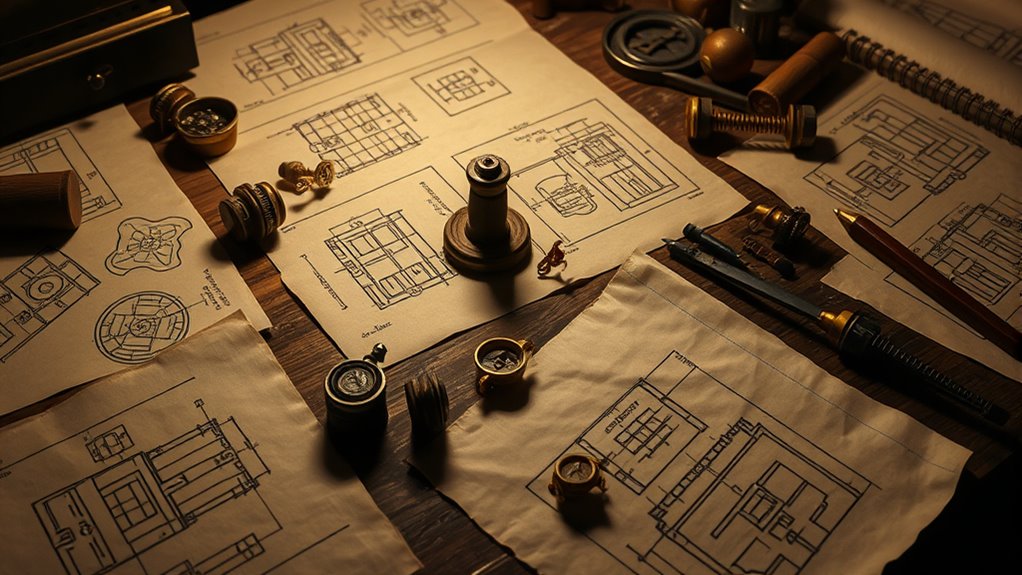
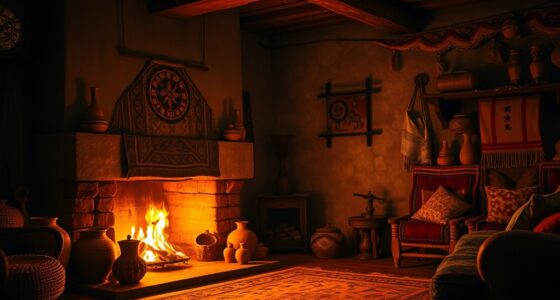
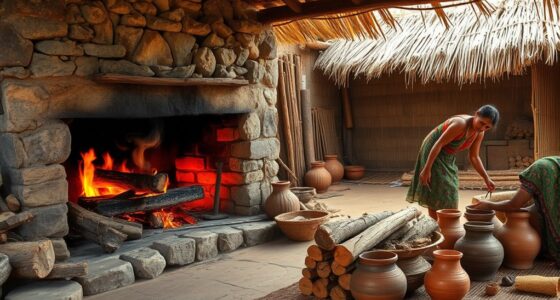
Leonardo da Vinci’s early stove designs showcase his inventive spirit and curiosity about improving everyday life. Long before modern heating systems, people relied on medieval heating methods, which often involved large, inefficient fireplaces or simple hearths. These traditional methods could be smoky, uneven, and difficult to control, making indoor comfort a challenge. Da Vinci’s approach was different; he sought solutions that combined efficiency with innovation, reflecting his keen interest in Renaissance inventions that aimed to elevate daily living. His designs reveal a desire to create a more effective way to heat indoor spaces, reducing the smoke and heat loss common in medieval heating practices.
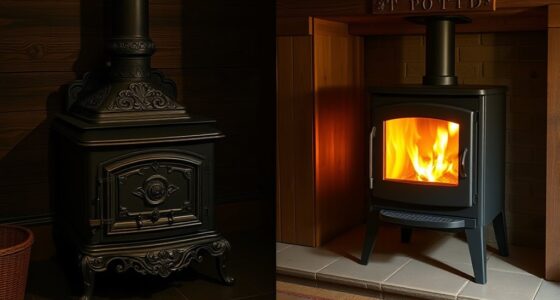
Da Vinci’s stove ideas aimed to improve heating efficiency, reducing smoke and heat loss in medieval homes.
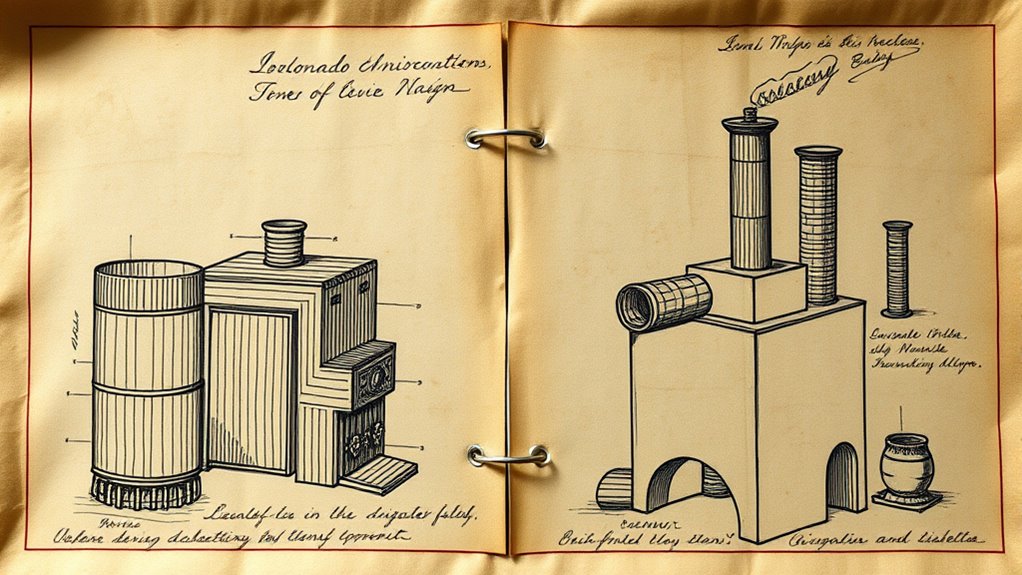
In his sketches, you can see how da Vinci envisioned a stove that would be more than just a simple hearth. Unlike the basic fireplaces of his time, his designs incorporated enclosed chambers, improved airflow, and better heat retention. These ideas aligned with the Renaissance focus on scientific understanding and technological progress, moving away from superstition and trial-and-error toward rational design. His stove concepts show an understanding of combustion principles and how to harness heat more effectively, paving the way for future innovations. While his ideas weren’t always practical to build in his lifetime, they demonstrated a clear desire to revolutionize indoor heating.
You might imagine yourself in a medieval home, where heating was often inconsistent and smoky, or in a Renaissance workshop, where inventors like da Vinci pushed boundaries. His stove designs reflect this era’s spirit — a time when inventors began exploring mechanical and thermal improvements. His sketches suggest an enclosed, more controlled environment for combustion, which would reduce smoke and increase heat efficiency. This was a significant step forward from medieval heating, which was often messy and inefficient. Da Vinci’s insights anticipated future developments in stove technology, influencing ideas on how to make heating cleaner and more effective. Additionally, his focus on heat retention and controlled airflow demonstrated an understanding of key principles in thermal efficiency that are still relevant today.
As you explore his sketches, it’s clear that da Vinci was ahead of his time. His focus on creating a cleaner, more efficient heating device aligns with the Renaissance inventions that sought to harness science for practical use. His stove designs weren’t just about warmth; they embodied a broader movement toward rational design and technological progress. Though he never built a working model, his concepts laid groundwork for future innovations in domestic heating. By understanding his ideas, you see how Leonardo da Vinci bridged medieval heating methods and modern stove technology, reflecting his relentless pursuit of improving everyday life through inventive thinking.
modern enclosed wood stove
As an affiliate, we earn on qualifying purchases.
As an affiliate, we earn on qualifying purchases.
Frequently Asked Questions
Did Leonardo Da Vinci Ever Build a Working Prototype of His Stove Designs?
You might think Leonardo Da Vinci built a working prototype of his stove designs, but there’s no evidence he did. His sketches from the Renaissance engineering era show innovative ideas for medieval cooking appliances, yet they remained conceptual. Da Vinci’s focus was on art, anatomy, and engineering, so while his stove designs were ahead of their time, they likely never advanced beyond detailed drawings.
How Did Da Vinci’s Stove Concepts Influence Later Heating Technology?
Your curiosity sparks like a flame, illuminating Da Vinci’s influence on heating. His stove concepts laid the groundwork for innovative heating solutions, pushing the boundaries of thermal efficiency. Though he never built a working prototype, his ideas inspired future inventors to develop more effective and efficient heating systems. Da Vinci’s visionary designs act as a bridge, connecting old ideas with modern innovations, shaping how we warm our homes today.
Were Da Vinci’s Stove Designs Meant for Domestic or Industrial Use?
Your answer is that da Vinci’s stove designs were primarily meant for domestic use. His artistic sketches show compact, efficient heating solutions suitable for homes, reflecting medieval heating needs. While some designs hint at industrial applications, they mainly aimed to improve household warmth and comfort. His innovative ideas influenced later heating technologies, blending practicality with artistic ingenuity in medieval heating solutions.
What Materials Did Da Vinci Suggest for Constructing His Stove Prototypes?
Imagine a craftsman’s palette, filled with possibilities—Da Vinci explored materials like clay, brick, and metal, blending them into his stove prototypes. His materials exploration aimed to harness heat efficiently and innovate design. You see, his choice of durable, heat-resistant substances reflected a desire for both functionality and elegance. With these materials, he envisioned a future where stove designs would seamlessly merge form and function, transforming everyday cooking into artful engineering.
Are There Any Surviving Sketches or Models of Da Vinci’s Stove Designs Today?
You won’t find any surviving sketches or models of Da Vinci’s stove designs today. While his ideas for medieval heating and Renaissance engineering were innovative, most of his work on stoves remains speculative or lost over time. Researchers rely on his sketches and notes to piece together his concepts, but no physical prototypes have been preserved. His contributions, however, continue to influence heating technology development centuries later.
efficient indoor heating stove
As an affiliate, we earn on qualifying purchases.
As an affiliate, we earn on qualifying purchases.
Conclusion
You might wonder if Leonardo da Vinci truly envisioned advanced stove designs centuries before their time. While some believe his sketches were purely artistic, evidence suggests he explored practical heating solutions. Imagine the shock of discovering that this Renaissance genius may have pioneered ideas that modern heating systems still draw inspiration from. It’s a reminder that innovation often begins with curiosity—proving that even the most creative minds can shape our everyday lives long before their time.
clean burning stove for home
As an affiliate, we earn on qualifying purchases.
As an affiliate, we earn on qualifying purchases.
thermal efficiency stove
As an affiliate, we earn on qualifying purchases.
As an affiliate, we earn on qualifying purchases.