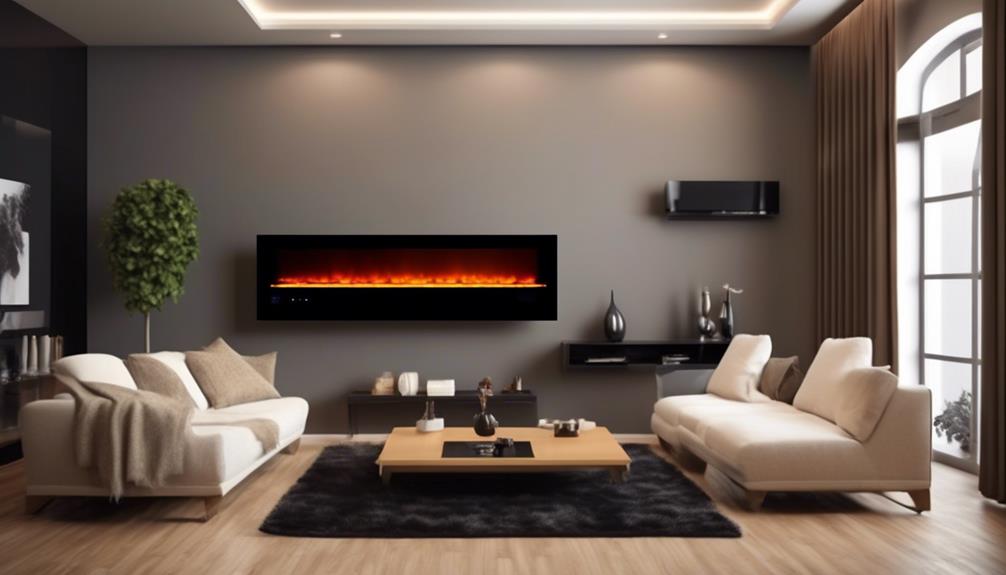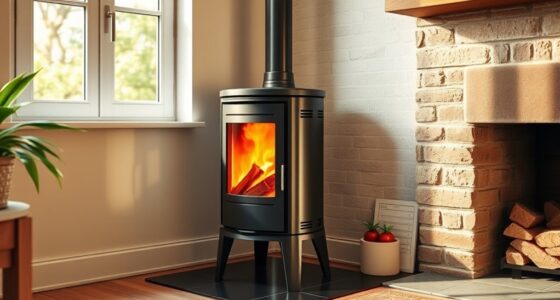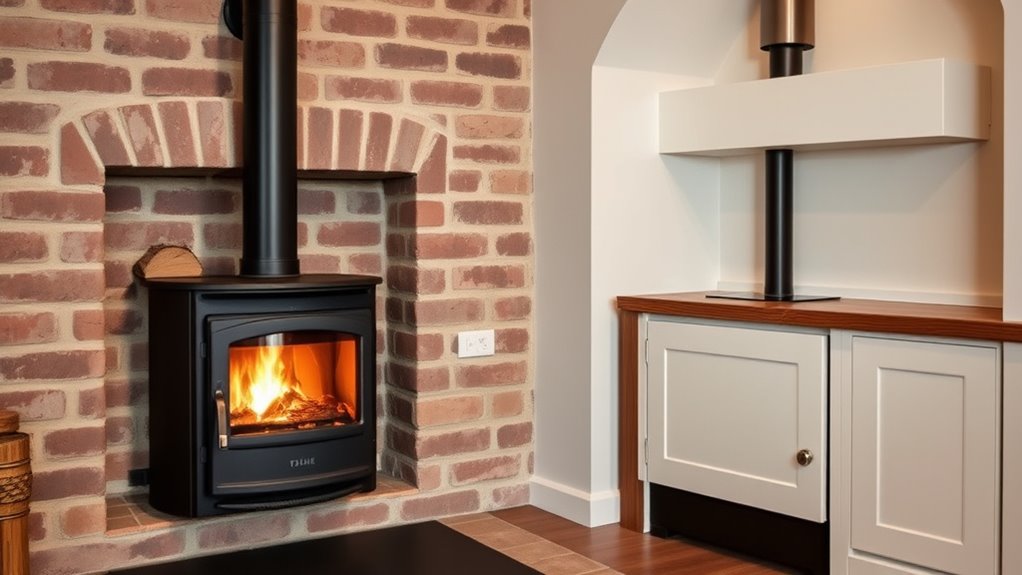

Inset and built-in wood stoves are perfect for small spaces, offering efficient warmth while saving room and keeping a sleek look. They typically require a proper venting system to ensure safe smoke and carbon monoxide removal. You’ll need to take into account wall support, clearances, and insulation for safety and efficiency. With the right installation, these stoves blend seamlessly into your decor. Keep exploring for expert tips on selecting and installing the best small-space wood stove for your needs.
Key Takeaways
- Ensure proper ventilation and venting systems to safely exhaust fumes outside in small spaces.
- Confirm wall and structural support suitability, including non-combustible backing and adequate clearances.
- Choose inset or built-in models designed for small areas to maximize space efficiency.
- Follow local building codes and manufacturer instructions for safe installation and venting.
- Incorporate insulation and access panels for safety, energy efficiency, and easy maintenance.

If you’re looking to add warmth and ambiance to a small space, inset and built-in wood stoves offer an excellent solution. These stoves are designed to fit seamlessly into your existing wall or alcove, saving space while providing efficient heating. However, before installing one, it’s essential to understand ventilation requirements and installation considerations to guarantee safety and peak performance.
Ventilation is a key factor when installing inset or built-in wood stoves. Proper airflow prevents dangerous buildup of smoke and carbon monoxide, safeguarding your household. Most small-space stoves require a dedicated chimney or venting system that directs fumes safely outside. You’ll need to assess whether your wall or structure can accommodate a vent pipe, and if not, consider options like a direct vent system that pulls outside air for combustion. It’s important to follow local building codes and manufacturer instructions regarding venting, as improper installation can pose serious health risks and may void warranties. When planning your ventilation setup, also think about the location of the stove—placing it near exterior walls simplifies venting and reduces complexity.
Proper ventilation is essential for safe inset or built-in wood stove installation.
Installation considerations extend beyond venting. You must evaluate the wall’s material and structural integrity to guarantee it can support the weight of the stove. Many inset models require a sturdy, non-combustible backing or framing within the wall cavity, which might involve additional modifications. Clearances to combustible materials are essential; most stoves come with specific measurements for safe distances from walls, furniture, or other combustibles. You’ll also need to consider access for maintenance and cleaning, ensuring you can easily reach the stove and chimney for routine inspections and ash removal.
Another critical aspect is guaranteeing proper insulation around the inset or built-in unit. Insulation prevents heat transfer to surrounding combustible materials and enhances efficiency. You might need to install fire-resistant panels or barriers as recommended by the manufacturer. Additionally, check if your wall cavity has enough space to accommodate the stove’s dimensions and clearance requirements without crowding or compromising safety. Using appropriate insulation materials can further improve energy efficiency and safety.
Finally, consider the electrical and finishing aspects. Some models have electronic components or controls that require power, and finishing touches like trim or faceplates should complement your interior while maintaining safety standards. Consulting with a professional installer ensures that all these installation considerations are addressed properly, providing peace of mind and a safe, cozy heating solution for your small space.
Top picks for "inset built wood"
Open Amazon search results for this keyword.
As an affiliate, we earn on qualifying purchases.
Frequently Asked Questions
Are Inset Wood Stoves Suitable for Rental Properties?
Inset wood stoves can be suitable for rental properties if you consider rental property concerns and tenant safety considerations. You need to guarantee proper installation, ventilation, and adherence to local codes to prevent hazards. Regular maintenance is essential for safety and efficiency. Communicate clearly with tenants about stove use, and consider safety features like screens. When properly managed, inset stoves can add warmth and appeal without compromising safety or compliance.
How Do Inset Stoves Affect Room Ventilation?
Imagine cozying up by a warm inset stove; it can influence your room’s ventilation airflow. These stoves typically vent outside, helping maintain good indoor air quality. However, if not installed properly, they might restrict airflow or cause drafts, impacting ventilation. To keep the air fresh, make certain your stove has correct ventilation and regular maintenance. Proper setup balances warmth with healthy indoor air quality, making your space both inviting and safe.
Can Inset Stoves Be Installed Without a Chimney?
Yes, you can install inset stoves without a chimney by exploring chimney alternatives like ventless systems or direct vent models. However, you’ll need to meet ventilation requirements to guarantee safety and proper air circulation. Always check local building codes and manufacturer guidelines, as these options may not be suitable everywhere. Proper installation and ventilation are essential to prevent indoor air pollution and maintain a safe, cozy environment.
What Maintenance Is Required for Built-In Wood Stoves?
Think of your built-in wood stove as a trusted garden tool—needs regular care to work well. You’ll need to check chimney requirements to prevent creosote buildup, which can cause fires. A proper cleaning schedule, including removing ash and inspecting gaskets, keeps it efficient. Regular maintenance guarantees your stove heats safely and lasts longer, much like sharpening your tools keeps your garden thriving.
Are There Safety Concerns With Small Space Inset Stoves?
Yes, there are safety concerns with small space inset stoves. You should guarantee proper ventilation requirements are met to prevent carbon monoxide buildup, and always follow fire safety guidelines. Keep combustible materials away, install smoke and carbon monoxide detectors, and have regular inspections. By doing so, you reduce risks and enjoy the warmth safely. Proper installation and maintenance are key to keeping your space secure and cozy.
Conclusion
Just like a hidden treasure tucked neatly into a cozy corner, inset and built-in wood stoves bring warmth and charm without taking up space. They’re your secret weapon against chilly nights, blending seamlessly into your home’s design. Imagine curling up by a glowing fire, feeling the comfort and elegance of a well-chosen stove. With these space-saving solutions, you’ll create a warm haven where style and function unite, making every winter night truly special.