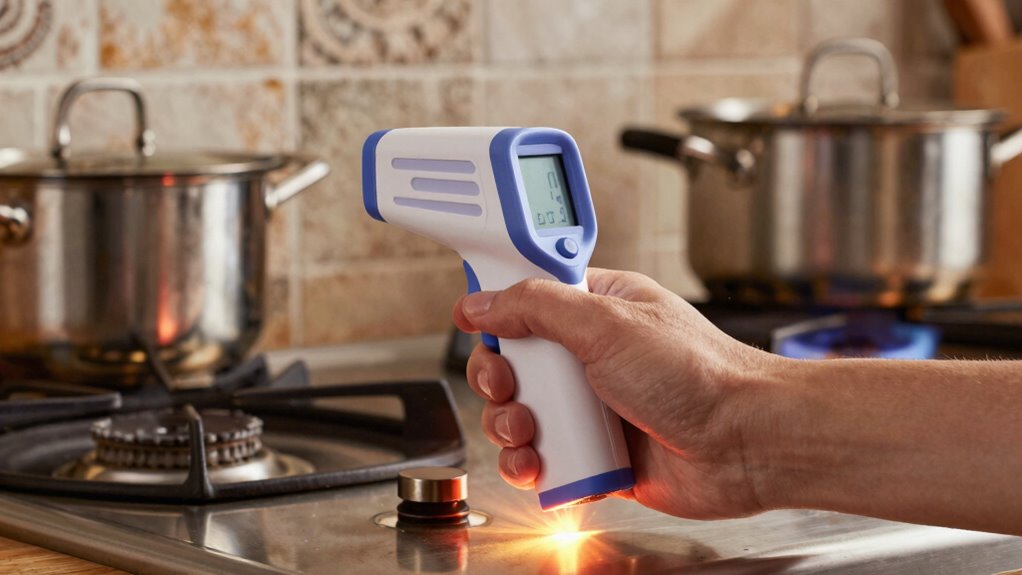
Infrared thermometers are great because they give quick, contactless temperature readings, making them hygienic and convenient for various uses. They work well on matte, non-reflective surfaces but can be inaccurate on shiny or glossy ones, as reflections distort measurements. Environmental factors like dust, moisture, and ambient temperature also affect their accuracy. To get reliable results, proper calibration and maintenance are essential. If you keep exploring, you’ll discover how to maximize their effectiveness in different situations.

Get backup power and energy gear delivered free with Prime
- Fast, free delivery on millions of items
- Prime Video, Amazon Music and more included
- Member-only deals all year
Key Takeaways
- Infrared thermometers provide quick, contactless temperature readings ideal for hygiene-sensitive environments.
- Their accuracy can be affected by surface reflectivity, emissivity, and environmental conditions, limiting reliability in some cases.
- They are less effective on shiny, polished, or reflective surfaces, requiring special surface treatments for accurate results.
- Proper calibration and maintenance are essential to ensure measurement precision over time.
- They are best suited for surface temperature monitoring but not suitable for internal body temperature or precise medical diagnostics.
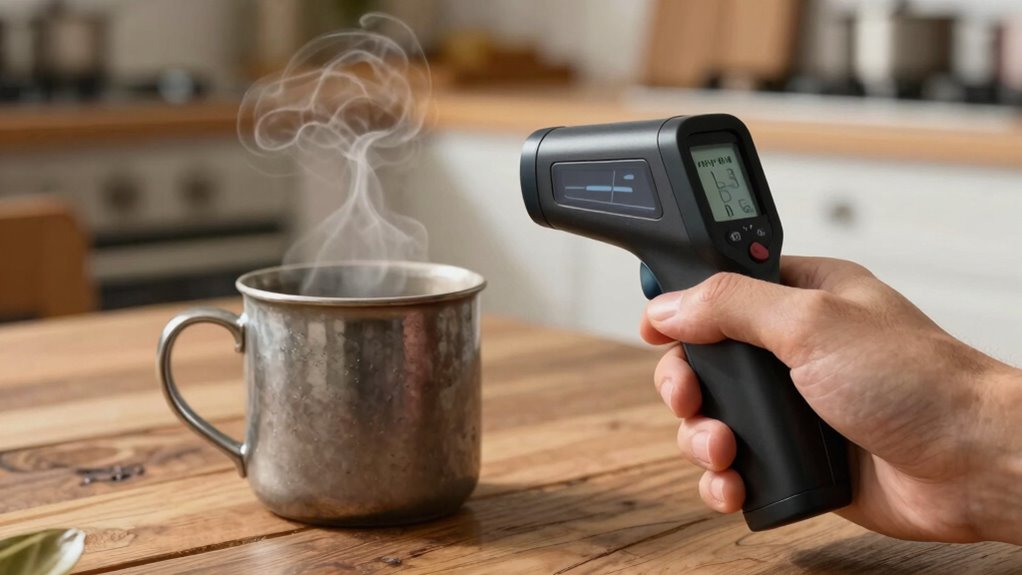
Infrared thermometers have become popular tools for quick and non-contact temperature measurement, especially in medical and industrial settings. They offer the convenience of taking readings without touching the surface, making them ideal for situations where hygiene or safety is a concern. However, their effectiveness depends heavily on infrared accuracy, which can vary based on several factors. While these devices provide fast results, they aren’t foolproof, and understanding their limitations helps you use them more effectively.
Infrared thermometers provide quick, contactless readings but require understanding their accuracy limitations for optimal use.
One of the main advantages of infrared thermometers is their ability to deliver instant readings, but this speed can sometimes come at the expense of precision. Infrared accuracy depends on how well the device is calibrated and the quality of the sensor. Inaccurate readings can happen if the thermometer isn’t properly maintained or if it’s used incorrectly. For example, ambient temperature, humidity, and even sunlight can influence the measurement. When accuracy is vital, it’s essential to verify the device’s calibration regularly and follow the manufacturer’s guidelines for use.
Surface limitations pose a significant challenge when relying on infrared thermometers. These devices measure the infrared radiation emitted from the surface of an object, but not all surfaces emit heat equally. Shiny, reflective, or polished surfaces tend to reflect infrared radiation rather than emit it, leading to falsely low readings. Conversely, dark, matte surfaces absorb and emit infrared radiation better, providing more reliable measurements. If you’re measuring temperature on a shiny metal surface or a highly reflective object, you might get misleading results. To improve accuracy, you can place a piece of matte tape or paint on reflective surfaces or take multiple readings from different angles. Additionally, surface emissivity varies among materials, which can significantly impact the accuracy of measurements. Being aware of emissivity differences can help you interpret readings more accurately. Recognizing the limitations of infrared measurement in different environments is also essential for obtaining reliable data.
Another surface-related issue is cleanliness. Dirt, dust, or moisture on the surface can obstruct infrared emission and skew the reading. It’s vital to ensure that the surface is clean and dry before measurement. Also, the distance from which you take the reading matters. Most infrared thermometers have a recommended distance-to-spot ratio, and exceeding this range can lead to inaccurate results because the device averages a larger area than intended. Additionally, proper understanding of infrared measurement principles can help users interpret readings more accurately and avoid common pitfalls. Recognizing how environmental conditions impact infrared readings is crucial for obtaining reliable data.
infrared thermometer for surface temperature
As an affiliate, we earn on qualifying purchases.
As an affiliate, we earn on qualifying purchases.
Frequently Asked Questions
Can Infrared Thermometers Measure Temperature Through Walls?
Infrared thermometers can’t measure temperature through walls because of wall penetration limits. Material interference from insulation, concrete, or brick blocks the infrared signals, preventing accurate readings. These thermometers work by detecting surface temperature, so any barrier or dense material interferes with the measurement. If you need to measure wall temperature, consider using a contact thermometer or thermal imaging camera instead, which can handle wall penetration better.
Are Infrared Thermometers Accurate for Newborns?
Infrared thermometers are like a quick flash of light—they can give accurate readings if used correctly. When measuring a newborn’s temperature, infrared accuracy is generally reliable, making them safe for newborn safety. Just make certain you aim the device properly and follow instructions closely. For the most precise results, especially with newborns, double-check with a digital thermometer and consult your pediatrician if needed.
What Is the Maximum Distance Infrared Thermometers Can Measure?
Infrared thermometers typically have a measurement range of about 1 to 15 inches, depending on the model. Using infrared technology, you can measure temperatures from a safe distance without contact. However, the maximum distance varies; some advanced models can measure accurately from as far as 20 inches. Always check your specific thermometer’s specifications to confirm accurate readings, especially when measuring from a longer distance.
Do Infrared Thermometers Work in Extreme Weather Conditions?
Sure, infrared thermometers work in extreme weather—if you ignore sensor limitations and environmental interference. Ironically, their accuracy plummets in such conditions, making them unreliable when you need them most. Wind, rain, or snow can throw off readings, highlighting their vulnerability. So, while they’re handy for quick checks, don’t rely on them in harsh weather without considering how environmental interference might skew your results.
How Often Should I Calibrate My Infrared Thermometer?
You should calibrate your infrared thermometer regularly to guarantee measurement accuracy. For most devices, calibration frequency depends on usage, but a good rule of thumb is every 1 to 2 years or after any impact or extreme temperature exposure. Regular calibration maintains precision, helping you trust your readings. If you notice inconsistent results, calibrate sooner to keep your measurements reliable and accurate.
Conclusion
Remember, while infrared thermometers are quick and convenient, they’re not a one-size-fits-all solution. Their pros make them great for rapid readings, but their limitations mean you shouldn’t rely on them for every situation. When it comes to accuracy, especially with tricky surfaces or internal temperatures, traditional methods still have their place. As the saying goes, “Don’t put all your eggs in one basket”—use infrared thermometers wisely, knowing when to trust them and when to seek other options.
Fall Picks
fall essentials
As an affiliate, we earn on qualifying purchases.