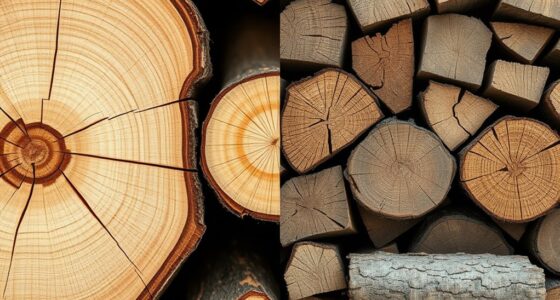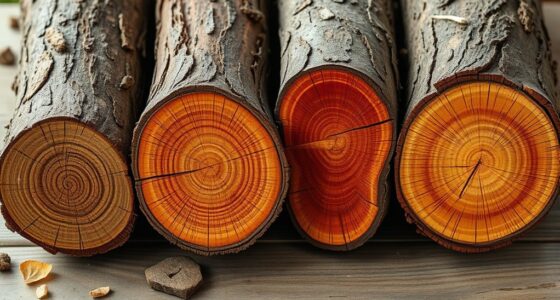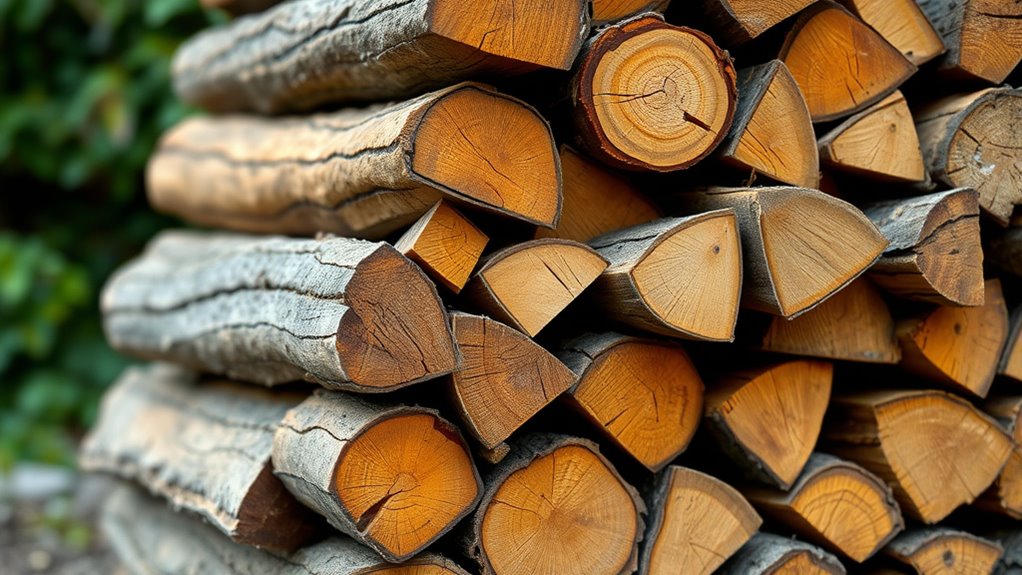

To identify properly seasoned wood, check if it feels light, looks dry and dull, and makes a hollow sound when tapped. Cracks or splits at the ends are good signs, and it shouldn’t produce excessive smoke when burned. Store your wood in a dry, well-ventilated spot, off the ground, and covered lightly on top to help it dry further. Keep learning how to guarantee your firewood is perfect for cleaner, more efficient burning.

Get backup power and energy gear delivered free with Prime
- Fast, free delivery on millions of items
- Prime Video, Amazon Music and more included
- Member-only deals all year
Key Takeaways
- Check moisture content with a moisture meter; ideal is around 20% or less.
- Look for visual cues like cracks, dull appearance, and sound hollow when tapped.
- Handle wood to feel lighter and test for a hollow sound indicating dryness.
- Stack logs with space for airflow, off the ground, and cover the top loosely to prevent moisture buildup.
- Store in a dry, well-ventilated area away from dampness to ensure proper drying and prevent mold.

Have you ever wondered why some firewood burns efficiently while others smoke and produce little heat? The key lies in understanding moisture content and how you store your wood. When firewood has high moisture content, it contains a lot of water trapped within the wood fibers. Burning wet wood causes excessive smoke, sparks, and inefficient heat output. To guarantee your firewood burns well, you need to recognize the signs of properly seasoned wood and use effective wood storage techniques to keep it dry.
First, you want to check the moisture content of your wood. Ideally, seasoned firewood should have a moisture content of around 20% or less. You can use a moisture meter for an accurate reading, but if you don’t have one, there are simple visual and tactile cues. Properly seasoned wood feels lighter, sounds hollow when tapped, and has cracks or splits in the ends. It also looks dry and dull, rather than shiny or freshly cut. These signs indicate that the moisture has evaporated sufficiently, making the wood ready for burning.
Proper wood storage techniques are vital to maintaining low moisture content. You should stack your firewood in a way that promotes good airflow around each piece. Leave space between logs and stack them off the ground on a pallet or a rack to prevent moisture from the ground seeping in. Cover the top of the stack with a tarp or a waterproof cover, but leave the sides exposed to air. This setup allows moisture to escape while preventing rain from soaking the wood. Avoid covering the entire stack tightly, as trapping moisture inside can lead to mold and decay. Instead, aim for a well-ventilated setup that encourages air circulation, which helps the wood dry evenly and stay dry over time.
Additionally, store your wood in a dry, sheltered location if possible, such as a shed or a carport. Keep it away from areas prone to dampness or flooding. Proper wood storage techniques not only help you keep your firewood dry but also prevent mold, rot, and insect infestation. Remember, the key to effective seasoning is patience. Good storage practices allow you to dry your wood gradually, preserving its quality and ensuring it burns cleanly and efficiently when you need it. By paying attention to moisture content and adopting proper storage techniques, you’ll always have ready-to-burn firewood that produces maximum heat with minimal smoke. Proper storage methods are essential for maintaining the quality and safety of your firewood over time.
As an affiliate, we earn on qualifying purchases.
Frequently Asked Questions
How Can I Tell if Wood Is Over-Dried or Under-Dried?
You can tell if wood is over-dried or under-dried by checking its moisture content and visual cues. Over-dried wood often looks cracked, brittle, and has a low moisture content below 15%. Under-dried wood appears heavier, darker, and may have visible moisture or mold. Use a moisture meter for accuracy, and trust your eyes—cracks indicate over-drying, while dampness suggests it’s not yet properly seasoned.
What Are the Best Storage Conditions for Seasoned Wood?
Did you know that proper storage can increase wood’s burn efficiency by up to 25%? To achieve this, keep your seasoned wood in a dry, covered area with moisture barriers like tarps or plastic sheeting. Use good ventilation techniques to allow airflow around the stacks, preventing mold and decay. Store the wood off the ground on pallets or racks, ensuring it stays dry and well-ventilated for ideal burning conditions.
How Long Does It Typically Take to Season Different Wood Types?
You’ll find that hardwoods like oak take about 6 to 12 months to season properly, while softer woods like pine dry faster, usually in 6 to 8 months. To determine if your wood is ready, use a moisture meter; ideally, the moisture content should be below 20%. Keep in mind, drying time varies based on wood type, thickness, and storage conditions, so check regularly for best results.
Can Seasoned Wood Be Re-Moistened if It Becomes Too Dry?
Yes, you can re-moisten seasoned wood if it becomes too dry. To do this, you should use moisture reintroduction techniques like wrapping the wood in damp cloths or storing it in a humid environment. Avoid excessive drying techniques, which could cause cracking. Instead, gently increase humidity around the wood, allowing it to absorb moisture gradually. This process helps restore its moisture content for better burning quality.
What Are Common Mistakes to Avoid When Storing Seasoned Wood?
When storing seasoned wood, avoid common mistakes like keeping it in airtight storage containers, which trap moisture and promote rot. Use moisture meters to check the wood’s dryness and guarantee proper airflow. Don’t stack wood directly on the ground; elevate it for better ventilation. Also, prevent exposure to rain or snow, and store in a dry, covered area. These steps help maintain the wood’s quality and verify it burns efficiently.
Conclusion
Remember, properly seasoned wood is like a steady heart—resilient and ready to give warmth. When you select and store it with patience, you’re nurturing a fire that symbolizes comfort and readiness. Don’t rush the process; let the wood’s natural journey mirror your own growth. In the end, well-seasoned wood stands as a quiet affirmation to patience, symbolizing the strength found in careful preparation and the warmth it brings to your home and spirit.
Halloween Picks
halloween
As an affiliate, we earn on qualifying purchases.