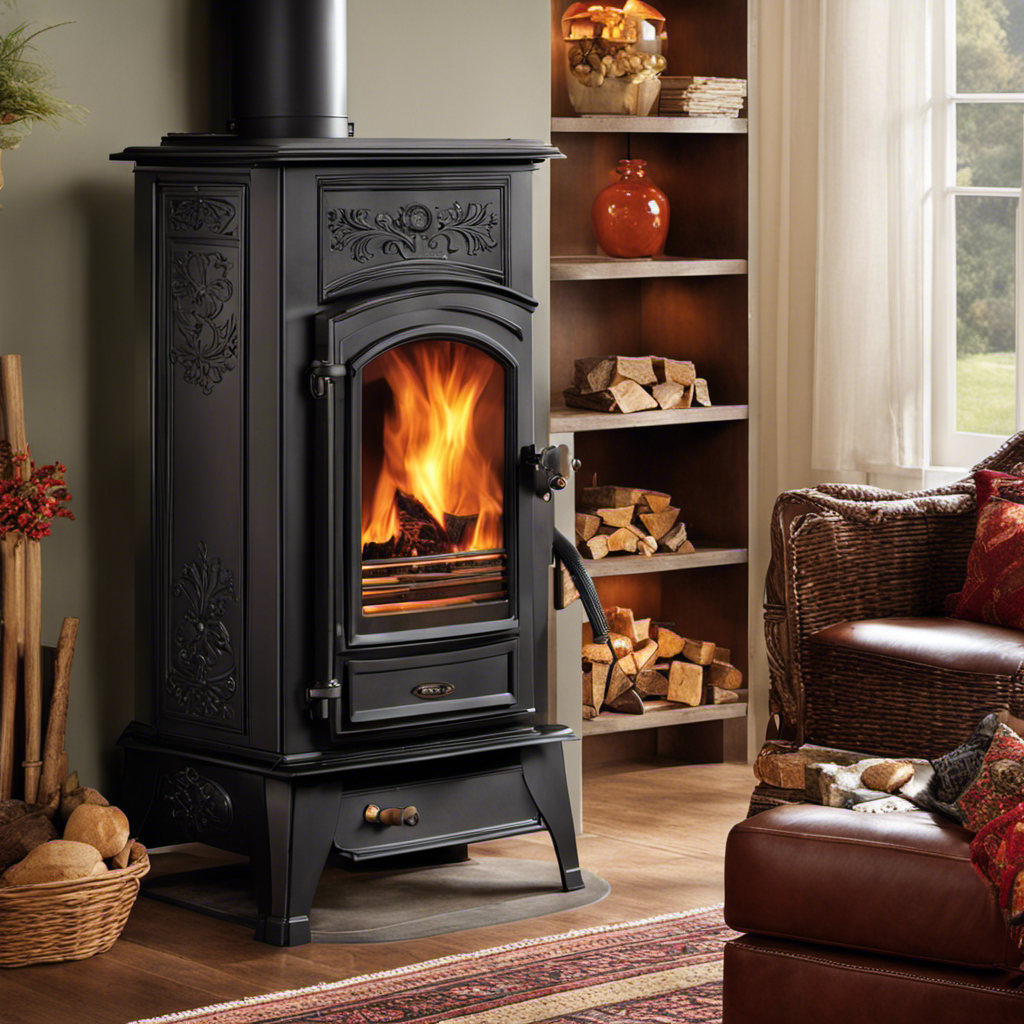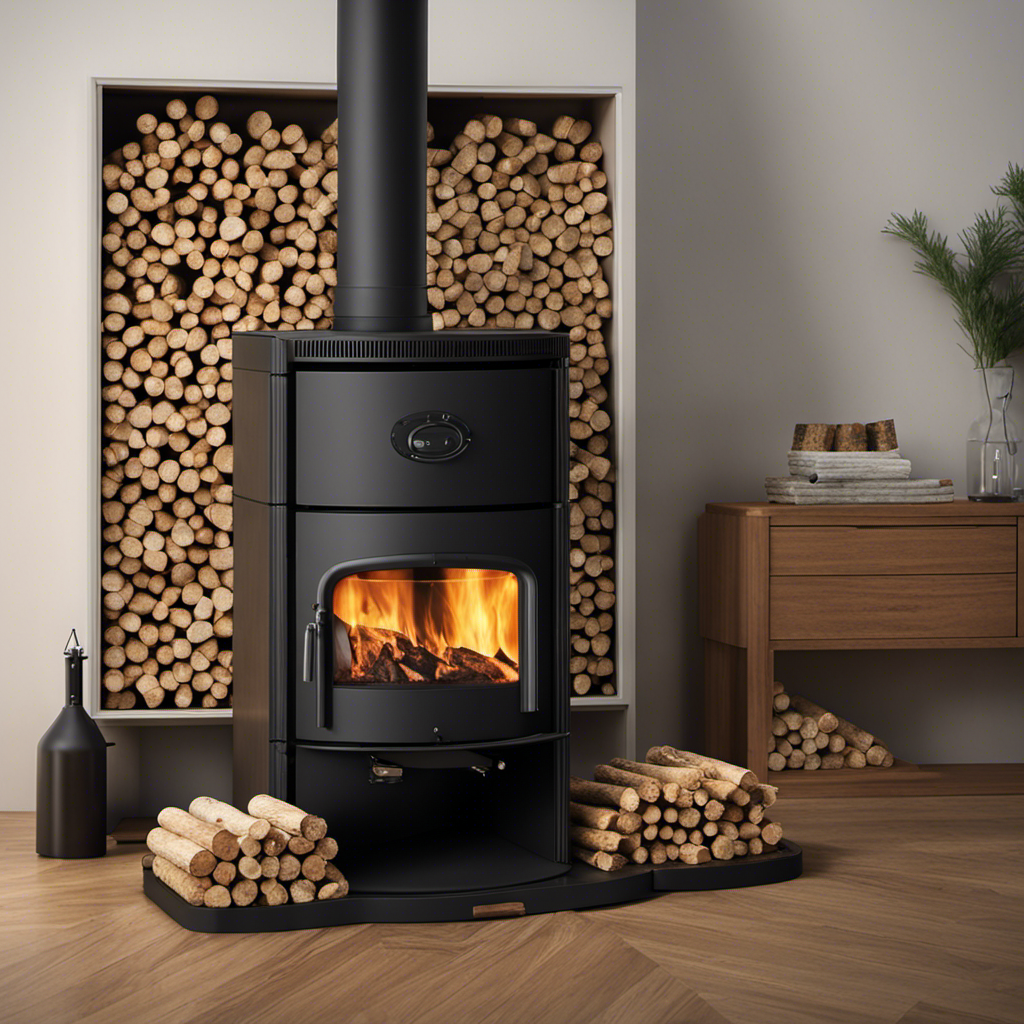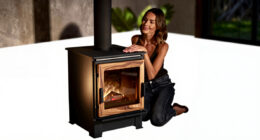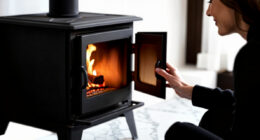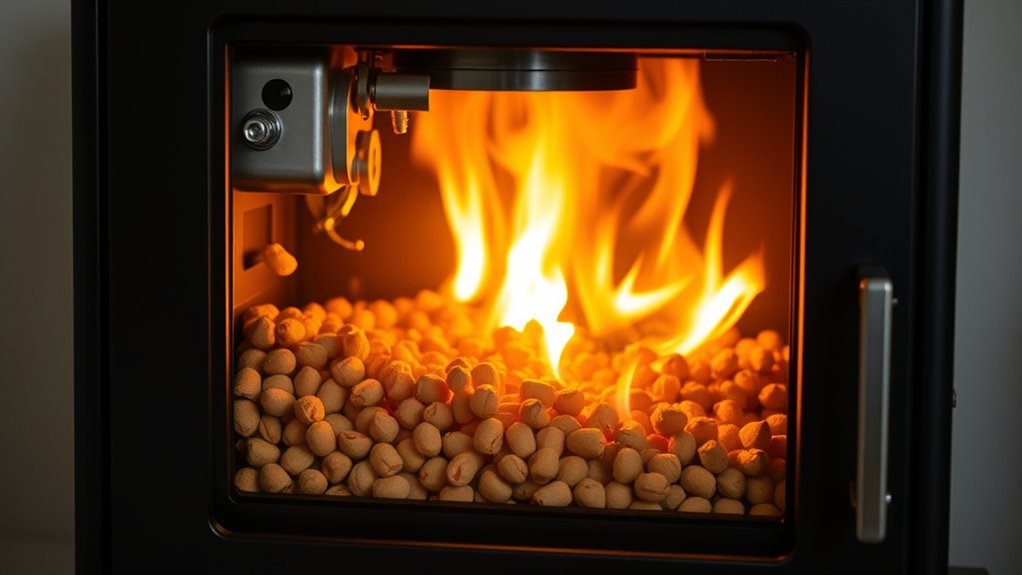

When you turn on a pellet stove, the process starts in the hopper, which stores the pellets. An auger then transports the pellets to the burn pot, where an automatic igniter sparks to light them. As the pellets burn, a convection blower circulates warm air into your space, while sensors maintain consistent heat. Regular maintenance like ash removal keeps everything running smoothly—continue exploring to discover how all these parts work together seamlessly for efficient heating.
Key Takeaways
- Pellets are fed from the hopper to the burn pot via an auger driven by a motor.
- The ignition system automatically heats up to create a steady flame for combustion.
- Combustion produces heat, ash, and exhaust gases, with internal components regulating pellet flow.
- Warm air is circulated into the living space by a convection blower.
- Ash is collected in an ash pan, requiring regular removal to maintain stove efficiency.

Pellet stoves are efficient heating appliances that burn compressed wood or biomass pellets to generate warmth. When you turn on the stove, the ignition process begins, which is designed to quickly and safely light the pellets inside the combustion chamber. Modern pellet stoves typically feature an electric igniter that automatically activates once you set the desired temperature. As the igniter heats up, it ignites the pellets, creating a steady flame that sustains combustion. This process is usually quick, allowing you to enjoy warmth within minutes of turning on the stove. The ignition process is carefully controlled to guarantee safety and efficiency, often involving automatic shutoff if the ignition fails or if there’s a malfunction.
Once the pellets are burning, the stove’s internal components take over to maintain consistent heat output. An auger, driven by a motor, delivers pellets from the hopper into the burn pot at a controlled rate. As the pellets combust, they produce ash and exhaust gases. Managing ash is an essential part of keeping your pellet stove functioning smoothly. Regular ash removal is necessary because ash can clog the burn pot and reduce efficiency if it accumulates too much. Many pellet stoves feature an ash pan or tray that collects debris automatically or can be easily removed for manual cleaning. You should plan to check and empty this ash container regularly—usually after every few bags of pellets—to guarantee proper airflow and maintain ideal performance.
Throughout operation, the stove’s convection blower distributes warm air into your living space, while sensors and thermostats help regulate the heat output. The continuous cycle of pellet feeding, combustion, and heat distribution keeps your home comfortable without much effort on your part. The ash removal process is straightforward: once the ash pan is full, you turn off the stove, wait for it to cool, and then remove the tray for disposal. This simple maintenance task helps prevent blockages, keeps the stove running efficiently, and extends its lifespan. Proper ash removal not only guarantees safety but also helps maintain steady heat output. Additionally, some pellet stoves incorporate stove safety features that automatically shut down the unit in case of malfunctions, ensuring safe operation. Regular cleaning and filter maintenance are also crucial for optimal performance and longevity of your appliance. Moreover, understanding the ignition process can help troubleshoot common issues and ensure reliable startup. Maintaining proper airflow within the stove is vital for efficient combustion and energy use. Overall, understanding the ignition process and regular ash removal are key to operating your pellet stove effectively. With routine care, your stove can provide dependable, environmentally friendly heat for years to come.

Breckwell Big E Pellet Stove Ash Pan Part # A-ASHPANBIGE
If Your Pan Is Warped And Has Air Leaks, The Stove May Shut Down With 2 Blinking Heat…
As an affiliate, we earn on qualifying purchases.
As an affiliate, we earn on qualifying purchases.
Frequently Asked Questions
How Often Do I Need to Clean My Pellet Stove?
You should clean your pellet stove at least once a week during regular use, following a consistent cleaning schedule. Make sure to clear ash from the burn pot and vacuum out the ash pan regularly. For proper maintenance tips, check the burn pot, glass door, and venting system monthly. Regular cleaning keeps your stove running efficiently and prevents buildup, ensuring safe and best operation throughout the heating season.
Can I Operate a Pellet Stove During a Power Outage?
Yes, you can operate your pellet stove during a power outage if it has a battery backup or a manual ignition option. The battery backup supplies power to keep the stove running, while manual ignition allows you to start the stove without electricity. Make sure to keep the backup fully charged and familiarize yourself with the manual ignition process beforehand so you’re prepared during an outage.
Are Pellet Stoves Suitable for Large Open-Plan Areas?
Yes, pellet stoves can be suitable for large open-plan areas if they have a high heating capacity, but their efficiency might decrease in very large spaces. You’ll want to choose a stove designed for large areas to guarantee ideal heating efficiency. Proper placement and potentially supplementing with fans can help distribute heat evenly, making your space comfortable without sacrificing energy efficiency.
What Safety Features Are Integrated Into Pellet Stoves?
Pellet stoves come with safety features like fire suppression systems and safety sensors that detect overheating or blockages. These sensors automatically shut off the stove if they sense a problem, preventing accidents. Fire suppression systems activate quickly to extinguish any fire, offering peace of mind. You should always follow manufacturer guidelines and perform regular maintenance to guarantee these safety features work effectively, keeping your home safe.
How Do I Choose the Right Size Pellet Stove for My Space?
Ever wondered how to pick the perfect pellet stove size? You should consider sizing considerations and room insulation. Measure your space accurately and determine its heating needs. A stove that’s too small won’t keep you warm, while one that’s too large can waste energy. Think about your room’s insulation—well-insulated rooms need less heat. By evaluating these factors, you’ll select a stove that efficiently heats your space and saves money.

Pellet Stove Igniter Compatible with All Models of Castle/Comfortbilt Pellet Stoves HP21,HP22,Replace Part#Castle 720307/ComfortBilt igniter1 IG-1,6"Long and 3/8 "Diameter
Pellet Stove Igniter Replacement Spec: 6" long slide in style ,3/8 "Diameter,AC 115V 450 W
As an affiliate, we earn on qualifying purchases.
As an affiliate, we earn on qualifying purchases.
Conclusion
Now that you understand the journey from hopper to heat, imagine what could go wrong if one part fails. Will your stove keep burning smoothly, or will a hidden glitch disrupt your cozy comfort? The secrets behind pellet stoves are fascinating, but they also remind you that maintenance and attention are key. Stay vigilant, and your stove will keep delivering warmth—just don’t forget, the next unexpected hiccup could be around the corner.

Adviace Replacement SRV7000-659 Convection Blower Distribution Fan for Pelpro PP60 PP60-B PP60B & Pleasant Hearth PH50CABPS PH35PS PH50PS PH50 PH35 Pellet Stoves
Perfect Compatible Models ~ ✅Replacement SRV7000-659 Convection Blower for Pelpro PP60, PP60-B, PP60B, PP60-RF Pellet Stoves. ✅Replacement Distribution…
As an affiliate, we earn on qualifying purchases.
As an affiliate, we earn on qualifying purchases.

ComfortBilt & Castle Serenity Pellet Stove Maintenance Kit
Included: Igniter (CB-IGNITER) Lower Auger Bearing (CB-LOWER-BEARING) Upper Auger Bearing (CB-UPPER-BEARING) Exhaust Gasket (6.5" dia.) (COMFORTBILT-EXHAUST-GASKET) Large Cleanout…
As an affiliate, we earn on qualifying purchases.
As an affiliate, we earn on qualifying purchases.