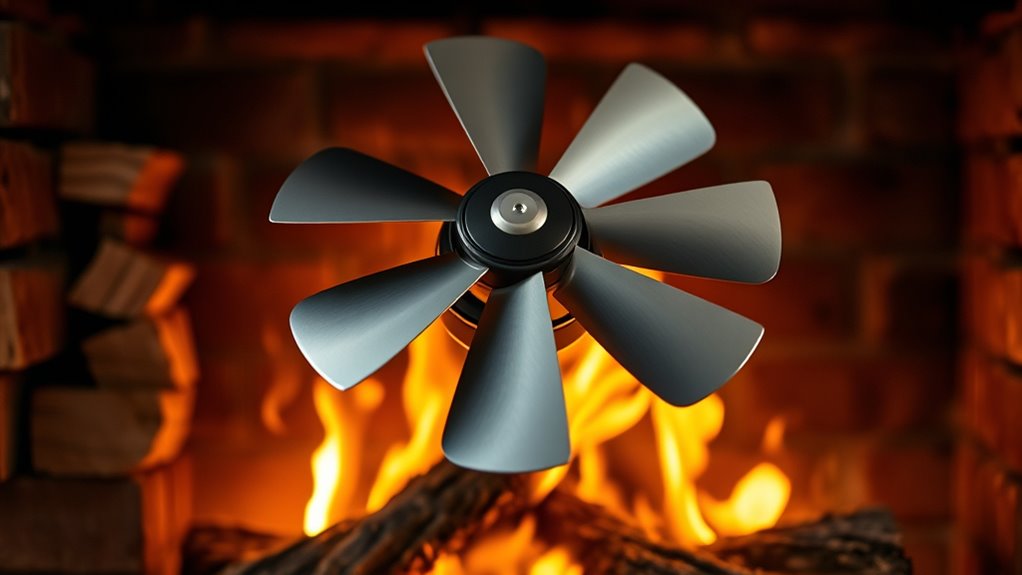

Heat-powered stove fans definitely help by circulating warm air more effectively across your space. They operate using just the heat from your stove, so you won’t need batteries or electricity. As the stove heats up, the fan spins faster, pushing warm air into colder corners and reducing hot spots. This improves your home’s comfort and can lower energy bills. To find out how to get the most out of yours, keep exploring the details below.
Key Takeaways
- Heat-powered stove fans improve airflow, promoting more even heat distribution throughout the room.
- They reduce hot spots and drafts, enhancing comfort without increasing the stove’s temperature.
- These fans operate silently and require no external power, making them energy-efficient and cost-effective.
- They help maximize stove heat use, potentially lowering overall energy consumption and heating costs.
- Proper placement and operation increase their effectiveness in circulating warm air more quickly.

If you’re looking for an easy way to distribute heat more evenly in your home, heat-powered stove fans are a smart solution. These devices sit atop your wood or pellet stove and use the heat generated to power a small, quiet fan that circulates warm air throughout the room. By improving the flow of heated air, you can enhance ventilation efficiency, ensuring that the warmth spreads evenly rather than lingering near the stove. This not only makes your space more comfortable but also helps you make better use of the heat you produce, reducing the need to turn up the thermostat or run additional heating sources.
Heat-powered stove fans improve airflow, distribute heat evenly, and boost energy efficiency in your home.
One of the key benefits of a heat-powered stove fan is energy conservation. Since these fans operate solely on the heat from your stove, they don’t require electricity, which means you save on energy costs. This independence from electrical power also makes them a reliable option during power outages. As the fan kicks into action with rising stove temperatures, it creates a more dynamic airflow, pushing warm air into colder corners of the room that might otherwise stay chilly. This improved circulation means you can maintain a cozy environment without constantly increasing your heating output, leading to lower energy bills over time.
The design of heat-powered stove fans typically involves a thermoelectric module that converts heat into electrical energy to run the fan. Because they don’t rely on batteries or external power sources, they’re both eco-friendly and cost-effective. You’ll find that as your stove heats up, the fan’s speed increases, helping to distribute heat faster and more evenly. This not only enhances ventilation efficiency but also minimizes hot spots and drafts, creating a more consistent temperature throughout your space. In turn, this can contribute to better energy conservation because your heating system doesn’t have to work as hard to compensate for uneven heat distribution. Additionally, many models are designed with adjustable angles to optimize airflow and performance.
Furthermore, these fans are easy to install and maintain. You simply place them on your stove, and they start working immediately once the surface reaches the necessary temperature. Their silent operation means you won’t even notice their presence, yet their impact on your home’s warmth and energy use can be significant. Proper placement of these fans can optimize their performance and heat distribution. Optimizing fan speed settings can further improve efficiency and comfort. Using heat distribution techniques can help ensure even warmth throughout your space. Overall, heat-powered stove fans do help by boosting ventilation efficiency and promoting energy conservation, making your heating more effective and your home more comfortable. They’re a simple, sustainable addition that leverages the heat you already produce, maximizing warmth while minimizing waste.
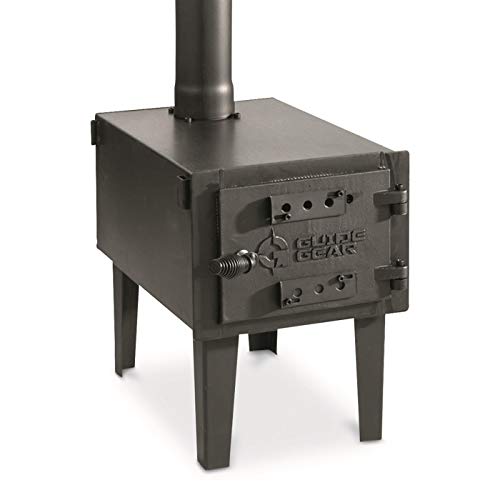
Guide Gear Outdoor Wood Burning Stove; Portable with Chimney Pipe for Cooking and Camping
OUTDOOR WOOD STOVE – We designed our camp stove for use outside. Perfect for use during camping trips...
As an affiliate, we earn on qualifying purchases.
Frequently Asked Questions
Do Heat-Powered Stove Fans Work With All Types of Stoves?
Heat-powered stove fans typically work with most stoves, but you should check chimney compatibility and fuel source requirements first. These fans rely on heat from the stove to operate, so they’re best suited for solid fuel stoves like wood or coal. If your stove has an open or enclosed chimney and uses compatible fuel sources, chances are the fan will work efficiently. Always verify manufacturer instructions for the best fit.
How Noisy Are Heat-Powered Stove Fans During Operation?
Heat-powered stove fans operate quietly, with noise levels typically below 30 decibels, making them barely noticeable during use. You might hear a gentle hum or subtle clicking, but the sound quality is minimal and unlikely to disturb your environment. This quiet operation guarantees you can enjoy the warmth without distraction, and their low noise levels make them a practical addition to any stove setup.
Can These Fans Improve Overall Heating Efficiency?
Yes, heat-powered stove fans can improve your overall heating efficiency. They circulate warm air more effectively, which helps distribute heat evenly across your space. This increased circulation can lead to energy savings because you might rely less on your main heating system. Additionally, these fans are cost-effective since they don’t require electricity, making them a practical way to enhance your stove’s performance and save money over time.
Are Heat-Powered Stove Fans Safe to Use Indoors?
Imagine it’s 1920, and you’re wondering if heat-powered stove fans are safe indoors. Rest assured, they’re designed with fire safety in mind, so they won’t cause fires or damage your stove. They also don’t affect indoor air quality negatively, meaning you won’t breathe in harmful fumes. Just guarantee proper placement and follow manufacturer instructions, and these fans can safely help distribute heat efficiently in your home.
How Long Do Heat-Powered Stove Fans Typically Last?
Heat-powered stove fans typically last about 5 to 10 years, depending on maintenance and durability. You can extend their lifespan by regularly cleaning the blades and ensuring proper operation. Proper maintenance helps prevent wear and tear, so you get the most out of your fan. Keep an eye on any unusual noises or decreased efficiency, and replace the unit when it shows significant signs of aging to make certain of safe and effective performance.

Single Burn Rate Stove
Heats up to 900 sq. ft.
As an affiliate, we earn on qualifying purchases.
Conclusion
So, next time you notice your stove’s warmth, remember those little fans might just be a coincidence—helping spread heat more evenly, or maybe not. Sometimes, it feels like the universe aligns when a simple gadget makes your space cozier without you even planning it. Whether they truly boost your stove’s efficiency or just add a touch of comfort, you might find that, in the end, it’s the small coincidences that make a big difference in your home.

YRenZ Upgraded Portable Wood Stove for Camping, Compact Tent Stove with Large Firebox, High Airtightness for Outdoor Cooking & Heating
【Upgraded Tent Camping Wood Stove】: Compact yet powerful wood stove for tents and outdoor use, with high airtightness,...
As an affiliate, we earn on qualifying purchases.

Hot Tent Stove,AVOFOREST Wood Burning Stove,Small Wood Stove with 7 Stainless Chimney Pipes for Outdoor Heating & Cooking, Ice Fishing, Hunting
🔥Detachable Chimney Design :In order to facilitate portability,wood Burning Stove is divided into 7 sections, which are composed...
As an affiliate, we earn on qualifying purchases.