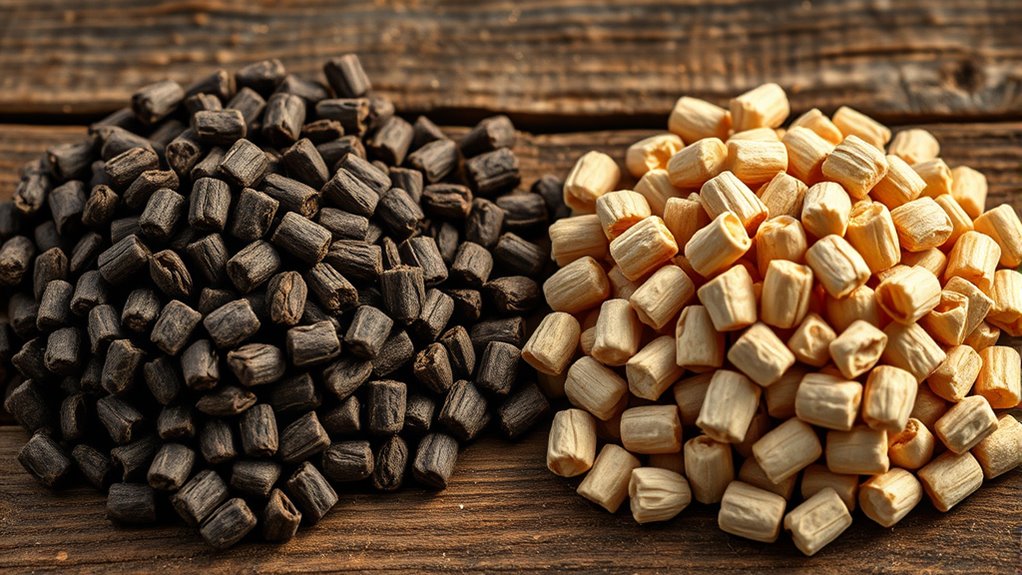
When comparing hardwood and softwood pellets, hardwood typically offers lower ash content and moisture levels, resulting in cleaner burns and easier stove maintenance. Softwood pellets tend to produce more ash and may retain higher moisture, leading to more buildup and less efficient combustion. Choosing hardwood can improve your stove’s performance and reduce cleaning frequency. If you want to discover how these differences impact your heating system and what to look for, keep exploring further.
Key Takeaways
- Hardwood pellets generally have lower ash content, resulting in cleaner burning and less maintenance.
- Softwood pellets often contain higher moisture levels, which can reduce combustion efficiency.
- Properly dried hardwood pellets produce less smoke and creosote buildup than softwood variants.
- The density of hardwood makes its pellets burn longer and more efficiently than softwood.
- Manufacturing quality affects pellet performance; low ash and moisture are key for optimal fuel quality.

Have you ever wondered what makes some pellet fuels perform better than others? The answer often comes down to their quality, which is heavily influenced by factors like ash content and moisture levels. When choosing between hardwood and softwood pellets, these aspects become even more critical since they directly impact efficiency, cleanliness, and overall performance. Hardwood pellets typically have a lower ash content, meaning they produce less residue after combustion. This not only keeps your stove cleaner but also reduces the frequency of ash removal, making maintenance easier. Softwood pellets, on the other hand, tend to generate more ash, which can lead to more frequent cleaning and potential buildup in your stove or chimney. If you prioritize a cleaner burn and less cleanup, hardwood pellets are generally the better choice.
Moisture levels also play a crucial role in pellet quality. Well-manufactured pellets should have low moisture content—around 8-10%. Higher moisture levels can cause inefficient burning, increased emissions, and difficulty igniting the fire. They can also lead to excess smoke and creosote buildup, which poses safety concerns over time. Hardwood pellets are often dried more thoroughly during production, which helps keep moisture levels low and ensures a more consistent, efficient burn. Softwood pellets can sometimes have slightly higher moisture content if not processed properly, which diminishes their combustion quality. When selecting pellets, paying attention to the moisture content on the packaging or product specifications ensures you’re getting fuel that burns hotter, cleaner, and more efficiently. Additionally, the differences in ash content and moisture levels reflect the raw materials used. Hardwood, like oak or maple, is denser and requires more processing but results in a more stable and cleaner-burning pellet. Softwood, such as pine or spruce, is lighter and easier to process but tends to produce more ash and may have slightly higher moisture levels if not carefully dried. As a user, understanding these distinctions helps you choose pellets that match your heating needs and maintenance preferences. When you prioritize low ash content and ideal moisture levels, you’re investing in a more efficient and cleaner-burning pellet fuel. Incorporating advanced manufacturing techniques can further enhance pellet quality by reducing impurities and ensuring consistent moisture content, making your heating experience even better.

Hardwood Oak Heating Pellets
Made in the USA from 100% kiln-dried oak fiber
As an affiliate, we earn on qualifying purchases.
As an affiliate, we earn on qualifying purchases.
Frequently Asked Questions
How Do Moisture Levels Affect Pellet Combustion Efficiency?
Moisture content substantially impacts your pellet’s combustion efficiency. When moisture levels are high, your pellets burn less efficiently because extra energy is used to evaporate the water. This results in more ash, less heat, and increased emissions. To maximize combustion efficiency, choose pellets with low moisture content, ideally below 8-10%, which ensures cleaner, more efficient burning and better heat output for your stove or furnace.
Are There Specific Brands Known for Higher Hardwood Pellet Quality?
You might be surprised to find that top brands like Traeger, Enviro-Log, and Green Supreme stand out for their high-quality hardwood pellets. These brands earn their reputation through rigorous certification standards like the Pellet Fuels Institute (PFI) certification, ensuring consistent quality. When choosing, don’t overlook these trusted names—they often deliver superior burn efficiency, less ash, and better heat output, making your pellet stove experience truly exceptional.
What Certifications Should I Look for in High-Quality Pellets?
You should look for pellets with certification standards like the Pellet Fuel Institute (PFI) or ENplus. These certifications guarantee your pellets meet strict quality assurance measures, indicating consistent burn performance and low ash content. High-quality pellets often carry these labels, giving you confidence in their durability and efficiency. Always check for these certifications on the packaging to ensure you’re getting reliable, top-tier fuel for your stove or boiler.
Do Softwood Pellets Produce More Creosote Buildup?
Softwood pellets tend to produce more creosote buildup because they generate higher levels of combustion byproducts, including tar and volatile gases. These byproducts can condense inside your chimney or stove, increasing the risk of creosote accumulation. To minimize this, guarantee proper ventilation, use high-quality pellets, and have your chimney cleaned regularly. Softwood pellets may burn hotter, but managing creosote buildup is essential for safe and efficient operation.
How Does Pellet Size Variation Impact Stove Performance?
A touch of variation in pellet size can subtly influence your stove’s performance. When fuel pellet uniformity aligns with pellet sizing standards, you’ll notice smoother feeding and more consistent heat. Slight inconsistencies might cause minor hiccups, like uneven burning or ash buildup. To keep your stove running ideally, opt for pellets that meet standard sizing, ensuring your heating experience remains cozy and hassle-free.
Hardwood Oak Heating Pellets
Made in the USA from 100% kiln-dried oak fiber
As an affiliate, we earn on qualifying purchases.
As an affiliate, we earn on qualifying purchases.
Conclusion
In the end, choosing the right pellet fuel can feel like a modern-day quest, much like seeking the warmth of a hearth in colder times. Whether you opt for hardwood or softwood pellets, prioritize quality to guarantee a cozy, efficient fire. Don’t settle for lesser options that may leave you in the cold or with a smoky ordeal. Remember, your choice today can keep the flames of comfort burning brightly—just like those old tales by the hearth.

Royal Oak 100 Percent Charcoal Hardwood Pellets for Real BBQ Flavor, Grilling and Smoking, High Heat, Resists Water, Easy to Clean, 30 Pound Bag
REAL CHARCOAL: Royal Oak 100 Percent Real Hardwood Charcoal Pellets sear in authentic barbecue flavor when grilling or…
As an affiliate, we earn on qualifying purchases.
As an affiliate, we earn on qualifying purchases.

Pit Boss (20 pound Apple Blend) All Natural Hardwood BBQ Wood Pellets for Pellet Grills and Smokers
A blend of apple and oak pellets to infuse food with a mild smoky flavor
As an affiliate, we earn on qualifying purchases.
As an affiliate, we earn on qualifying purchases.