
Renewable energy projects may promise a cleaner future, but their construction still depends on something decidedly practical: reliable records of what happened on site. Wind farms make that challenge especially visible. Turbine positions are spread across large areas, crews rotate, acceptance walks happen in the field, and mobile coverage cannot be taken for granted. Meetings, observations and defects still have to be documented across every location.

Get backup power and energy gear delivered free with Prime
- Fast, free delivery on millions of items
- Prime Video, Amazon Music and more included
- Member-only deals all year
Energie & Öko · Wind-farm documentation
The evidence has to travel with the crew
Turbine positions are dispersed, teams rotate and mobile coverage breaks. Gewerkton starts the record where the work happens—during the field walk, while its context is still present.
Field reality
One project, many working locations
A meeting decision may affect several turbine positions; an acceptance defect belongs to one specific place. Both must remain understandable after crews move on.
Voice becomes project evidence
Not an isolated voice note
Gewerkton Field turns site dictation into practical construction records.
Cross-border work
27content languages
EU, US and APAC participants can work on the same project in their own languages while the original evidence remains connected to the later documentation.
Data foundations
Regional choice, controlled residency
Projects can choose regional AI providers and keep data in an EU cloud or on the customer’s own infrastructure. German integration runs through GAEB, REB, XRechnung and DATEV.
One branded house
3product lines connect the field record
The same field logic extends from wind farms to distributed charging infrastructure: documentation follows physical locations and mobile teams, not a central desk.
“On site, what counts is what’s proven.”
That is the home turf of Gewerkton, a voice-first construction documentation and defect management platform for global markets. It was born in the German market and has its deepest German commercial integration through GAEB, REB, XRechnung and DATEV, but its broader design reflects the realities of international projects: 27 content languages, regional AI-provider choice and data residency in an EU cloud or on the customer’s own infrastructure.
The central idea is well suited to distributed energy sites. Instead of treating documentation as desk work that follows the site visit, Gewerkton Field starts with what people can capture while they are actually standing near the work. Dictation becomes evidence, defects, daywork reports, takt information or portal content. When a crew reaches a dead zone, offline capture allows the documentation to continue and sync later.
That matters because a loss of connectivity should not become a loss of evidence. On a wind farm, the work does not conveniently move back within network range. A field acceptance walk still has to proceed, and the record still has to reflect what the team encountered at each turbine position. As Gewerkton’s marketing line puts it: “On site, what counts is what’s proven.”
Why wind projects put pressure on ordinary documentation
A wind farm is not one compact building site. It is a collection of distributed working locations connected by a common project, with crews and responsibilities moving between them. That geography changes the documentation problem. A meeting decision may affect several turbine positions, while a defect found during acceptance belongs to one particular location. Both need to remain understandable after crews rotate or the work advances.
The challenge is not simply generating more notes. It is maintaining documentation discipline across distance, time and changing teams. If information is captured inconsistently, the project can accumulate fragments that are difficult to relate to the field work they describe. Voice-first capture addresses the moment when those fragments are created: during an inspection, a walk or a discussion, while the context is still present.
Gewerkton Field is the product line that carries this part of the story. It is the voice-first construction site app in the Gewerkton house, supporting dictation to evidence, defects, daywork reports, takt and portal workflows. Its role is not limited to recording speech. The point is to turn site capture into usable project documentation without making the field team wait until it returns to a desk.
Offline capture is part of the working environment
Dead zones are not an edge case on distributed renewable sites. They are part of the environment in which documentation has to function. If capture depends on continuous connectivity, the process can break precisely where the work is taking place. Offline capture, followed by later synchronisation, allows the record to continue even when the network does not.
This is especially relevant during field acceptance. The people conducting the walk need to document what they see across multiple positions, not merely what they can reach online. The documentation can be captured in the field and synced later, preserving continuity between connected and disconnected areas of the project.
The same logic applies to rotating crews. A site record should not depend entirely on one person remaining available to explain it. Meetings and defects need to stay documented as teams move through the project. The original capture provides the evidence base, while the resulting documentation gives the wider team something it can continue to work with.
field documentation voice recorder
As an affiliate, we earn on qualifying purchases.
As an affiliate, we earn on qualifying purchases.
From spoken observation to project evidence
Construction documentation often competes with the immediate demands of the site. People are walking, inspecting and discussing work rather than sitting at a keyboard. Voice-first capture fits that reality because it begins with dictation. For wind farms and other renewable projects, this can connect the acceptance walk more directly with the evidence it produces.
Gewerkton Field supports the practical categories that recur in construction: evidence, defects, daywork reports, takt and portal content. A dictated observation can therefore enter a structured working context instead of remaining an isolated voice note. That distinction is important. A project does not merely need a collection of recordings; it needs documentation that can continue through review, coordination and handover.
Original audio also has value in longer and more change-heavy environments. Gewerkton’s infrastructure and tunnel deployment field, for example, includes instructions backed by the original audio. On cross-border projects, each participant can work in their own language while the evidence original remains unambiguous. These capabilities reflect a consistent principle: the source captured on site should remain connected to the documentation used later.
Gewerkton supports 27 content languages. For cross-border teams, that means EU, US and APAC participants can work on the same project in their own languages. For projects in Asia, Chinese, Korean and Vietnamese crews can use multilingual workflows from capture to report. That reach is relevant to the renewables sector, where distributed physical sites can also involve internationally distributed organisations.
Field capture is one part of the system
Gewerkton has three product lines under one brand: Field, Studio and Cloud. Field is the site-facing app and the natural centre of a wind-farm workflow, but it does not stand alone. The other two lines address the plans, models, operations and coordination around the field record.
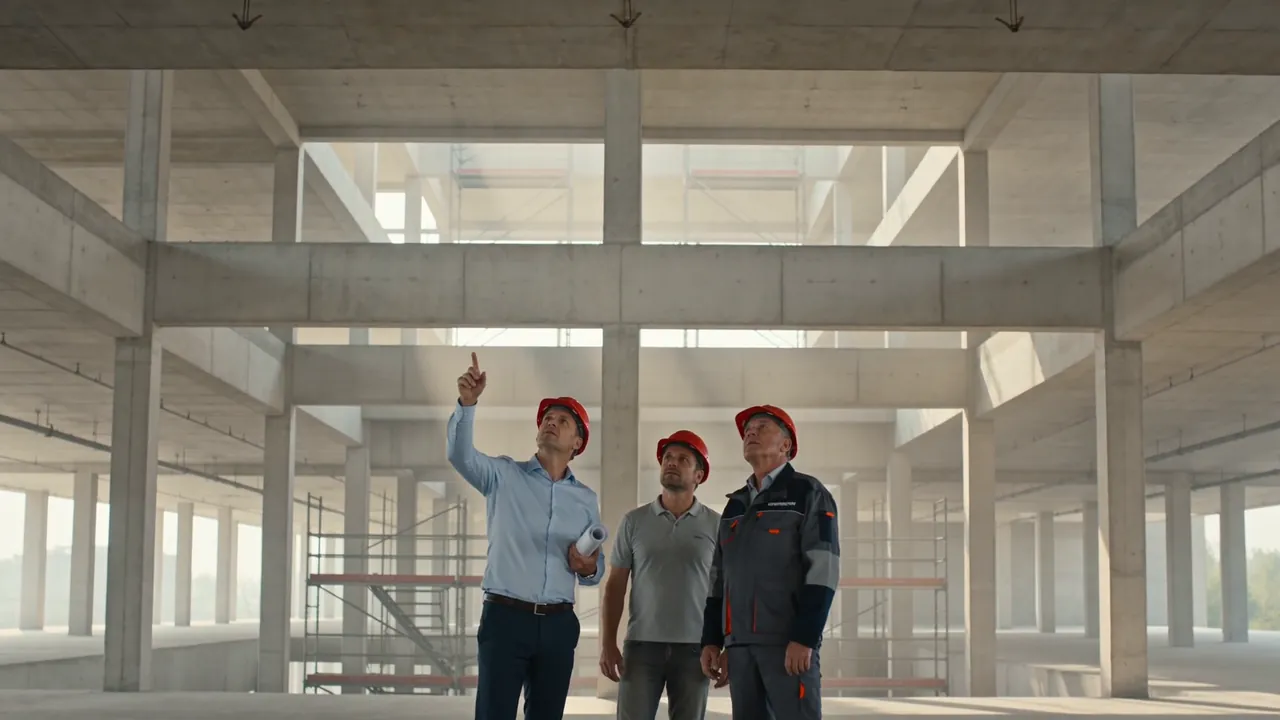
Gewerkton Studio is the browser workspace for plans and models. Where no model exists, the site team can create one in the browser. That gives project information a visual and spatial working environment without assuming that every site arrives with a finished model.
Gewerkton Cloud provides operations and model or data coordination between Field, Studio and third parties. Together, the three lines form a branded house: capture on site, work with plans and models in the browser, and coordinate the operational data moving between those environments.
For a distributed renewables project, this separation is useful because the person walking a turbine position does not have the same immediate task as the person working with project plans or coordinating data. Field remains focused on the construction site, while Studio and Cloud support the wider information flow.
Charging infrastructure faces the same field reality
The wind-farm example is distinctive, but it is not isolated. EV-adjacent construction sites face the same basic challenge when charging infrastructure is spread across multiple locations. Crews move, field checks happen where the equipment is being built, and documentation has to follow the work rather than remain tied to a central desk.
Here again, documentation discipline matters more than the novelty of the technology being installed. A sustainable asset is still a construction project. Its meetings, evidence and defects need a record, and disconnected locations still require a capture method that works before synchronisation is possible.
Voice-first field documentation is therefore relevant beyond any one renewable technology. The common feature is a project made up of physical locations and mobile teams. Whether the site contains turbine positions or charging infrastructure, the project needs a dependable connection between what a crew observes and what the organisation can later review.
Sustainable construction claims depend on evidence
For an environmentally focused audience, documentation can look secondary to generation capacity, lower-emission transport or efficient buildings. In practice, it is part of what makes sustainable building claims verifiable. A claim about what was constructed is stronger when the underlying work has been recorded with consistent evidence.
This does not turn documentation into a substitute for the sustainable outcome itself. It makes the construction history easier to examine. Acceptance findings, defects, decisions and site reports form the practical record behind the finished asset. Without disciplined capture, a project may have ambitions that are clear in principle but harder to trace through execution.
That is why the Gewerkton approach begins in the field. The relevant evidence is often created while a crew is inspecting work, discussing a decision or recording a defect. Capturing it at that point helps preserve the relationship between the physical site and the later report.
Regional choice without a single AI dependency
Gewerkton uses a BYO-AI model across 13 AI providers. Customers can bring their own keys and select providers by region, including the EU, the US and Asia, with mainland China included. The stated aim is to avoid vendor lock-in while allowing regional AI-provider choice.
That regional flexibility sits alongside the platform’s data-residency options. Project data can use an EU cloud or the customer’s own infrastructure. For teams operating across EU, US and APAC locations, those choices allow the technical setup to reflect where a project operates and how the organisation wants its infrastructure arranged.

The multilingual design follows the same global-market direction. Gewerkton has 27 content languages, while its German-market origins remain visible in its commercial integration with GAEB, REB, XRechnung and DATEV. Rather than presenting international reach as a replacement for local depth, the product combines both.
Six deployment fields, one recurring problem
Wind farms and renewables are one of six deployment fields identified for Gewerkton. The others show how often the same documentation pressures appear in different forms:
- Data centres and industrial plants bring many trades together under tight deadlines, with meeting decisions becoming trade-sorted task lists.
- Housing and building construction includes defects with a photo and deadline, dictated daywork reports and signatures on the device at handover.
- Infrastructure and tunnels involve long durations, many change orders and instructions backed by original audio.
- Cross-border teams can bring EU, US and APAC participants onto the same project, each working in their own language while the evidence original stays unambiguous.
- Projects in Asia can include Chinese, Korean and Vietnamese crews, with multilingual work from capture to report and data residency by choice.
Across these fields, the recurring issue is not simply where files are stored. It is how evidence moves from the place where work happens into a record that remains usable by the rest of the project. For renewables, distance and dead zones make that problem particularly easy to see.
Beta status and the engineering behind it
Gewerkton is in beta now, with a public beta planned for fall 2026. That status should be understood plainly: this is a beta platform, not a finished general release.
The product is being built by a solo founder directing a fleet of coding agents using Codex and Claude. In one night, that fleet shipped 21 software packages, verified with negative controls and mutation tests. Those details describe an unusual development model, but they do not change the current availability status. The platform remains in beta ahead of the planned public beta.
The wider project also includes a marketing site in 27 languages, built with zero trackers, no cookie banner and a fully egress-free architecture. Its media bank contains more than 51 self-produced clips and posters. These elements support the global presentation of the same three product lines without adding further product families.
Documentation must work where the energy transition is built
Wind projects stretch construction workflows across physical distance. They put crews in the field, move responsibilities between people and expose the limits of connectivity. Those are not peripheral inconveniences; they shape whether documentation is captured when it matters.
Gewerkton Field addresses that setting directly through voice-first capture, offline operation and later synchronisation. Meetings and defects can remain documented across dozens of turbine positions, while Studio and Cloud connect the resulting information with plans, models, operations and third parties.
For renewable energy, charging infrastructure and sustainable construction, the wider lesson is straightforward. Environmental ambition does not remove the need for careful site records. It increases the value of being able to verify how an asset was built. The evidence starts in the field, including the places where the network does not reach.
Halloween Picks
halloween
As an affiliate, we earn on qualifying purchases.