
The future of wood stoves is bright with low-emission innovations that make heating cleaner and more efficient. Advanced combustion techniques guarantee complete fuel burning, reducing smoke and creosote buildup, while emission control tech like catalytic converters lower pollutants. Smart features allow you to control temperature remotely, saving fuel and minimizing waste. Ongoing advancements aim for smarter, greener designs that fit modern lifestyles. Keep exploring to discover how these innovations can transform your heating experience.
Key Takeaways
- Future wood stoves will integrate advanced combustion and emission control technologies for cleaner, more efficient burning.
- Smart features like remote control and automatic regulation will enhance user convenience and optimize performance.
- Innovations will focus on reducing emissions further, meeting stricter environmental standards and promoting sustainability.
- Continuous technological evolution aims to make wood heating more environmentally responsible and cost-effective.
- Low-emission designs will improve indoor air quality, decrease environmental impact, and support cleaner community air.
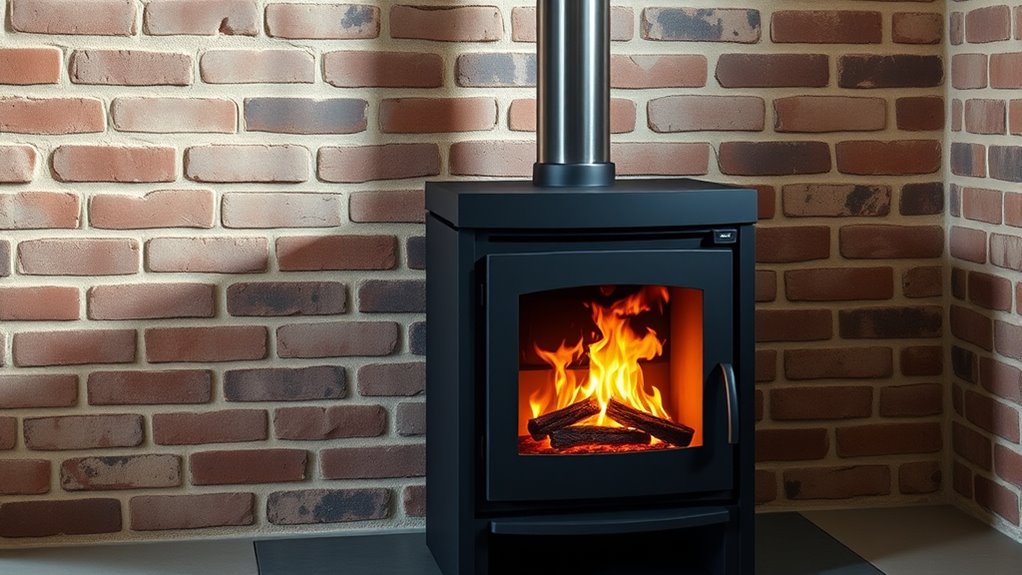
Wood stove innovations are transforming the way we heat our homes, making traditional heating more efficient, environmentally friendly, and user-friendly. One of the most important developments is the integration of advanced combustion techniques. These systems guarantee that wood burns more completely, extracting maximum heat from every piece of fuel while minimizing waste. With advanced combustion, you’ll notice cleaner flames, less creosote buildup, and a more consistent heat output. This means you get to enjoy a warmer home without the hassle of frequent maintenance or worrying about inefficient burning. Furthermore, these systems are designed to optimize airflow and combustion efficiency, reducing fuel consumption and saving you money over time.
Another essential aspect of these innovations is the implementation of sophisticated emission controls. Traditional wood stoves often produce high levels of smoke, particulate matter, and other pollutants that can harm the environment and affect indoor air quality. Modern low-emission stoves are equipped with technologies like catalytic converters and secondary combustion chambers, which substantially reduce these harmful emissions. As a result, your home stays cleaner, and you’re contributing less to local air pollution. These emission controls also help your stove meet strict environmental standards, making them more viable in areas with rigorous regulations.
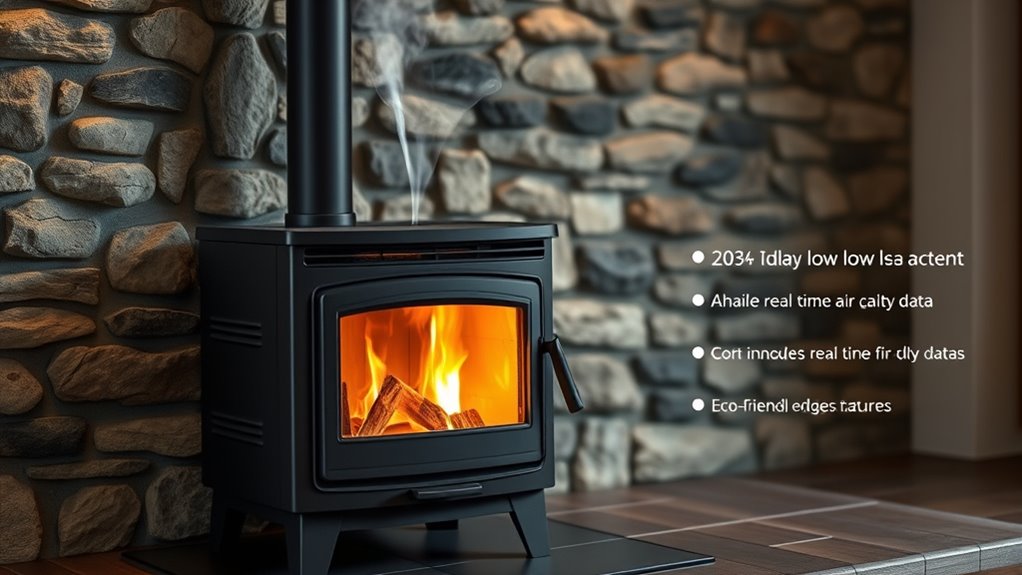
You’ll find that these advancements not only improve environmental performance but also enhance user experience. Many new models come with smart features, such as automatic draft controls and thermostatic regulators, which help you maintain a consistent temperature effortlessly. Some stoves even connect to your smartphone, allowing you to monitor and adjust settings remotely. This level of control makes heating more convenient and efficient, giving you peace of mind that your home stays comfortable without wasting fuel or producing excess smoke.
In addition, the integration of access to personalized work environments can make managing your heating system more tailored and efficient, especially with smart technology. As these innovations continue to evolve, expect even smarter, cleaner, and more efficient wood stoves in the near future. Manufacturers are investing heavily in refining advanced combustion and emission control technologies, aiming to make wood heating a truly sustainable option. You’ll benefit from lower emissions, better fuel economy, and reduced environmental impact—all while enjoying the cozy ambiance and cost savings of a well-designed stove. Ultimately, these innovations are shaping a future where wood heating is not only reliable but also environmentally responsible and easy to operate, aligning with modern standards for sustainability and user comfort.
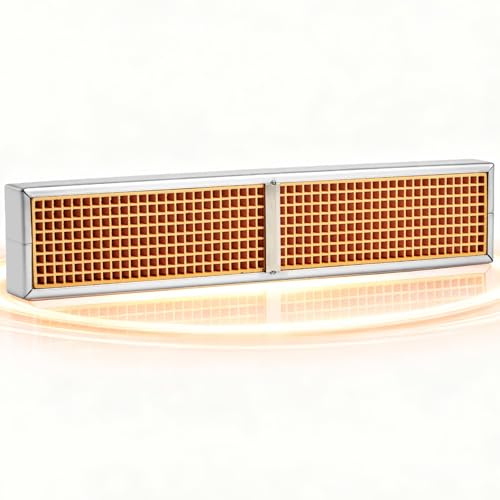
Vorynne 2.5"x12.75"x1" Wood Stove Catalytic Combustor Compatible with Vermont Castings Defiant and Encore Flexburn,Ceramic Catalytic Combustor replacement part number 30006623
✅【PREMIUM MATERIALS】Dimensions:2.5"x12.75"x1".Crafted from high-grade heat-resistant ceramic material with a stainless steel frame, featuring reinforced central construction for enhanced…
As an affiliate, we earn on qualifying purchases.
As an affiliate, we earn on qualifying purchases.
Frequently Asked Questions
How Do Low-Emission Wood Stoves Compare in Cost to Traditional Models?
You’ll find that low-emission wood stoves generally cost more upfront than traditional models, but their improved efficiency can lead to savings over time. A thorough cost comparison shows that the higher initial investment pays off through lower fuel consumption and reduced emissions. An affordability analysis reveals that, while they might seem pricier initially, the long-term benefits and potential incentives make them a smart, eco-friendly choice for eco-conscious homeowners.
Are Low-Emission Innovations Suitable for Small or Large Homes?
Low-emission innovations suit both small and large homes, but your choice depends on home size and installation complexity. For small homes, compact models are efficient and easy to install. Larger homes may require more powerful stoves, which can be more complex to install but provide ample heating. Consider your home’s size and available space; consult a professional to guarantee the stove meets your needs and installation requirements.
What Maintenance Is Required for Advanced Low-Emission Wood Stoves?
You need to perform regular chimney inspections and ash removal to keep your advanced low-emission wood stove running efficiently. Check the chimney for creosote buildup and clean it as needed to prevent blockages. Remove ash frequently to guarantee proper airflow and combustion. Additionally, inspect door seals and vents to maintain ideal operation. Staying on top of these maintenance tasks ensures your stove remains eco-friendly and safe for your home.
Do These Innovations Impact the Heating Efficiency Significantly?
These innovations considerably improve heating efficiency while reducing emissions. By optimizing combustion and incorporating advanced technologies, your stove heats your space more effectively with less fuel. Emission reduction doesn’t come at the expense of performance; instead, it enhances overall efficiency. You’ll notice quicker heat distribution and longer burn times, making your stove more eco-friendly and cost-effective. These innovations guarantee you enjoy better warmth without harming the environment.
Are There Government Incentives for Upgrading to Low-Emission Wood Stoves?
Yes, there are government incentives available when you upgrade to low-emission wood stoves. These incentives aim to promote renewable energy and support carbon reduction efforts. You might find rebates, tax credits, or grants designed to offset the costs of upgrading your heating system. By taking advantage of these programs, you contribute to cleaner air and a healthier environment while saving money on energy costs.

TURBRO Suburbs 25" WiFi Electric Fireplace Infrared Heater with Crackling Sound, Freestanding Fireplace Stove with Adjustable Flame Effects, Overheating Protection, Timer, Remote Control 1400W
Upgraded New Design: The elegantly vintage door allows you to see the control panel and easily adjust the…
As an affiliate, we earn on qualifying purchases.
As an affiliate, we earn on qualifying purchases.
Conclusion
As you consider upgrading your wood stove, it’s worth questioning whether new innovations truly cut emissions. Research shows that modern designs with advanced combustion technology markedly reduce pollutants, making your home cleaner and greener. While some skeptics doubt these claims, evidence suggests these innovations genuinely improve air quality. So, before you dismiss low-emission models, explore the facts—you might find that embracing these advancements is the best way to enjoy warmth while protecting the environment.

Hearth Wood Stove Catalytic Combustor for Dutchwest Parts-2460 2461 2462 Englander Dovre,6"x2" Ceramic Wood Stove Catalytic Converter for Longer Burn Time Save 1/3 Firewood Activate Higher Temp
Top High Quality: Our ceramic wood stove catalytic combustors for Dutchwest Englander is with cells per Inch -…
As an affiliate, we earn on qualifying purchases.
As an affiliate, we earn on qualifying purchases.

Wood Burning Stove with Heavy-Duty Steel Construction, Heats Up to 900 Sq Ft, FireBrick Lined, Large Viewing Glass & Automatic Air Curtain System
Compatible & Flexible Installation: Standard 15 cm (5.9") chimney flange. Includes 3.5m straight pipe and 1 elbow for…
As an affiliate, we earn on qualifying purchases.
As an affiliate, we earn on qualifying purchases.