To avoid trouble later, you should replace firebricks as soon as you notice cracks, chips, or crumbling surfaces. Regular inspections help catch microfractures and damage early before they grow larger, which can decrease efficiency, cause unsafe conditions, or lead to expensive repairs. Timely replacement maintains safety and peak performance of your stove or fireplace. Keep an eye on signs of wear now, and you’ll prevent bigger problems down the line—there’s more to know if you continue.
Key Takeaways
- Regular inspection detects cracks or damage early, preventing costly repairs later.
- Replacing compromised firebricks maintains optimal insulation and heating efficiency.
- Timely replacement reduces the risk of structural failure or fire hazards.
- Prevents microfractures from growing, extending the lifespan of the appliance.
- Ensures safe operation by avoiding exposure of interior components to excessive heat.
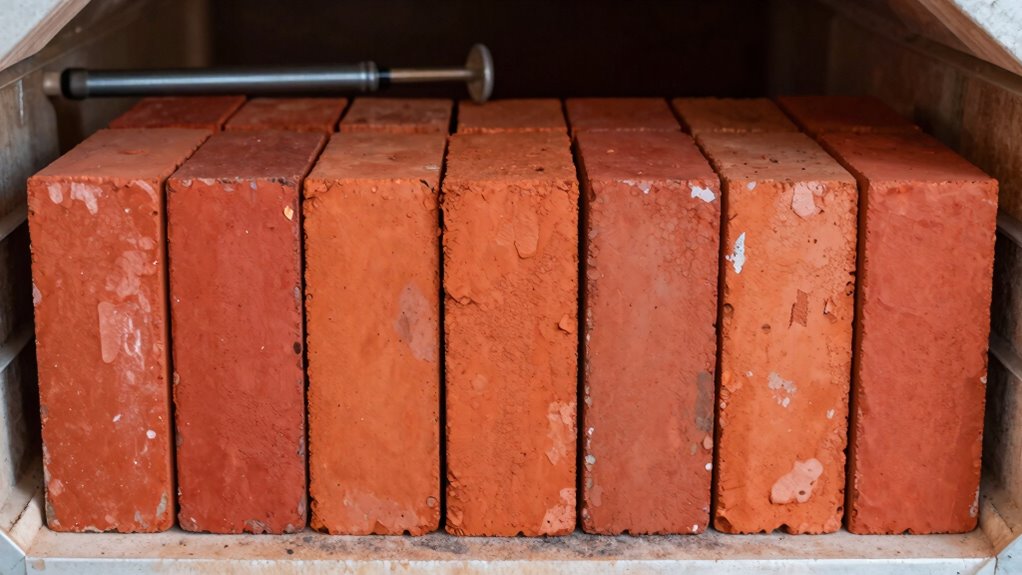
Knowing when to replace firebricks is essential for maintaining the efficiency and safety of your fireplace or stove. Over time, firebricks wear out or crack due to constant exposure to high temperatures and thermal stresses. Recognizing the signs early can save you from costly repairs and potential safety hazards. Firebricks are made from refractory materials designed to withstand intense heat, but even the best materials aren’t immune to damage caused by thermal expansion. As these bricks heat and cool repeatedly, they expand and contract, which can lead to cracking, crumbling, or disintegration over time. When this happens, the bricks lose their insulating properties, and the overall performance of your heating appliance diminishes.
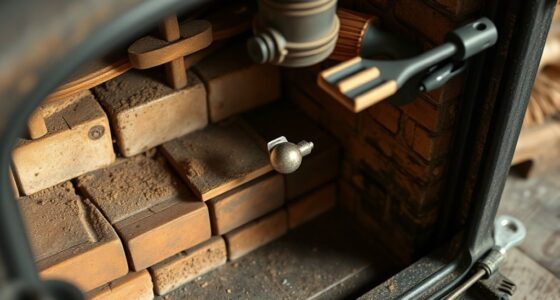
Regularly inspect firebricks for cracks and crumbling to ensure safety and optimal heating performance.
You should inspect your firebricks regularly, especially if you notice changes in how your fireplace or stove operates. Cracks, chips, or uneven surfaces are clear indicators that replacement might be necessary. Small cracks can sometimes be repaired, but larger or numerous cracks compromise the integrity of the firebricks and the refractory lining as a whole. If the bricks are falling apart or if you see gaps that allow heat or combustion gases to escape, it’s time to think about replacing them. Failure to do so can result in inefficient burning, increased fuel consumption, and even dangerous carbon monoxide leaks. Understanding the importance of refractory materials helps you grasp why firebricks degrade over time.
Understanding the nature of refractory materials helps you grasp why firebricks degrade over time. These materials are engineered to handle thermal expansion, but they have their limits. Continuous heating and cooling cycles cause stress within the bricks, leading to microfractures that grow larger with each cycle. As these microfractures develop, the bricks’ insulating ability diminishes, and they become less effective at protecting the stove or fireplace structure. This deterioration not only reduces efficiency but can also cause the brick to crumble, exposing the interior components to direct heat, which could lead to further damage or even fires. Additionally, thermal stress accelerates the deterioration process, making timely inspection even more crucial. A proper understanding of microfractures can help you better assess the condition of your firebricks and determine when replacement is necessary.
Replacing firebricks at the right time ensures your appliance remains safe and runs efficiently. When you notice significant cracking or crumbling, don’t delay. Prompt replacement preserves the integrity of the refractory lining and maintains proper thermal performance. It’s a small investment that prevents bigger issues down the line, like costly repairs or dangerous malfunctions. By staying attentive to the condition of your firebricks and understanding how refractory materials respond to thermal expansion, you can keep your heating system operating smoothly and safely for years to come.
firebrick replacement kit for fireplace
As an affiliate, we earn on qualifying purchases.
As an affiliate, we earn on qualifying purchases.
Frequently Asked Questions
Can Firebrick Replacement Be Done DIY or Should Professionals Handle It?
You can attempt DIY firebrick installation, but consider firebrick durability and your experience level first. Replacing firebricks requires careful handling and proper techniques to prevent damage or safety issues. If you’re comfortable with masonry work and follow safety guidelines, DIY might work. However, for long-lasting results and safety, it’s often best to hire professionals who know the ins and outs of firebrick replacement, ensuring it’s done correctly and efficiently.
How Long Does a Typical Firebrick Last Before Needing Replacement?
A firebrick’s lifespan is like a ticking clock—typically 1 to 3 years, depending on usage. You should expect to replace firebricks more frequently if you use your stove heavily or burn harsh fuels. Regular inspections help catch cracks or damage early, preventing bigger problems. Knowing the replacement frequency keeps your stove safe and efficient. Stay vigilant, and you’ll extend the life of your firebricks and enjoy consistent heat.
What Tools Are Necessary for Replacing Firebricks Safely?
To replace firebricks safely, you need basic tools like a cold chisel, a hammer, and safety gloves. The type of firebrick you choose, such as insulating or high-temperature bricks, affects the replacement cost. Make sure to wear eye protection and work in a well-ventilated area. These tools help you remove old bricks carefully and install new ones securely, ensuring your stove or fireplace functions efficiently and safely.
Does Replacing Firebricks Affect the Stove’s Efficiency?
Think of replacing firebricks like tuning up your vintage car—you keep it running smoothly. When you replace old firebricks, it can improve your stove’s performance, but only if you select durable materials. Poor firebrick durability might cause heat loss, reducing efficiency. Regularly replacing them at the right time guarantees your stove stays efficient, conserving fuel and maintaining consistent heat, just like a well-maintained engine keeps a car running at its best.
Are There Specific Safety Precautions During Firebrick Replacement?
When replacing firebricks, you should prioritize fire safety by wearing protective gear like gloves, goggles, and a dust mask to prevent burns and inhalation of debris. Make certain the stove is completely cool before starting, and work in a well-ventilated area. Handling bricks carefully minimizes the risk of injury. Always follow manufacturer instructions and safety guidelines to keep yourself protected throughout the process.
Conclusion
Follow the firebrick replacement timing rule consistently, and you’ll prevent costly repairs, avoid dangerous failures, and extend your fireplace’s lifespan. Address cracks early, replace damaged bricks promptly, and maintain regular inspections. By doing so, you safeguard your investment, guarantee safety, and preserve efficiency. Stay proactive, stay attentive, and stay ahead—because timely action today saves trouble tomorrow. Keep this rule in mind, and you’ll enjoy a warm, safe, and reliable fireplace for years to come.