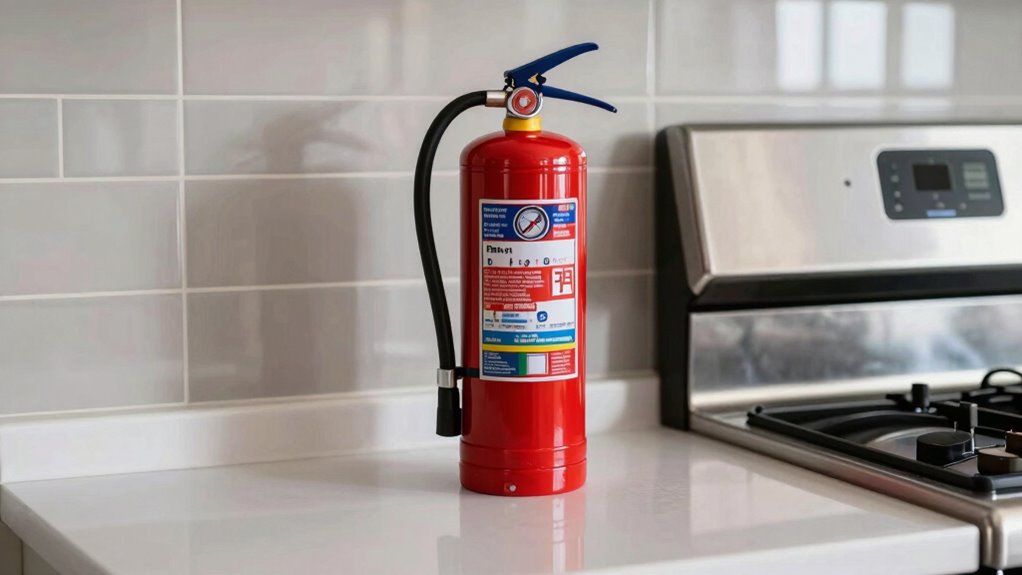

As a stove owner, you should choose a multi-purpose ABC fire extinguisher, effective for both flammable liquids and electrical fires common in kitchens. Keep it within easy reach—preferably near the stove but not too close—and guarantee it’s properly maintained and inspected regularly. Proper placement and maintenance can make all the difference when seconds count. For more tips on selecting and maintaining the right extinguisher, there’s more to discover that could enhance your safety.

Get backup power and energy gear delivered free with Prime
- Fast, free delivery on millions of items
- Prime Video, Amazon Music and more included
- Member-only deals all year
Key Takeaways
- Choose a multi-purpose ABC extinguisher suitable for both flammable liquids and electrical fires in kitchens.
- Place the extinguisher within easy reach, ideally near the stove but not directly adjacent.
- Regularly inspect and maintain the extinguisher for proper pressure, damage, and expiry to ensure readiness.
- Ensure staff or household members are trained on proper extinguisher use during emergencies.
- Keep flammable items away from heat sources and follow fire safety tips to prevent kitchen fires.
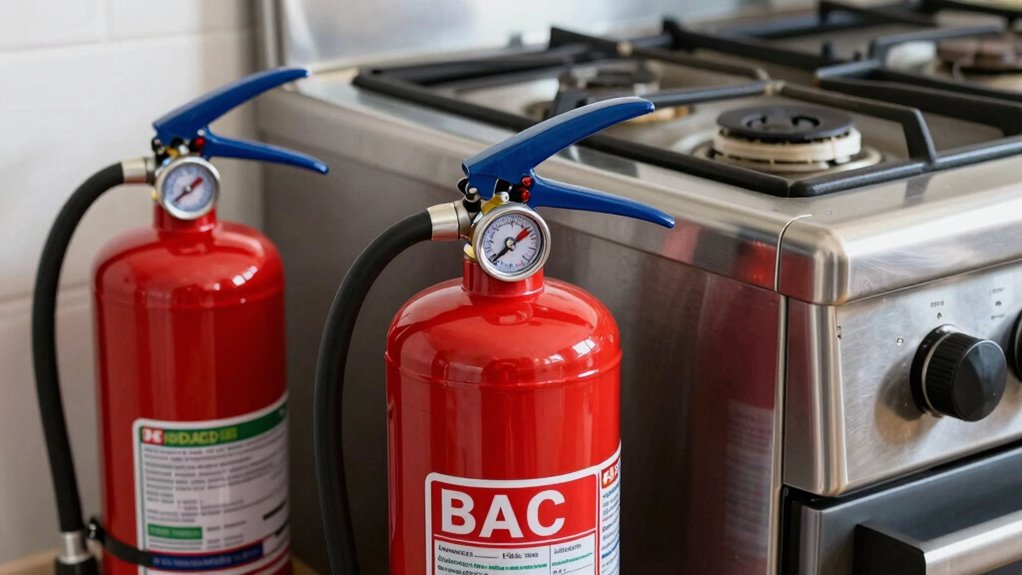
If you own a stove, choosing the right fire extinguisher is essential for safety. Your kitchen is a common place for fires to start, especially from cooking accidents, so having the proper extinguisher nearby can make all the difference. When selecting an extinguisher, focus on one that’s suitable for kitchen fires, typically classified as Class B (flammable liquids) and Class C (electrical fires). A multi-purpose extinguisher, like an ABC type, is often the best choice because it covers various fire types you might encounter. Keep in mind that quick access is vital—mount your extinguisher within easy reach, ideally near the stove but not so close that it could be knocked over or damaged during cooking.
Once you’ve chosen the right fire extinguisher, it’s crucial to understand fire safety tips to prevent fires from starting in the first place. Never leave your stove unattended while cooking, especially when frying or boiling. Keep flammable items like dish towels, paper, and curtains away from heat sources. Regularly check for gas leaks or electrical issues that could lead to fires, and always have a fire-safe plan in place for emergencies. Remember, the best approach to fire safety tips combines prevention with preparedness. Additionally, understanding fire classifications can help you select the most effective extinguisher for different types of fires. Knowing how to identify and respond to each fire type can significantly improve your safety measures. Proper fire extinguisher maintenance, including regular inspections, ensures your safety equipment is ready when needed.
Maintaining your fire extinguisher is just as important as choosing the right one. Extinguisher maintenance involves regular inspections—check the pressure gauge to ensure it’s in the operable range, and look for any signs of damage, corrosion, or leakage. Most extinguishers have a label indicating the last inspection date; if it’s been a year or more, it’s time to recharge or replace it. Also, ensure the safety pin and nozzle are intact and unobstructed. Training yourself and your family on how to properly use the extinguisher can make a significant difference during a fire emergency. Remember, an extinguisher isn’t effective if it’s expired or damaged, so proper extinguisher maintenance is a vital part of your overall fire safety plan.
ABC fire extinguisher for kitchen
As an affiliate, we earn on qualifying purchases.
As an affiliate, we earn on qualifying purchases.
Frequently Asked Questions
How Often Should I Replace My Fire Extinguisher?
You should replace your fire extinguisher every 5 to 15 years, depending on its type and manufacturer instructions. Regularly check your extinguisher for proper pressure and any signs of damage to guarantee fire safety. Different extinguisher types, like ABC or CO2, require different maintenance routines. When in doubt, have it inspected annually by a professional, and replace it immediately if it’s damaged, expired, or has been used.
Can I Use a Household Extinguisher on a Stove Fire?
You shouldn’t use a household extinguisher on a stove fire because it may not be the right type for kitchen safety. Household extinguishers are often rated for general fires but might not handle grease or electrical fires effectively. For stove fires, specifically choose an extinguisher designed for kitchen safety, such as a Class K or multi-purpose ABC extinguisher. Always make certain you’re using the correct extinguisher type to stay safe.
What Is the Best Extinguisher for Grease Fires?
For grease fires, the best extinguisher is a Class K or a multi-purpose ABC extinguisher. These are essential for kitchen safety and effective fire prevention, especially on stovetops. You should never use water on grease fires, as it can worsen the flames. Keep a suitable extinguisher nearby, and make certain you know how to use it properly. This proactive approach helps prevent minor incidents from escalating into major hazards.
Are There Extinguishers Suited for Outdoor Stove Fires?
When it comes to outdoor stove fires, you want an extinguisher that’s up to the task—think of it as bringing a knight to a dragon’s den. Look for extinguishers designed for outdoor safety, especially those with fireproof materials, to handle grease or wood fires. These are lightweight, durable, and effective, ensuring you’re ready for any mishap while camping or grilling outside. Always keep one handy and stay safe.
How Do I Properly Maintain My Fire Extinguisher?
You should regularly inspect your fire extinguisher, checking the pressure gauge, confirming the safety pin is intact, and looking for corrosion or damage. Follow a maintenance checklist that includes shaking the extinguisher to prevent powder clumping and verifying the expiration date. Different fire extinguisher types require specific care, so always review manufacturer instructions. Proper maintenance ensures your extinguisher functions correctly during an emergency and prolongs its lifespan.
Conclusion
So, there you have it—pick the wrong fire extinguisher, and your kitchen’s about to become a fiery disaster zone. But hey, who needs safety when you can gamble with your home and sanity? Get the right extinguisher now, or keep pretending you’re a culinary daredevil. After all, risking your kitchen’s future for a little thrill is so much fun—until it’s not. Stay safe, or stay sorry!
Fall Picks
fall essentials
As an affiliate, we earn on qualifying purchases.