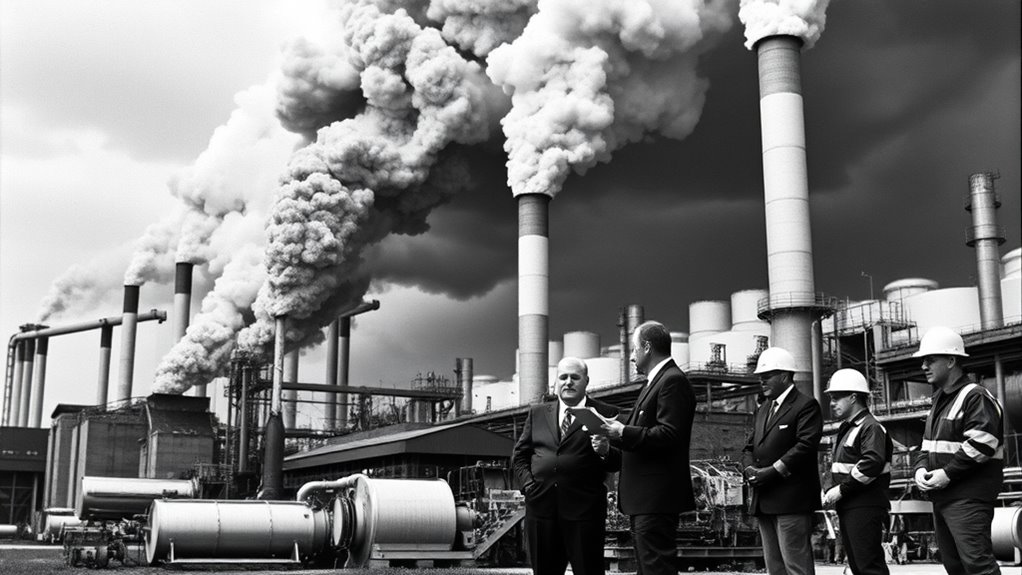

In the 1980s, EPA regulations dramatically changed how industries operate, requiring stricter pollution standards and proactive compliance. You’d see industries investing in pollution control technologies and improving waste management practices. Enforcement intensified with more inspections and fines, while companies formed dedicated environmental teams to meet new rules. These policies fostered a culture of responsibility and innovation, shaping industry practices for years. Keep exploring to discover how these regulations influenced industries and environmental health.
Key Takeaways
- The 1980s EPA regulations imposed strict pollution standards, transforming industry compliance practices and emphasizing proactive environmental responsibility.
- Industries invested in new pollution control technologies, such as scrubbers and wastewater treatment systems, to meet tighter standards.
- Regulatory enforcement intensified with increased inspections, fines, and shutdowns to ensure compliance across industries.
- Companies established dedicated environmental teams and integrated compliance into daily operations to adapt to evolving rules.
- The regulations expanded in scope, targeting specific pollutants and activities, fostering a culture of continuous environmental compliance.
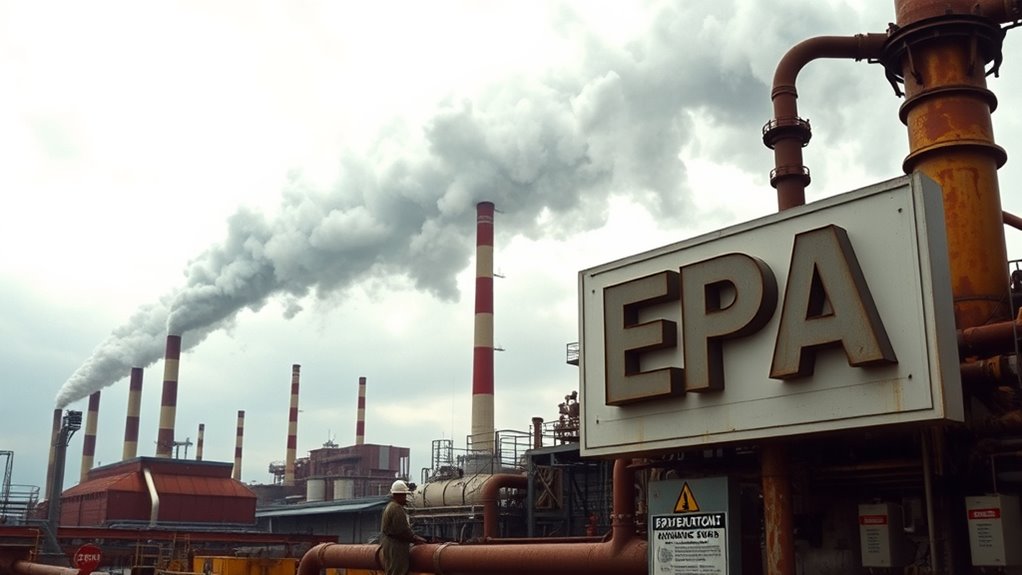
During the 1980s, the Environmental Protection Agency (EPA) implemented a series of significant regulations aimed at reducing pollution and protecting public health. These policies transformed the way industries approached environmental responsibility, emphasizing strict standards and accountability. As someone involved in industrial operations, you quickly learned that achieving compliance was no longer optional; it required a proactive approach to meet the evolving legal requirements. The focus on industrial compliance meant that companies had to adopt new technologies, improve waste management practices, and monitor emissions more closely. Regulatory enforcement became a central pillar of EPA efforts, with agencies increasing inspections, imposing fines, and shutting down facilities that failed to meet standards. This environment pushed industries to prioritize environmental considerations to avoid costly penalties and reputational damage.
The push for stricter standards meant that industries had to overhaul their existing processes. You might have seen factories investing heavily in pollution control devices, such as scrubbers and filters, to reduce air emissions. Water pollution controls also became more rigorous, requiring industries to treat wastewater before discharge. The emphasis on industrial compliance was not just about avoiding penalties; it was about fundamentally changing how industries interacted with the environment. The EPA’s regulatory enforcement became more aggressive, with agencies conducting surprise inspections and audits to ensure adherence. This heightened oversight created a climate where non-compliance was risky and costly, encouraging companies to prioritize environmental management systems and internal audits. Additionally, the development of advanced monitoring technologies helped industries track their emissions more accurately and stay compliant.
For you, this era also meant wayfinding through an increasingly complex web of regulations. The EPA introduced new rules targeting specific pollutants, setting tighter limits, and expanding the scope of regulated activities. Industries had to stay constantly informed and adapt quickly to new requirements. Some companies responded by establishing dedicated environmental compliance teams to handle reporting, documentation, and ongoing monitoring. Others faced legal action and financial penalties for violations, which underscored the importance of staying compliant. The combination of stricter regulations and rigorous enforcement meant that industrial facilities couldn’t ignore their environmental responsibilities anymore. Instead, they became integral to the operational strategy, with compliance efforts woven into daily practices.
industrial pollution control scrubbers
As an affiliate, we earn on qualifying purchases.
As an affiliate, we earn on qualifying purchases.
Frequently Asked Questions
How Did Industry Lobbyists Influence EPA Policy Changes in the 1980S?
You see that industry lobbyists heavily influenced EPA policy shifts in the 1980s by lobbying policymakers and funding campaigns. Their lobby influence pressured the EPA to relax regulations and prioritize industry interests over environmental protections. This resulted in policy changes that favored economic growth, often at the environment’s expense. Their involvement made policymakers more receptive to industry concerns, ultimately shaping a more lenient regulatory landscape during that era.
What Were the Economic Impacts of 1980S EPA Regulations on Small Businesses?
You’d find that the 1980s EPA regulations increased the cost burden on small businesses, making compliance more challenging. Many faced significant expenses to meet new standards, which strained their finances and sometimes limited growth opportunities. These regulations created compliance challenges that required extra time and resources, often putting small businesses at a competitive disadvantage compared to larger firms that could better absorb the costs.
Did EPA Regulations in the 1980S Differ Across States or Regions?
Like a river carving different paths through diverse landscapes, EPA regulations in the 1980s varied across regions. You’d notice regional enforcement and state variations shaping how rules were applied—some areas strict, others more lenient. These differences reflected local industries and political climates, making the environmental landscape uneven. Your experience shows that while federal standards aimed for unity, regional enforcement created a mosaic of compliance, impacting environmental and economic outcomes uniquely across the nation.
How Did Public Opinion Shape EPA Rulemaking During the 1980S?
You see that public opinion greatly influenced EPA rulemaking during the 1980s. Public engagement grew through community activism and increased media influence, which brought environmental issues to the forefront. Citizens voiced concerns and held policymakers accountable, leading to stricter regulations or adjustments. This dynamic pushed the EPA to take public sentiment more seriously, shaping policies that better reflected societal priorities and making environmental protection a shared responsibility.
What Technological Innovations Arose From Compliance Efforts in the 1980S?
Imagine a cleaner, greener future taking shape like a budding garden. You’ll see green technology bloom from pollution control efforts, sparking innovations like scrubbers and catalytic converters. These tools act as shields, capturing pollutants before they escape. In the 1980s, compliance pushed industries to develop advanced emissions-reducing devices, turning pollution control into a catalyst for technological progress, ultimately transforming environmental protection into a thriving green technology landscape.
wastewater treatment systems for factories
As an affiliate, we earn on qualifying purchases.
As an affiliate, we earn on qualifying purchases.
Conclusion
Looking back at the EPA regulations of the 1980s, you can see how they shaped environmental policy like a sturdy foundation supporting future progress. These rules sparked change, pushing industries to clean up their act and protect our planet. While challenges remained, the decade’s efforts planted seeds of awareness and innovation. Like a lighthouse guiding ships through stormy seas, these regulations illuminated a path toward a cleaner, healthier environment—reminding us that change is possible with determined action.
air emission monitoring devices
As an affiliate, we earn on qualifying purchases.
As an affiliate, we earn on qualifying purchases.
environmental compliance management software
As an affiliate, we earn on qualifying purchases.
As an affiliate, we earn on qualifying purchases.