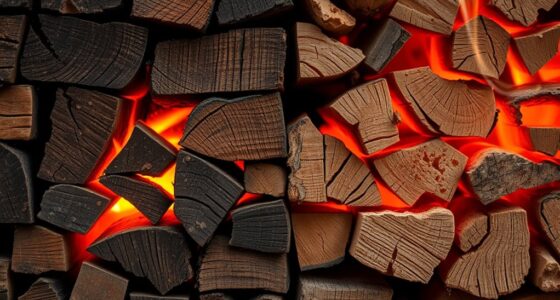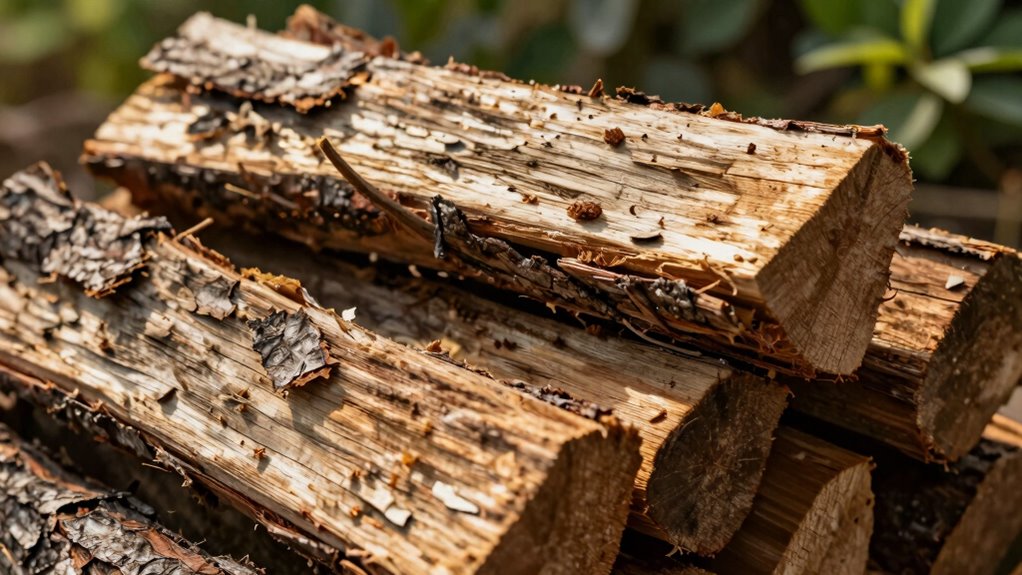

Even at the end of the season, dry wood remains essential because it burns more efficiently, producing less smoke and creosote buildup. It’s easier to ignite and helps your fireplace or stove run safely and smoothly. Dry wood also improves the quality of woodworking projects and reduces health risks from indoor smoke. If you want to keep your fires safe and effective until the last log, understanding why dry wood still matters will show you how to get the best results.

Get backup power and energy gear delivered free with Prime
- Fast, free delivery on millions of items
- Prime Video, Amazon Music and more included
- Member-only deals all year
Key Takeaways
- Dry wood burns more efficiently, providing consistent heat even late in the season.
- It produces less smoke and creosote, reducing chimney buildup and fire hazards.
- Properly seasoned wood ignites easily, saving time and effort during colder months.
- Maintaining dryness ensures safety, preventing unpredictable fires or smoke issues.
- Dry wood preserves the quality of woodworking projects and enhances overall safety.
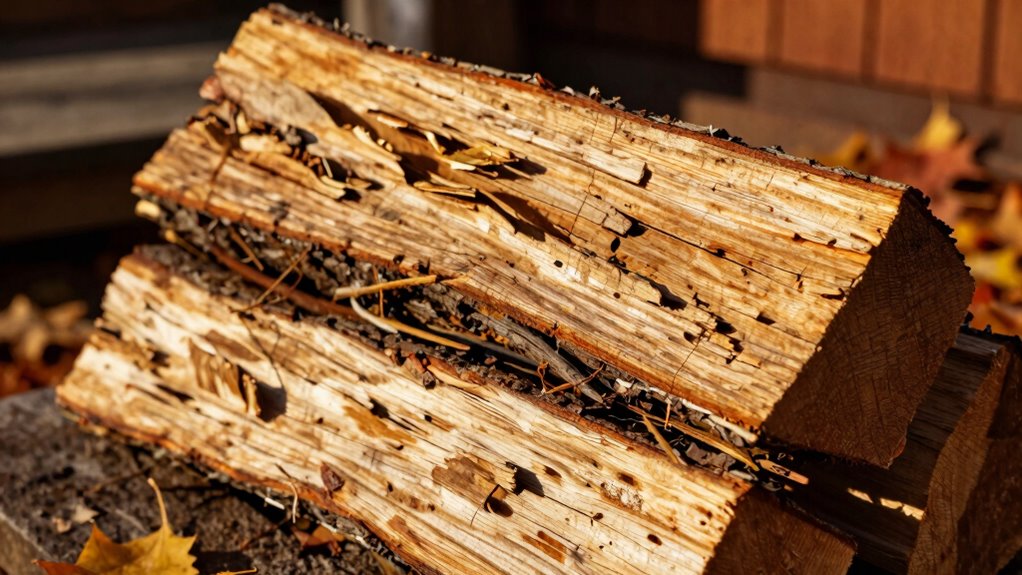
Have you ever wondered why dry wood is so highly valued for burning or crafting? It all comes down to moisture content. When wood has low moisture levels, it burns more efficiently, produces more heat, and creates less smoke and creosote buildup. If you’ve ever dealt with wet or green wood, you know it’s harder to ignite, burns unevenly, and leaves behind a lot of mess. That’s why, even at the end of the season, dry wood remains vital. Proper wood storage plays a key role here, as it guarantees your firewood stays dry and ready when you need it most. If you neglect storage, moisture can seep into the wood, reversing the drying process and reducing its quality.
Dry wood burns efficiently, produces more heat, and creates less smoke and creosote buildup.
When you store your wood correctly, you give it the best chance to reach an ideal moisture content—typically around 15-20%. Stacking your firewood in a crisscross pattern or on raised pallets allows air to circulate freely around each piece. Covering the top while leaving the sides open helps protect your wood from rain and snow, preventing moisture absorption. Ensuring proper air circulation is crucial for maintaining dryness and preventing mold or decay. If you skimp on wood storage, your freshly cut or seasoned wood can quickly absorb humidity, making it unsuitable for burning even months after harvest. That’s why it’s worth investing time in proper storage techniques; it keeps your wood dry and saves you from frustration during chilly nights or cold mornings. Proper moisture content is essential for efficient burning and safety. Additionally, monitoring moisture levels with a moisture meter can help you determine when your wood has reached optimal dryness. A seasoned wood that has been dried properly is less likely to produce excessive smoke or creosote buildup.
Even at the end of the season, dry wood continues to matter. It’s more dependable for starting fires, especially when you’re in a hurry or facing unpredictable weather. You won’t have to struggle with wet logs that refuse to catch or produce excessive smoke. Plus, dry wood burns cleaner, which means less soot and creosote buildup in your chimney or stove. This not only prolongs the life of your heating system but also reduces health risks associated with indoor smoke inhalation. Using dry wood also enhances the craftsmanship of woodworking projects, resulting in finer finishes and less warping or cracking.
In the end, your commitment to proper wood storage and understanding moisture content pays off. Even late in the season, dry wood remains the most practical, efficient, and satisfying choice for burning or crafting. It’s about making sure every piece is as close to perfect as possible, so you get the best performance whether you’re warming your home or creating something special. Dry wood isn’t just a preference—it’s an essential element that guarantees success, no matter the time of year.
As an affiliate, we earn on qualifying purchases.
Frequently Asked Questions
How Do I Identify Truly Dry Firewood?
To identify truly dry firewood, check its appearance and weight. Proper wood storage helps reduce moisture levels, so look for seasoned wood with cracks or splits on the ends, and a dull, grayish color. Lift the wood—dry pieces are lighter. You can also perform a simple moisture test with a tool or by knocking two pieces together; a sharp sound indicates low moisture, meaning the wood is ready to burn.
Can Wet Wood Ever Be Safely Used?
Wet wood can be used, but it’s not ideal or safe for efficient burning. If you use it, guarantee it’s properly seasoned using effective seasoning methods to reduce moisture content. High moisture content causes more smoke, creosote buildup, and inefficient heat. Ideally, wait until the wood is dry, with moisture content below 20%. This way, you’ll burn cleaner, safer, and get more warmth from your fire.
What Are the Signs of Mold in Firewood?
You’ll notice mold on firewood as fuzzy, grayish-green patches, or slimy spots that smell musty. To prevent mold, focus on proper firewood storage—keep it dry, well-ventilated, and off the ground. Mold prevention is essential because mold can weaken wood and produce spores. Regularly inspect your firewood, look for discoloration or unusual growth, and make certain your storage area stays dry to keep your firewood safe and ready to burn.
How Long Should Firewood Be Seasoned?
You should season your firewood for at least six to twelve months, depending on the wood type and climate. Proper seasoning techniques, like stacking wood off the ground and covering the top, help it dry evenly. Use suitable storage solutions to keep moisture out, ensuring your wood stays dry and burns efficiently. Well-seasoned wood produces less smoke and creosote, making your fire safer and more enjoyable.
Does Dry Wood Burn Hotter Than Wet Wood?
Ever notice how dry wood seems to ignite faster? That’s because low wood moisture boosts combustion efficiency, making dry wood burn hotter than wet wood. Wet wood’s high moisture content absorbs heat, slowing down the burning process and producing less heat overall. When you burn dry wood, you get a more efficient fire, more heat, and less smoke, making your fireside experience much better and more efficient.
Conclusion
Even as the season fades, dry wood remains a quiet ally, waiting patiently in the shadows. Its steadfast warmth and reliable glow remind you that some treasures, though subtle, hold the power to comfort and sustain. Embracing dry wood isn’t just about the fire—it’s about honoring timeless patience and understanding that true value often lingers beneath the surface. So, when the last ember dies, remember, the quiet strength of dry wood still lingers, whispering promises of warmth for days ahead.
Halloween Picks
halloween
As an affiliate, we earn on qualifying purchases.