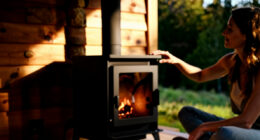
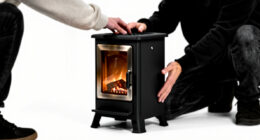
A double-combustion stove improves efficiency by adding a secondary burn that ignites unburned gases and particles after the initial flame. This process introduces extra air into the combustion chamber, ensuring more complete burning of the fuel. As a result, you get cleaner, more efficient heat with fewer emissions, less creosote buildup, and less maintenance. Keep exploring to discover how this innovative feature boosts your stove’s performance and benefits both your wallet and the environment.
Key Takeaways
- The secondary burn introduces additional air to ignite unburned gases and particles in the combustion chamber.
- It ensures complete combustion, extracting more heat and improving overall stove efficiency.
- The process significantly reduces smoke, harmful emissions, and pollutants like carbon monoxide.
- Secondary burning decreases creosote buildup, lowering chimney fire risks and reducing maintenance needs.
- Overall, it creates cleaner, more efficient, and environmentally friendly heating with better fuel utilization.

Double-combustion stoves are an innovative heating solution designed to maximize efficiency and reduce emissions. When you operate a double-combustion stove, you’re leveraging a second burn phase that notably enhances combustion efficiency. Unlike traditional stoves, which burn fuel once and release much of the heat and pollutants into the environment, these stoves introduce a secondary combustion process that burns off leftover gases and particles. This not only ensures you extract more heat from every log or pellet but also minimizes the amount of smoke and harmful emissions released into the atmosphere. As a result, you get a cleaner, more efficient heating system that’s better for the environment and your energy bills.
Understanding how the secondary burn works is key to appreciating its benefits. In a double-combustion stove, air is introduced into the combustion chamber after the initial fire has started to burn. This additional air ignites the unburned gases and particulates that would normally escape as smoke. The secondary burn zone is carefully designed to ensure complete combustion of these gases, which increases overall efficiency. This means you’re getting more heat from the same amount of fuel, reducing waste and making your heating more sustainable. The process also leads to a notable reduction in emissions because fewer unburned particles and pollutants are released into the air. By burning off these gases more completely, the stove drastically cuts the amount of smoke and carbon monoxide produced, contributing to a cleaner indoor and outdoor environment.
You’ll find that double-combustion stoves are not only more eco-friendly but also easier to maintain. Since they burn fuel more completely, there’s less creosote buildup in the chimney, decreasing the risk of chimney fires and reducing cleaning frequency. Additionally, the improved combustion efficiency means you can operate the stove with less fuss—less time spent tending to it and more consistent heat output. This technology also helps you meet stricter emissions standards without sacrificing performance, making it a smart choice for environmentally conscious homeowners.
In essence, the secondary burn in double-combustion stoves is a clever design feature that optimizes fuel use while drastically reducing harmful emissions. It’s an advancement that benefits your wallet, your health, and the planet. By ensuring more complete combustion, you enjoy warmer spaces with less pollution and waste, transforming your heating experience into one that’s both efficient and environmentally responsible.
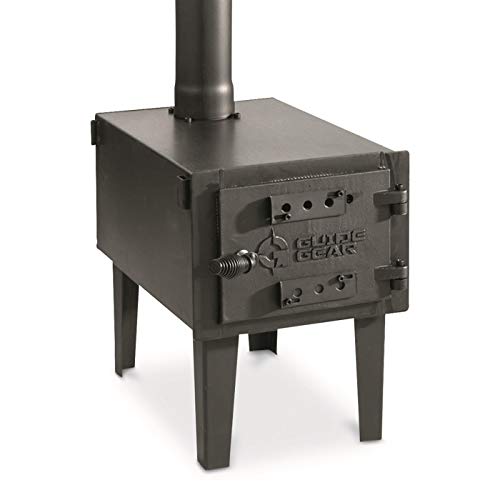
Guide Gear Outdoor Wood Burning Stove; Portable with Chimney Pipe for Cooking and Camping
OUTDOOR WOOD STOVE – We designed our camp stove for use outside. Perfect for use during camping trips...
As an affiliate, we earn on qualifying purchases.
Frequently Asked Questions
How Do Secondary Burns Impact Indoor Air Quality?
Secondary burns improve indoor air quality by increasing combustion efficiency, which reduces the release of pollutants and smoke. When you use a stove with a secondary burn, it burns off excess gases and particles, making the indoor air cleaner and healthier. This process minimizes harmful emissions, ensuring you breathe better indoor air while maximizing the stove’s efficiency. Ultimately, secondary burns help create a safer, more comfortable living environment.
Can Double-Combustion Stoves Operate Efficiently With Different Fuel Types?
You can operate double-combustion stoves efficiently with different fuel types, thanks to their fuel versatility. This design enhances combustion efficiency by optimizing secondary burns, which burn off gases and particulates. While some fuels work best, others may influence performance or emissions. Always check manufacturer guidelines to guarantee your stove handles the specific fuels you’re considering, maintaining both efficiency and safety for your heating needs.
What Maintenance Is Required for Secondary Burn Systems?
You should follow a regular cleaning schedule for your secondary burn system to guarantee it functions efficiently. Check and remove any ash buildup or soot that could block airflow. Additionally, use high-quality fuel to prevent deposits and maintain ideal combustion. By keeping these components clean and using good fuel, you’ll extend your stove’s lifespan and improve its performance, ensuring your secondary burn system operates smoothly and effectively.
Are Secondary Burns Environmentally More Sustainable Than Traditional Stoves?
Think of secondary burns as the eco-friendly whisper in your stove’s chorus. They’re more sustainable because they reduce emissions, acting like a cleaner breath for the environment. Plus, they offer fuel flexibility, allowing you to burn various materials efficiently. By embracing secondary burns, you’re not only warming your home but also helping cut pollution, making your stove a greener, more responsible choice for a healthier planet.
How Does Secondary Combustion Influence Stove Lifespan?
Secondary combustion extends your stove’s lifespan by promoting complete fuel combustion, which reduces soot buildup and ash deposits. This process maintains ideal combustion temperature, ensuring your stove runs efficiently and minimizes wear on parts. With improved fuel efficiency, secondary burns help prevent damage caused by incomplete combustion, ultimately prolonging your stove’s durability and reducing maintenance needs. You get a more reliable, longer-lasting stove while also saving on fuel costs.

Single Burn Rate Stove
Heats up to 900 sq. ft.
As an affiliate, we earn on qualifying purchases.
Conclusion
Understanding double-combustion stoves isn’t just about efficiency; it’s about reclaiming control over your heating. By embracing the secondary burn, you’re not only reducing emissions but also maximizing fuel use—turning waste into warmth. Think of it as a dance where every step counts, ensuring your stove performs at its best. So, why settle for less? Harness this powerful technology and let your stove’s full potential light up your home—because efficiency is the true fire that fuels our comfort.

YRenZ Upgraded Portable Wood Stove for Camping, Compact Tent Stove with Large Firebox, High Airtightness for Outdoor Cooking & Heating
【Upgraded Tent Camping Wood Stove】: Compact yet powerful wood stove for tents and outdoor use, with high airtightness,...
As an affiliate, we earn on qualifying purchases.

Hot Tent Stove,AVOFOREST Wood Burning Stove,Small Wood Stove with 7 Stainless Chimney Pipes for Outdoor Heating & Cooking, Ice Fishing, Hunting
🔥Detachable Chimney Design :In order to facilitate portability,wood Burning Stove is divided into 7 sections, which are composed...
As an affiliate, we earn on qualifying purchases.