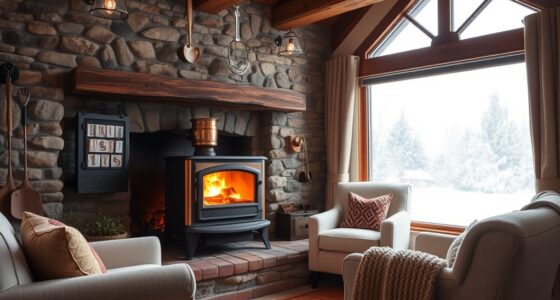
To stay compliant with fire codes and prevent creosote fires, you need to regularly inspect and clean your chimney, typically once a year. Follow local safety regulations, install proper venting, and use approved materials to reduce risks. Maintaining working smoke and carbon monoxide detectors also helps ensure your safety. Adhering to these standards not only protects your home but also keeps you in good legal standing. Learn more about how to keep your system safe and compliant.
Key Takeaways
- Regular chimney inspections and cleanings are mandated by fire codes to prevent creosote fires.
- Compliance with local, state, and national fire safety standards ensures proper creosote management.
- Following manufacturer guidelines and approved materials helps maintain code adherence and safety.
- Installing and maintaining smoke and carbon monoxide detectors is required for fire safety compliance.
- Staying updated on fire code regulations promotes early detection of creosote buildup and prevents violations.
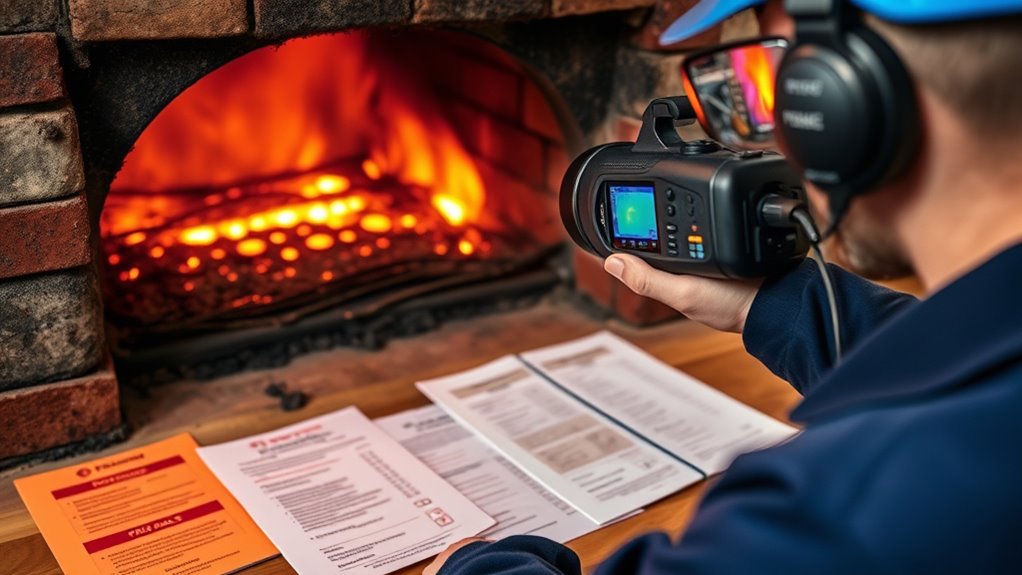
Creosote buildup in chimneys and fireplaces poses a significant fire hazard, which is why fire codes include strict regulations to prevent accidents. As a homeowner or property manager, it’s essential to understand the importance of regular chimney cleaning to stay compliant with these safety standards. Fire safety regulations are designed to minimize the risk of fires caused by creosote accumulation, which can ignite and rapidly spread through a chimney. The process involves inspecting the entire chimney system, identifying potential blockages, and ensuring the liner, damper, and venting are in proper condition. Regular chimney cleaning helps prevent creosote fires and ensures your fireplace operates efficiently, reducing the risk of harmful smoke leaks or carbon monoxide buildup. Additionally, understanding chimney inspection procedures can help you recognize early signs of issues before they become serious problems.
Regular chimney cleaning is essential to prevent creosote fires and stay compliant with safety regulations.
Staying informed about fire safety standards is also crucial, as these regulations are periodically updated to include new safety technologies and best practices. Understanding fire safety regulations is crucial because they specify how often you should have your chimney cleaned. Many codes recommend an annual inspection and cleaning, especially if you use your fireplace frequently. If you notice any signs of creosote buildup—such as a strong smoky smell, excessive soot, or reduced draft—it’s important to contact a professional sooner rather than later. Staying compliant not only protects your property but also guarantees your compliance with local, state, and national fire codes, which vary depending on your location.
In addition to scheduling regular chimney cleaning, you should also keep an eye on the condition of your fireplace and chimney system. Install and maintain smoke and carbon monoxide detectors, and follow all manufacturer guidelines for your heating appliances. Fire safety regulations often include requirements for proper venting, clearances, and the use of approved materials to ensure safe operation. Failing to follow these rules can lead to dangerous situations, including chimney fires or poisoning from toxic gases. Proper maintenance and fire code adherence are essential for preventing dangerous incidents related to creosote buildup.
Ultimately, staying compliant with fire safety regulations involves proactive maintenance and awareness. Regular chimney cleaning is your best defense against creosote fires, safeguarding your home and loved ones. By adhering to these regulations, you demonstrate responsible ownership and commitment to safety. Remember, prevention is always better than dealing with the devastating consequences of a fire caused by neglected creosote buildup. Make it a priority to understand and follow the rules, ensuring your fireplace remains a cozy, safe feature of your home. Proper understanding of fire safety regulations can help you avoid costly violations and ensure your home remains a safe haven.

Sealegend 30 Feet Chimney Sweep Kit Chimney Brush, Chimney Cleaning Kit and Rotary Chimney Cleaning System, Fireplace Brush Tool with 9 Nylon Flexible Rods
[Button Locking Design] The chimney sweep kit features a beautiful chrome-plated button design that ensures that it will…
As an affiliate, we earn on qualifying purchases.
As an affiliate, we earn on qualifying purchases.
Frequently Asked Questions
How Often Should Chimney Inspections Be Performed for Creosote Buildup?
You should have your chimney inspected at least once a year to prevent creosote buildup, which is essential for chimney safety. If you use your fireplace frequently or burn seasoned wood, more frequent inspections and cleanings may be necessary. Regular maintenance schedules help identify creosote accumulation early, reducing fire risks. Stay proactive with inspections to keep your chimney safe, efficient, and compliant with fire codes.
Are There Specific Creosote Removal Products Recommended by Fire Codes?
Think of creosote cleaning as fighting a sneaky villain—there are specific chemical treatments recommended by fire codes to tackle creosote buildup safely and effectively. These products often include creosote removal logs or chemical treatments designed for chimney maintenance. Always choose those approved by fire authorities to guarantee compliance. Using the right creosote cleaning products helps prevent fires and keeps your chimney functioning smoothly, protecting your home and loved ones.
What Are the Penalties for Non-Compliance With Creosote-Related Fire Codes?
If you don’t comply with creosote-related fire codes, you could face serious legal consequences, including hefty penalty fines. Authorities may issue citations or even force you to stop using your chimney until repairs are made. Non-compliance increases the risk of fire hazards, which can lead to costly damages or injuries. To avoid these penalties, stay up-to-date with regulations and guarantee your creosote removal practices meet all safety standards.
How Does Creosote Accumulation Impact Insurance Coverage?
Creosote accumulation can considerably impact your insurance coverage by leading to coverage restrictions or even policy cancellations. Insurance implications include higher premiums or denied claims if your chimney isn’t properly maintained. Fire risks due to creosote buildup may be considered preventable, causing insurers to view your home as higher risk. Regular cleaning and maintenance are essential to guarantee your coverage remains valid and to reduce the chance of denied claims.
Can DIY Creosote Removal Methods Meet Fire Code Requirements?
DIY creosote removal methods can sometimes meet fire code requirements if you follow strict safety protocols. However, DIY safety precautions are limited, and improper cleaning risks fire hazards. To guarantee compliance, it’s best to hire professional services, as experts use specialized tools and techniques to thoroughly remove creosote. Professionals also understand local fire codes, helping you stay safe and compliant, giving you peace of mind during the process.

Rutland Creosote Remover, Fireplace, Wood Stove & Chimney Cleaner, 2 lb Tub
Creosote remover penetrates the sticky, tar-like creosote and turns it into a loose, powdery, non-adhering ash that can…
As an affiliate, we earn on qualifying purchases.
As an affiliate, we earn on qualifying purchases.
Conclusion
Staying compliant with fire codes might seem like a hassle, but neglecting them puts your property at risk. Think of fire codes as your safety net, protecting you from disaster, just like creosote buildup can silently threaten your chimney’s integrity. While following regulations might feel restrictive, it’s actually the safeguard that keeps your home safe and your peace of mind intact. Prioritize compliance—because prevention today saves you from catastrophe tomorrow.

2 Pack Smoke and Carbon Monoxide Detector,Smoke Detector Carbon Monoxide Detector Combo with Batteries,Fire Alarm Smoke Detector with Test Button and Digital Display
Two Sensors: Carbon monoxide detector smoke alarm has a 2-in-1 dual sensors, photoelectrical and electrochemical sensors. They work…
As an affiliate, we earn on qualifying purchases.
As an affiliate, we earn on qualifying purchases.

Acoath Endoscope Camera with Light, Dual-Lens 1920P HD Borescope with 8 Adjustable LED Lights, IP67 Waterproof Boroscope Inspection Tools, 16.4ft Semi-Rigid Snake Camera for iOS & Android
1920P Dual Lens Inspection Camera – Aocath dual lens 7.9mm sewer endoscope camera probe easily accesses tight spots,…
As an affiliate, we earn on qualifying purchases.
As an affiliate, we earn on qualifying purchases.