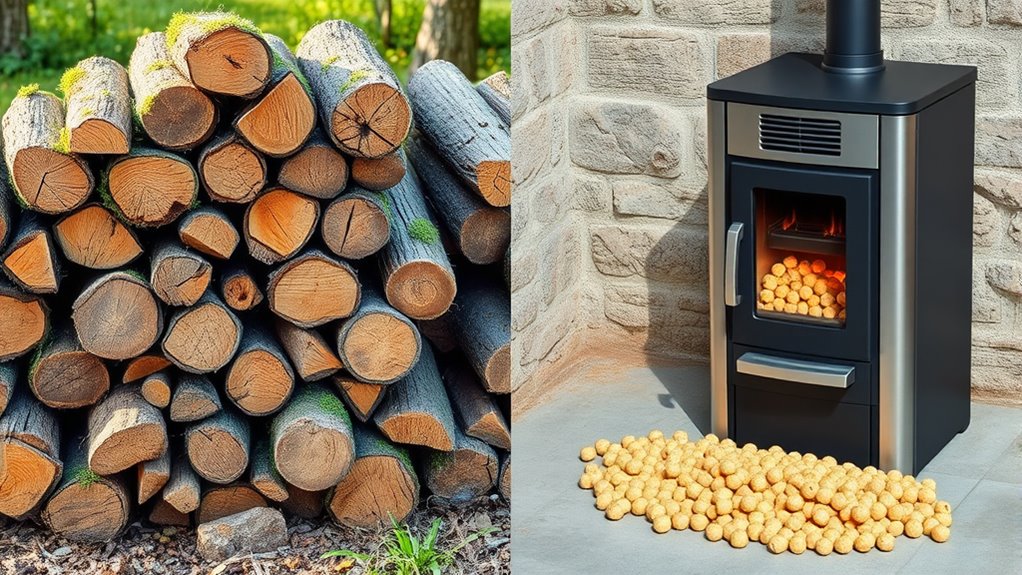
When comparing cordwood and pellet fuel for heating, you’ll find that properly seasoned cordwood burns cleaner and more efficiently if moisture levels stay below 20%, but it requires more effort to store and dry. Pellets, processed to have around 10% moisture, burn more consistently, with higher efficiency and less maintenance. Both have pros and cons, but understanding moisture content and ease of use can help you get the most heat. Keep exploring to learn which might suit your needs best.
Key Takeaways
- Properly seasoned cordwood burns cleaner, more efficiently, and produces more heat than green or high-moisture firewood.
- Pellet fuel offers consistent moisture content (~10%) and high efficiency, often exceeding 80%, ensuring reliable heating.
- Firewood requires proper drying and storage to maximize combustion efficiency and minimize creosote buildup.
- Pellet stoves are low-maintenance, operate with minimal user intervention, and produce less ash and emissions.
- Both options benefit from proper preparation; well-seasoned cordwood and quality pellets deliver optimal heating performance.

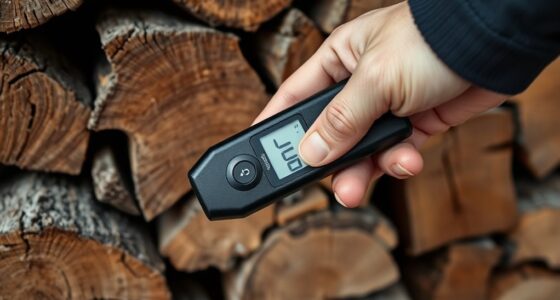
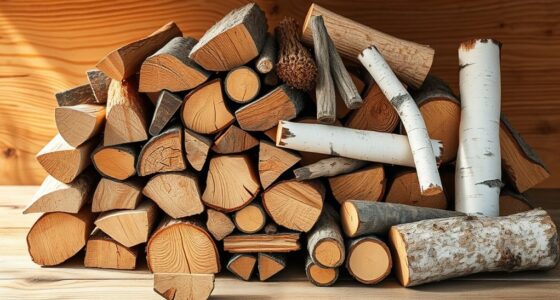
Are you trying to decide between cordwood and pellet fuel for heating? If so, understanding the differences in how each burns and performs can help you make an informed choice. One of the key factors to consider is firewood moisture. When using cordwood, the moisture content plays a significant role in heating efficiency. Freshly cut or improperly stored firewood with high moisture levels burns inefficiently, producing more smoke, creosote buildup, and less heat. Ideally, firewood should be seasoned to a moisture level of 20% or lower before use. If you neglect to dry your firewood properly, you’ll find that your stove consumes more fuel, and your home doesn’t stay as warm. Properly seasoned firewood not only burns cleaner but also provides more heat per load, making your heating process more effective and cost-efficient. Additionally, using well-seasoned firewood can help reduce the buildup of creosote, which is important for maintaining chimney safety and efficiency.
On the other hand, pellet stoves are designed to operate at high efficiency, often exceeding 80%. Unlike cordwood, pellet fuel is processed and dried to a consistent moisture level, typically around 10%. This consistency means that pellet stoves can maintain ideal combustion with minimal effort on your part. The high pellet stove efficiency ensures you get more heat from less fuel, and the controlled burn produces less ash and emissions. Because pellets are uniform in size and moisture content, your stove maintains a steady, efficient burn, which reduces waste and maximizes heat output. This makes pellet stoves an attractive option for those seeking reliable, low-maintenance heating.

General Tools MMD4E Digital Moisture Meter, Water Leak Detector, Moisture Tester, Pin Type, Backlit LCD Display With Audible and Visual High-Medium-Low Moisture Content Alerts, Grays
HUMIDITY SENSOR: Our handy meter tool can quickly determine what level of remediation is needed to keep your…
As an affiliate, we earn on qualifying purchases.
As an affiliate, we earn on qualifying purchases.
Frequently Asked Questions
Which Fuel Has Lower Long-Term Maintenance Costs?
Pellet fuel typically has lower long-term maintenance costs because it requires less handling and cleaning compared to cordwood. A thorough cost analysis shows that pellet stoves need fewer repairs and less frequent cleaning, saving you money over time. Additionally, pellet fuel’s consistent availability makes it easier to store and purchase, reducing your overall maintenance expenses. You’ll likely spend less on upkeep with pellet fuel, especially with reliable fuel availability.
How Do Storage Space Requirements Compare?
Storage space requirements are like night and day. You’ll need more storage capacity for cordwood because it’s bulkier and less space-efficient, often requiring a dedicated shed or large area. Pellet fuel, on the other hand, is much more space-efficient, stored in small bags or bins that fit easily into tight spaces. If saving space matters, pellets give you the upper hand, making storage simpler and more manageable.
Are There Environmental Differences in Emissions?
You’ll find that pellet fuel generally produces cleaner emissions, helping improve air quality and meeting stricter emission standards more easily. Cordwood, on the other hand, releases more particulate matter and pollutants, which can impact air quality negatively. If minimizing emissions is your priority, pellet fuel offers a more environmentally friendly option, but always guarantee your heating system complies with local emission standards to reduce environmental impact.
Which Option Offers Better Heat Output Consistency?
You’ll find pellet fuel offers better heat output consistency, mainly because of its superior heat stability and lower fuel volatility. Unlike cordwood, which can vary in moisture content and burn unevenly, pellets are manufactured for uniformity, ensuring a steady, reliable heat. This predictability means your heating stays consistent, so you won’t experience sudden drops in warmth. The choice is clear if you want dependable, continuous heat during colder months.
What Are the Safety Concerns for Each Fuel Type?
You should be cautious about safety concerns with each fuel type. With cordwood, handling wood ash is important, as it can contain hidden embers that cause fires if not disposed of properly. Pellet fuel requires careful fuel handling to prevent dust explosions and ensure proper storage. Always keep your heating area well-ventilated, wear protective gear, and follow safety guidelines to avoid accidents and maintain safe operation.

Cleveland iron Works Medium Pellet Stove – 60lb Hopper
Built-in WiFi – Smart Home Technology
As an affiliate, we earn on qualifying purchases.
As an affiliate, we earn on qualifying purchases.
Conclusion
Ultimately, choosing between cordwood and pellet fuel is like selecting a path through a forest—one offers rugged independence, the other a steady, precise glow. Cordwood symbolizes tradition and raw strength, while pellet fuel stands for innovation and ease. Whichever you choose, remember that your decision shapes your home’s warmth and your connection to nature. Like two fires warming one hearth, both fuels can light your way—each with its own unique soul.

Tikimilor 4ft Firewood Rack Holder, Adjustable Heavy Duty Fire Log Stacker Stand for Fireplace, Outdoor Indoor Metal Wood Pile Storage Organizer, Patio Logs Stand tool, Black
HEAVY TUBULAR STEEL:Wooden storage shelves are constructed of heavy-duty tubular steel with a two-layer black powder coat finish…
As an affiliate, we earn on qualifying purchases.
As an affiliate, we earn on qualifying purchases.

40 lb. Heating Pellets
Reliable heat source: Our Hardwood Heating Pellets are a reliable and efficient choice for keeping your home warm…
As an affiliate, we earn on qualifying purchases.
As an affiliate, we earn on qualifying purchases.