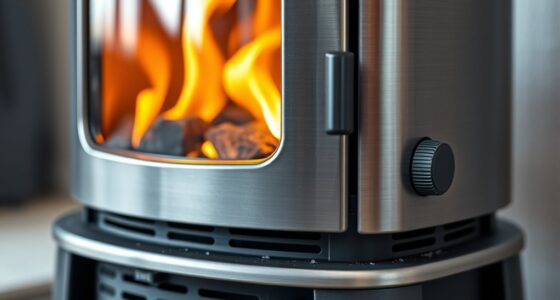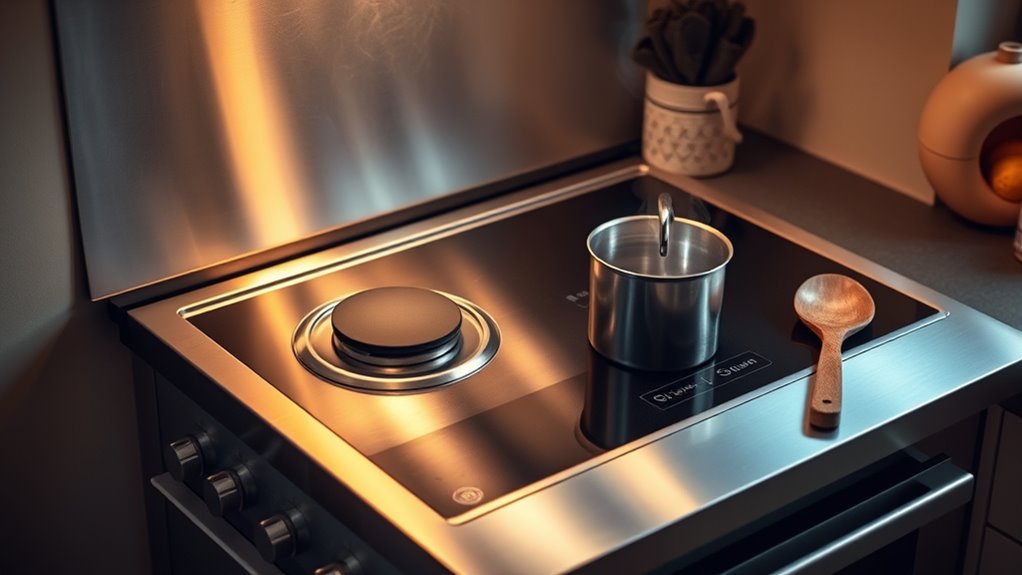

Cookstove hybrids let you heat your home and cook with one versatile appliance by switching between sources like electricity, LPG, wood, or charcoal. With their fuel flexibility, you can optimize efficiency, save costs, and reduce emissions. They adapt to fuel availability and fluctuations, boosting your energy resilience. Advanced technology ensures cleaner combustion and better environmental benefits. To discover how these innovative stoves can transform your energy use, keep exploring the options available.
Key Takeaways
- Hybrid cookstoves enable seamless switching between fuels like electricity, LPG, and biomass for versatile heating and cooking.
- They optimize fuel use by adapting to the most efficient energy source for each task, reducing costs.
- These stoves lower emissions and indoor air pollution through cleaner combustion technology.
- They enhance energy resilience by providing reliable cooking and heating options amid fuel supply disruptions.
- Incorporating advanced technology, hybrid stoves support sustainable energy use and integration of renewable fuels.
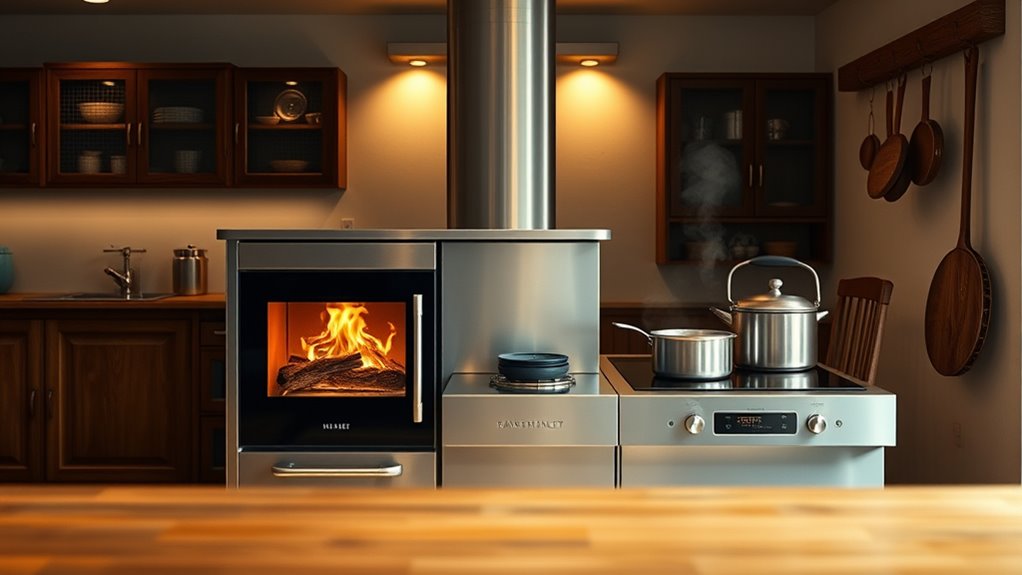
Cookstove hybrids are revolutionizing the way we approach household energy use by combining multiple fuel sources into a single, versatile appliance. This innovative design allows you to switch seamlessly between different fuels, such as electricity, LPG, wood, or charcoal, depending on what’s available or most economical at the moment. With this flexibility, you can optimize your cooking and heating practices while reducing overall fuel consumption. As a result, you’re not only saving money but also making strides toward a more sustainable lifestyle. These hybrid stoves often boast impressive fuel efficiency because they adapt to the most efficient fuel source for each task, minimizing waste. When you use the most suitable fuel, you burn it more completely, which means less fuel is needed to achieve the desired heat. This aspect alone can markedly cut your household energy costs over time. Additionally, fuel efficiency contributes to emission reduction, which benefits both your health and the environment. By burning fuels more completely and cleanly, hybrid cookstoves produce fewer harmful pollutants, such as particulate matter and carbon monoxide. This is particularly important if you live in areas where indoor air pollution from traditional cooking methods is a major health concern. The emission reduction capabilities of cookstove hybrids also help mitigate greenhouse gases, addressing climate change on a broader scale. You’ll find that these appliances are designed with advanced combustion technology to maximize clean burning, ensuring you get the most out of each fuel source while minimizing environmental impact. Switching between fuels isn’t just about convenience; it’s a strategic move toward cleaner energy use. During times when electricity is affordable and reliable, you can prioritize electric operation, which often produces fewer emissions. When fuel prices spike or electricity is less available, switching to biomass or LPG becomes more practical. This flexibility means you’re not locked into a single energy source, giving you control over your energy use and reducing reliance on fossil fuels. As a result, understanding the importance of energy sources and how they impact the environment can help you make more informed choices. Moreover, the integration of multiple fuel options in a single device exemplifies energy diversification, enhancing household resilience. In addition, the use of hybrid cookstoves supports renewable energy adoption by enabling the use of biofuels and other sustainable sources. Incorporating advanced combustion technology further improves efficiency and reduces emissions, making these appliances even more environmentally friendly. Over time, this adaptability can lead to a more resilient household energy system, especially in regions where fuel supply can be unpredictable. Overall, cookstove hybrids empower you to make smarter choices about how you heat and cook, combining efficiency with environmental consciousness. They exemplify how innovative appliance design can address energy costs, reduce harmful emissions, and promote sustainable living—all within a single, user-friendly device. By embracing this technology, you’re taking a meaningful step toward a healthier home and a healthier planet.
hybrid cookstove for home use
As an affiliate, we earn on qualifying purchases.
As an affiliate, we earn on qualifying purchases.
Frequently Asked Questions
How Do Hybrid Cookstoves Compare in Efficiency to Traditional Stoves?
Hybrid cookstoves are more efficient than traditional stoves, helping you reduce fuel consumption by optimizing energy use. They also lower emissions, making cooking cleaner and healthier for you and the environment. You’ll notice that hybrids heat faster and use less fuel, which saves money over time. Plus, their dual-function design means you get reliable heating and cooking, making them a practical choice for everyday use.
What Maintenance Is Required for Hybrid Cookstoves Over Time?
You’ll need to regularly check your hybrid cookstove for proper fuel storage and ash removal. Keep fuel dry and stored safely to guarantee efficiency, and clean out ash to prevent blockages and maintain peak performance. Periodic inspection of the stove’s components, like the combustion chamber, helps catch wear early. Doing these simple maintenance tasks keeps your hybrid stove working smoothly and extends its lifespan.
Are Hybrid Cookstoves Suitable for All Fuel Types?
Ever wonder if hybrid cookstoves suit all fuel types? The answer is, it depends. These stoves excel in fuel versatility, accommodating various fuels like wood, charcoal, or LPG. However, user adaptability is key—some models may perform better with specific fuels. Always check the manufacturer’s specifications to guarantee the stove matches your available fuel sources and cooking needs, maximizing efficiency and safety.
How Long Does It Take to Switch Between Heating and Cooking Modes?
Switching between heating and cooking modes on a hybrid cookstove typically takes just a few minutes, depending on the model. During mode changeover, you’ll need to follow user operation instructions carefully to guarantee safety and efficiency. Most hybrids are designed for quick switching, allowing you to seamlessly move from one mode to another without lengthy delays. With proper operation, you can switch modes smoothly and conveniently whenever needed.
What Safety Features Are Integrated Into Hybrid Cookstoves?
You’ll find that hybrid cookstoves include safety features like child safety locks to prevent accidental burns or opening, ensuring little ones stay safe. Ventilation features are integrated to reduce smoke and harmful emissions, improving indoor air quality. These safety measures make hybrid cookstoves safer for daily use, giving you peace of mind while cooking or heating your home. Always check the specific model’s safety features for the best protection.
multi-fuel energy-efficient stove
As an affiliate, we earn on qualifying purchases.
As an affiliate, we earn on qualifying purchases.
Conclusion
With cookstove hybrids, you hold the key to a brighter, cleaner future. Imagine a cozy hearth that not only warms your home but also fuels your daily life with efficiency and ease. These stoves are like a trusted partner, seamlessly blending tradition with innovation. By choosing a hybrid, you’re planting seeds for healthier lungs, greener skies, and a more sustainable world—turning your kitchen into a sanctuary of progress and warmth.
electric LPG wood hybrid stove
As an affiliate, we earn on qualifying purchases.
As an affiliate, we earn on qualifying purchases.
clean burning hybrid cookstove
As an affiliate, we earn on qualifying purchases.
As an affiliate, we earn on qualifying purchases.