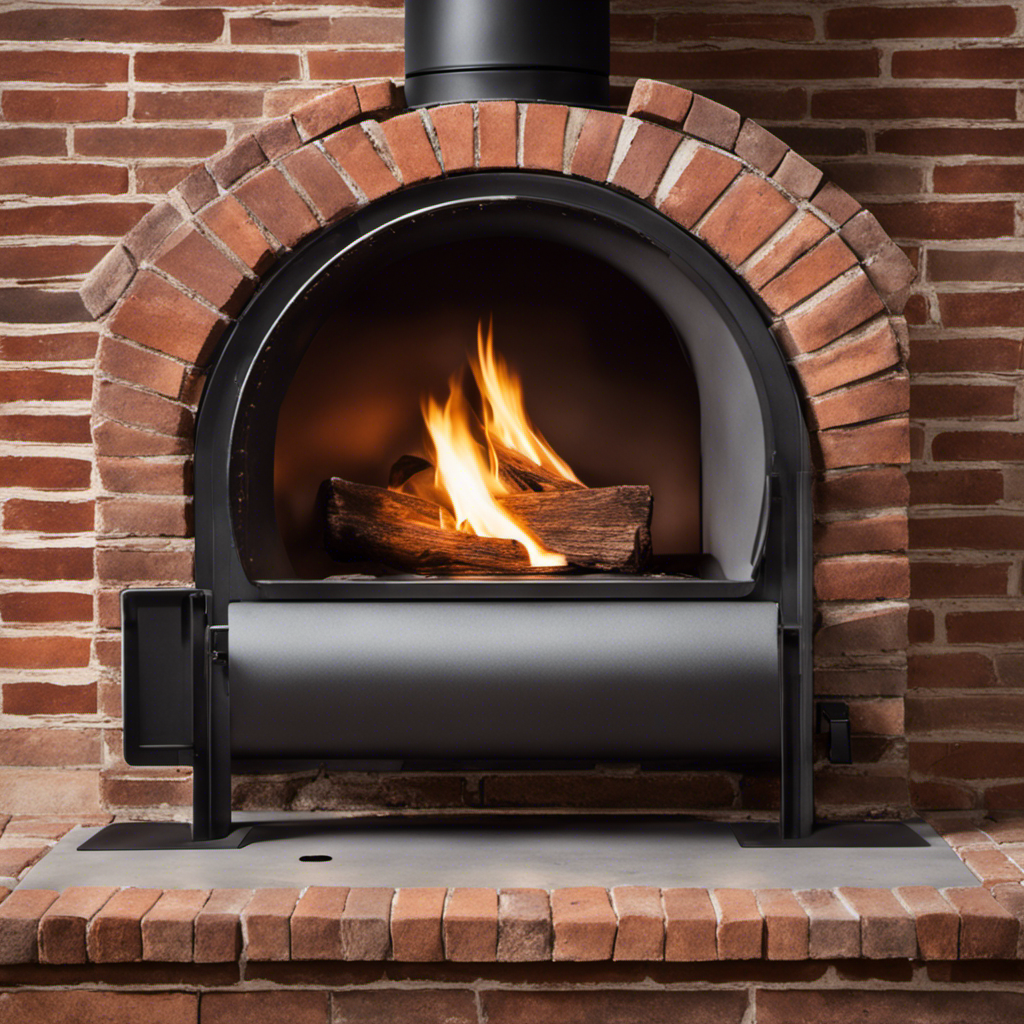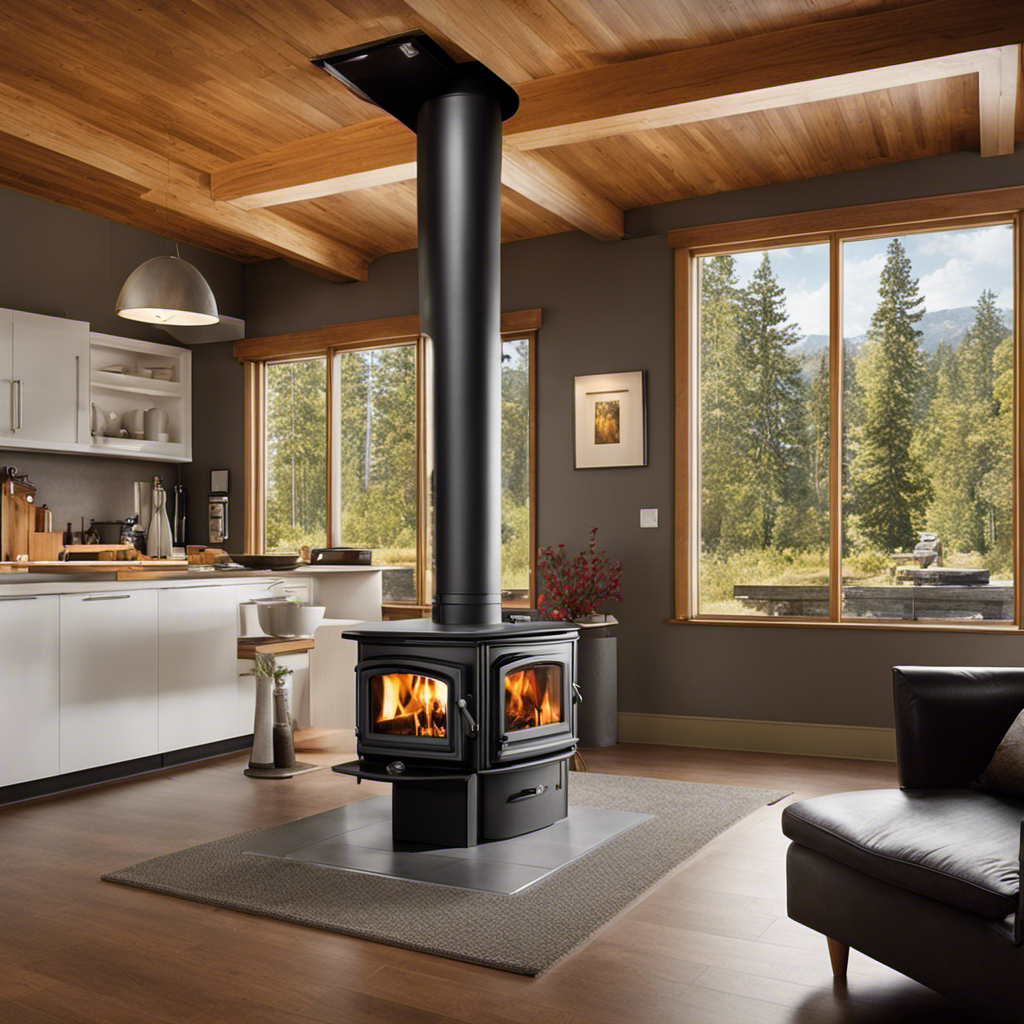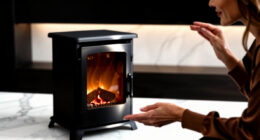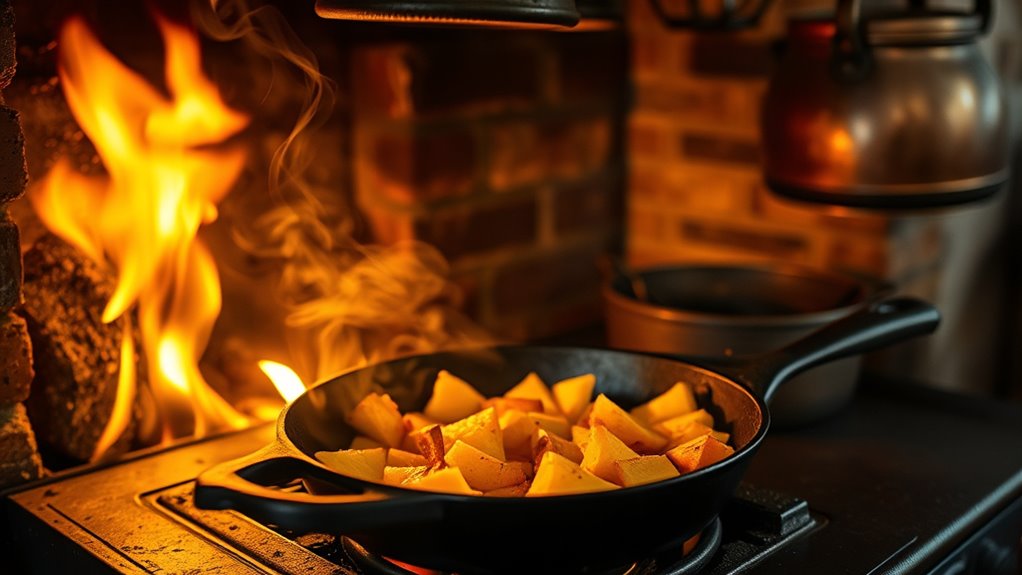
To cook effectively on a wood stove, focus on controlling the fire by adjusting airflow and choosing steady-burning wood for consistent heat. Use heavy-duty cookware like cast iron to guarantee even cooking and better heat retention. Monitor flames closely, shifting fire strength as needed for boiling, simmering, or slow cooking. Experiment with different woods and fire techniques to refine your skills. Keep practicing, and you’ll become more confident with every meal you prepare on your stove.
Key Takeaways
- Control fire intensity by adjusting wood and airflow for different cooking methods like simmering or boiling.
- Use appropriate cookware, such as heavy-duty cast iron, to ensure even heat distribution and safety.
- Monitor flames closely to maintain consistent heat and prevent flare-ups or smoke.
- Cover pots with tight-fitting lids to trap heat and moisture, enhancing cooking efficiency.
- Experiment with different wood types and fire management techniques to optimize heat and flavor.
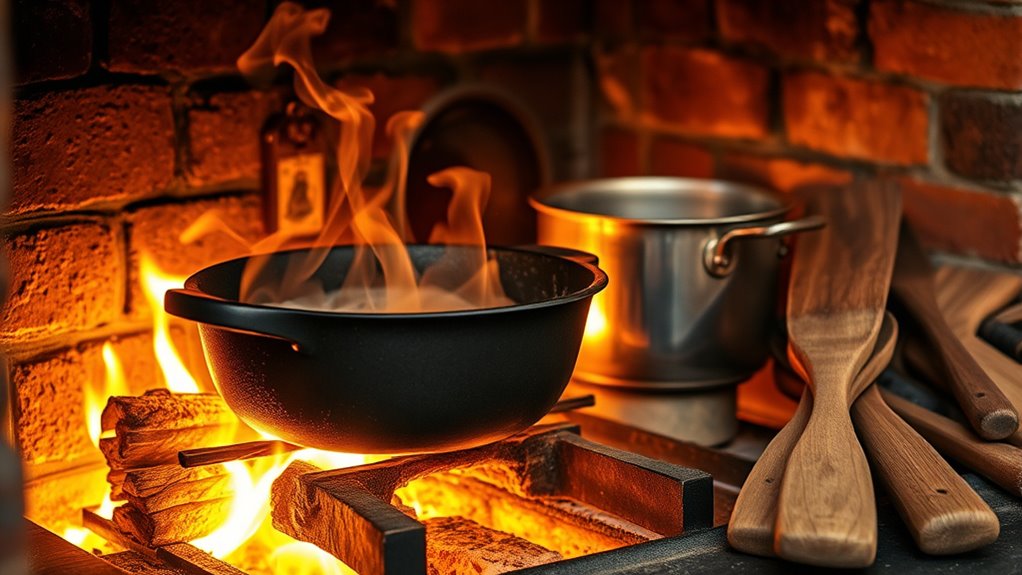
Cooking on a wood stove can be both rewarding and challenging, especially if you’re new to it. One of the most important skills you’ll need to develop is fire management. Unlike modern stoves with precise temperature controls, a wood stove relies on how well you control the fire to achieve the right heat. You’ll want to learn how to start a fire that burns steadily without producing excessive smoke or dangerous sparks. Keep a close eye on the flames, adjusting the wood and air vents to regulate the intensity. A strong, hot fire is perfect for boiling and frying, while a gentler, smoldering fire is ideal for simmering and slow cooking. As you gain experience, you’ll better understand how different types of wood influence heat levels and cooking times. Managing the fire effectively guarantees your food cooks evenly and prevents waste or safety hazards. Additionally, understanding how to use different tuning techniques can help optimize your stove’s heat output for various cooking needs. Proper fire control is essential for consistent results and safety during your cooking sessions.
Another key aspect of successful cooking on a wood stove is cookware selection. Not all pots and pans are suitable for open-flame cooking, so choosing the right cookware makes a significant difference. Heavy-duty, cast iron cookware is highly recommended because it retains heat well and distributes it evenly, which is essential for consistent cooking. Plus, cast iron can handle high temperatures and is incredibly durable. You’ll also want to have a variety of sizes to accommodate different recipes, from small saucepans to large Dutch ovens. When selecting cookware, consider those with flat, stable bottoms to sit securely on the stove’s surface or on the stove’s hot spots. Avoid lightweight or thin metal pots, as they heat unevenly and can warp or crack under high heat. Additionally, using lids that fit tightly helps trap heat and moisture, improving cooking efficiency. Remember, the material and construction of your cookware influence how well your food cooks and how quickly it heats up.
In your journey of mastering wood stove cooking, pay attention to how your cookware responds to the flames and heat adjustments. With practice, you’ll learn the best fire management techniques to keep your stove at the right temperature and select cookware that maximizes heat retention. This combination allows you to cook a wide range of dishes effectively, from quick sautés to slow-roasted stews. The process might involve some trial and error, but each cooking session sharpens your skills. Over time, you’ll become confident in controlling the fire and choosing the right cookware, making your wood stove a versatile and reliable cooking tool. Remember, patience and observation are key—soon, wood stove cooking will feel natural and even enjoyable. Additionally, experimenting with different wood types can help you achieve desired heat levels and flavor profiles in your dishes.
cast iron cookware for open flame
As an affiliate, we earn on qualifying purchases.
As an affiliate, we earn on qualifying purchases.
Frequently Asked Questions
How Do I Control the Temperature on a Wood Stove Effectively?
To control the temperature on your wood stove, start by adjusting the fire size—add more wood for higher heat or let it burn down for cooler temps. Dampening the air intake also helps manage heat; close the damper slightly to reduce airflow and lower the temperature, or open it to increase airflow and boost heat. Practice these adjustments, and you’ll master maintaining a steady, comfortable heat.
What Safety Precautions Should I Take When Cooking on a Wood Stove?
Think of your wood stove as a fiery dragon: powerful but needing respect. Always keep a fire hazard in mind by never leaving flames unattended and keeping flammable objects away. Guarantee proper ventilation to prevent smoke buildup and carbon monoxide poisoning. Use gloves and long tools to handle hot pots, and keep a fire extinguisher nearby. These precautions turn your adventure into a safe, warm haven rather than a risky inferno.
How Do I Clean and Maintain a Wood Stove for Optimal Performance?
To keep your wood stove performing well, regularly clean it by removing ash and cleaning the chimney. Ash buildup can hinder airflow, so scoop out the ash after each use and dispose of it safely. Schedule chimney cleaning at least once a year to prevent creosote buildup, which could cause dangerous fires. Keep the stove’s surfaces clean and inspect for damage to ensure safe, efficient operation every time you cook.
Can I Cook All Types of Dishes on a Wood Stove?
You can cook most types of dishes on a wood stove, thanks to its excellent cooking versatility. You’ll find it great for simmering stews, frying, baking, and even making delicate sauces. Just keep in mind that some dish adaptations help optimize results, like adjusting heat levels or using specific cookware. With a little practice, you’ll enjoy preparing a wide variety of meals, all with that warm, rustic flavor only a wood stove provides.
What Are the Best Woods to Use for Consistent Heat and Flavor?
You’ll find that hardwoods like oak, hickory, and maple are your best choices for consistent heat and rich flavor preservation. These woods burn steadily, providing even heat that’s as reliable as the sunrise. Avoid softwoods like pine, which burn quickly and produce unpleasant flavors. Selecting the right wood guarantees your dishes develop incredible taste and aroma, turning every meal into a memorable experience.
wood stove compatible pots and pans
As an affiliate, we earn on qualifying purchases.
As an affiliate, we earn on qualifying purchases.
Conclusion
Cooking on a wood stove is like crafting a warm, hearty story. As you master controlling the flames, you’ll find each meal becomes a chapter filled with flavor and tradition. I remember my first time tending the fire — it was like conducting a symphony, balancing heat and patience. With practice, you’ll discover that every dish, like a well-told tale, leaves a lasting impression. Embrace the process, and let your wood stove become your storytelling partner.
heavy-duty Dutch oven
As an affiliate, we earn on qualifying purchases.
As an affiliate, we earn on qualifying purchases.
fire management tools for wood stove
As an affiliate, we earn on qualifying purchases.
As an affiliate, we earn on qualifying purchases.