To clean your stove glass without scratches, use a soft cloth or non-abrasive sponge and avoid harsh scrubbers like steel wool. Apply a gentle cleaner such as a specialized stove glass cleaner or a baking soda-water mixture, and let it sit for a few minutes before wiping in circular motions. For stubborn spots, carefully use a plastic scraper at a low angle. Keep exploring for more tips to maintain a scratch-free, sparkling surface.
Key Takeaways
- Use soft microfiber cloths or non-abrasive sponges for gentle cleaning.
- Apply specialized stove glass cleaner or a baking soda-water paste and let it sit before wiping.
- Avoid steel wool, scouring pads, or harsh scrubbers that can scratch the surface.
- Use plastic scrapers at low angles for stubborn spots, applying minimal pressure.
- Regularly wipe the glass after each use to prevent buildup and reduce the need for aggressive cleaning.
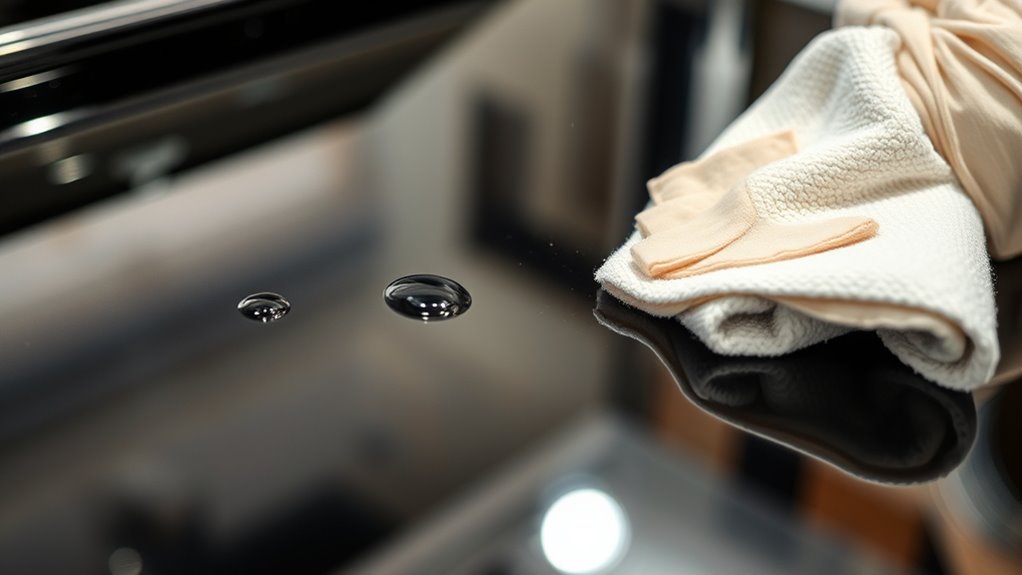
Cleaning stove glass can be a straightforward task if you know the right methods. Your goal is to maintain the glass surface’s clarity without causing scratches that can compromise its appearance and safety. Stovetop maintenance is essential not just for looks but also for ensuring the glass surface remains safe to use. When you keep the surface clean, you reduce the risk of debris or baked-on food that could lead to scratches during cleaning or cooking. Proper cleaning techniques help preserve the integrity of the glass surface and keep your stove functioning safely.
First, always allow the glass to cool completely before cleaning. Attempting to clean hot glass can cause damage or accidental burns. Once cooled, use a soft cloth or non-abrasive sponge to wipe away loose debris or spills. Avoid steel wool, scouring pads, or harsh scrubbers, as they can leave scratches that diminish the glass’s smooth surface and compromise glass surface safety. Instead, opt for gentle cleaning tools that won’t damage the surface.
Always let the glass cool completely before cleaning to prevent damage or burns.
To effectively clean stubborn stains or baked-on residues, apply a specialized stove glass cleaner or a mixture of baking soda and water. Spray or dab the cleaner onto the surface and let it sit for a few minutes. Then, gently wipe with a soft cloth or sponge, working in circular motions. This method prevents scratches and ensures you remove dirt without scratching the glass. For persistent spots, a plastic scraper designed for glass surfaces can be used carefully, holding it at a low angle and gently scraping away residues. Be cautious, as excessive pressure can cause scratches. Additionally, using proper cleaning tools that are specifically designed for delicate surfaces can help prevent damage and maintain the glass’s clarity over time.
Regular maintenance is key. Wipe your glass surface after each use to prevent buildup. This simple habit reduces the need for aggressive cleaning later, which can risk scratching. When cleaning, always use a microfiber cloth or soft sponge; these materials minimize the chance of scratching and are gentle on the glass surface safety. Avoid abrasive powders or harsh chemicals, which can mar the surface or leave residues that are difficult to remove. Incorporating appropriate cleaning products can also help protect the surface and make cleaning safer and more effective.
In addition to cleaning, consider applying a glass stove top protectant or polish to create a barrier against scratches and stains. These products can help maintain the surface’s smoothness, making future cleaning easier and safer. Also, monitoring filter indicators on some appliances can help you keep your cleaning tools and methods aligned with optimal performance, ensuring your stove stays in the best condition. Remember, the key to scratch-free cleaning is patience and gentle handling. By following these tips, you’ll keep your stove glass looking pristine and ensure it remains safe for everyday use. Proper stovetop maintenance not only prolongs the life of your appliance but also guarantees a safe cooking environment free from scratches and damage.

Weiman Glass & Ceramic Cooktop, Stove Top & Oven Cleaner Kit – Kitchen Cleaner Cream, 3 Scrubbing Pads & Scraper for Burnt-On Food & Grease, Clean Shine – Safe for Induction, Electric & Gas Cooktops
REVITALIZE WITHOUT SCRATCHING: Non-abrasive cooktop pads help easily remove heavily burned on foods, grease & grime. Our cooktop…
As an affiliate, we earn on qualifying purchases.
As an affiliate, we earn on qualifying purchases.
Frequently Asked Questions
Can I Use Vinegar to Clean Stove Glass Safely?
Yes, you can use vinegar cleaning to safely clean your stove glass. Vinegar is a gentle, natural cleaner that won’t scratch the glass surface if used properly. Just mix equal parts vinegar and water, then apply it with a soft cloth. Make sure the glass is cool before cleaning, and avoid abrasive scrubbers. This method guarantees glass safety while effectively removing grime and grease.
How Often Should I Clean Stove Glass to Prevent Scratches?
An ounce of prevention is worth a pound of cure. You should clean your stove glass regularly, ideally after each use, to maintain its appearance and avoid scratches. Stick to a gentle cleaning routine and avoid abrasive materials. Proper stove glass maintenance involves consistent cleaning frequency, which helps keep the surface smooth and scratch-free, ensuring your stove looks great and functions efficiently for years to come.
Are There Any DIY Homemade Solutions Recommended?
Yes, you can use homemade cleaners for scratch prevention on your stove glass. Mix baking soda with a small amount of water to create a gentle paste, and apply it with a soft cloth. Vinegar diluted with water also works as a natural cleaner. These homemade solutions help clean effectively without scratching, ensuring your stove glass stays clear and damage-free. Always use soft cloths to avoid accidental scratches.
What Tools Should I Avoid Using on Stove Glass?
You should avoid using abrasive pads and steel wool on your stove glass, as they can scratch the surface. Instead, opt for soft cloths or sponges designed for delicate surfaces. Using harsh tools can leave marks that are difficult to remove. Always select gentle, non-abrasive cleaning tools to keep your stove glass spotless and scratch-free, ensuring it stays in good condition for longer.
Can Cleaning Stove Glass Damage the Stove’s Surface?
Yes, improper cleaning techniques can damage your stove surface. Using abrasive tools or harsh chemicals may scratch or dull the glass, leading to permanent marks. To avoid damage, opt for gentle cleaning methods like soft cloths or non-abrasive cleaners. Always test a small area first, and avoid excessive scrubbing. Proper care guarantees your stove surface stays clear and scratch-free, maintaining both its appearance and functionality.
non-abrasive stove glass sponge
As an affiliate, we earn on qualifying purchases.
As an affiliate, we earn on qualifying purchases.
Conclusion
So, after all that effort, you might think your stove glass will stay spotless forever. But in reality, the moment you breathe, a tiny fingerprint or smudge sneaks in, reminding you that perfection is fleeting. Ironically, the very act of cleaning to protect your stove often feels like a losing battle. Still, don’t give up—you’ll keep trying, knowing deep down that a perfectly clear stove glass is just a fleeting illusion.
plastic scraper for stove glass
As an affiliate, we earn on qualifying purchases.
As an affiliate, we earn on qualifying purchases.
microfiber cloth for glass cleaning
As an affiliate, we earn on qualifying purchases.
As an affiliate, we earn on qualifying purchases.