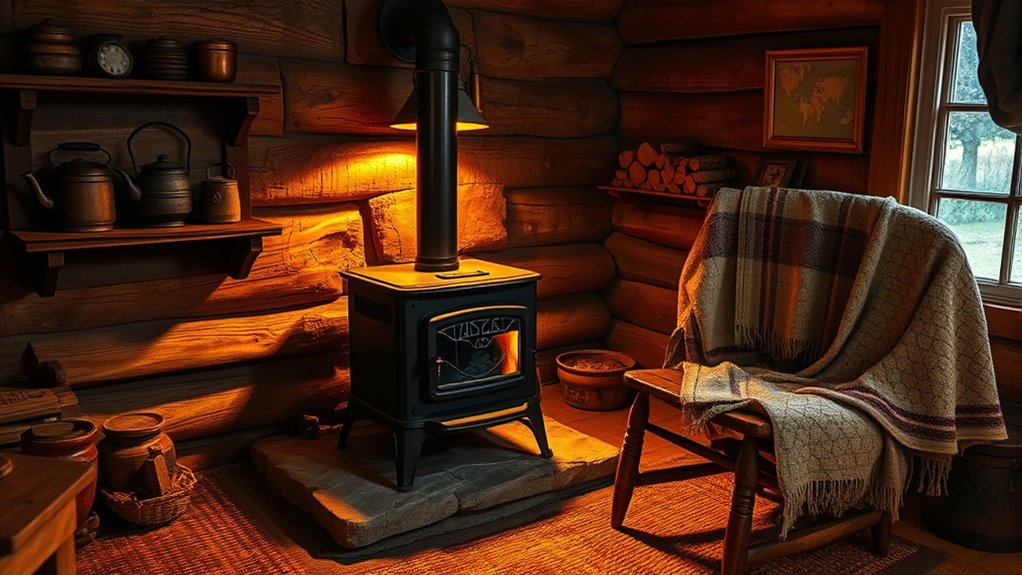

When choosing a small wood stove for your cabin or tiny house, first assess your heating needs and available space to find a model that offers reliable warmth without overwhelming your area. Measure carefully for proper placement, considering safety clearances and using heat shields if needed. Make certain proper venting with a suitable chimney and maintain regular inspections. Focus on foundation stability, floor protection, and safety devices like smoke detectors. Keep these tips in mind to keep your space warm and safe—there’s more to take into account for a perfect setup.
Key Takeaways
- Determine the heating capacity needed based on cabin or tiny house size to select an appropriately powered stove.
- Measure available space carefully to ensure the stove fits comfortably and allows sufficient clearance for safety.
- Choose a compact, efficient model that maximizes heat output without overwhelming limited space.
- Prioritize models with proper venting options and easy installation suitable for small structures.
- Ensure safety features like proper clearance, floor protection, and smoke/CO detectors are incorporated into your setup.

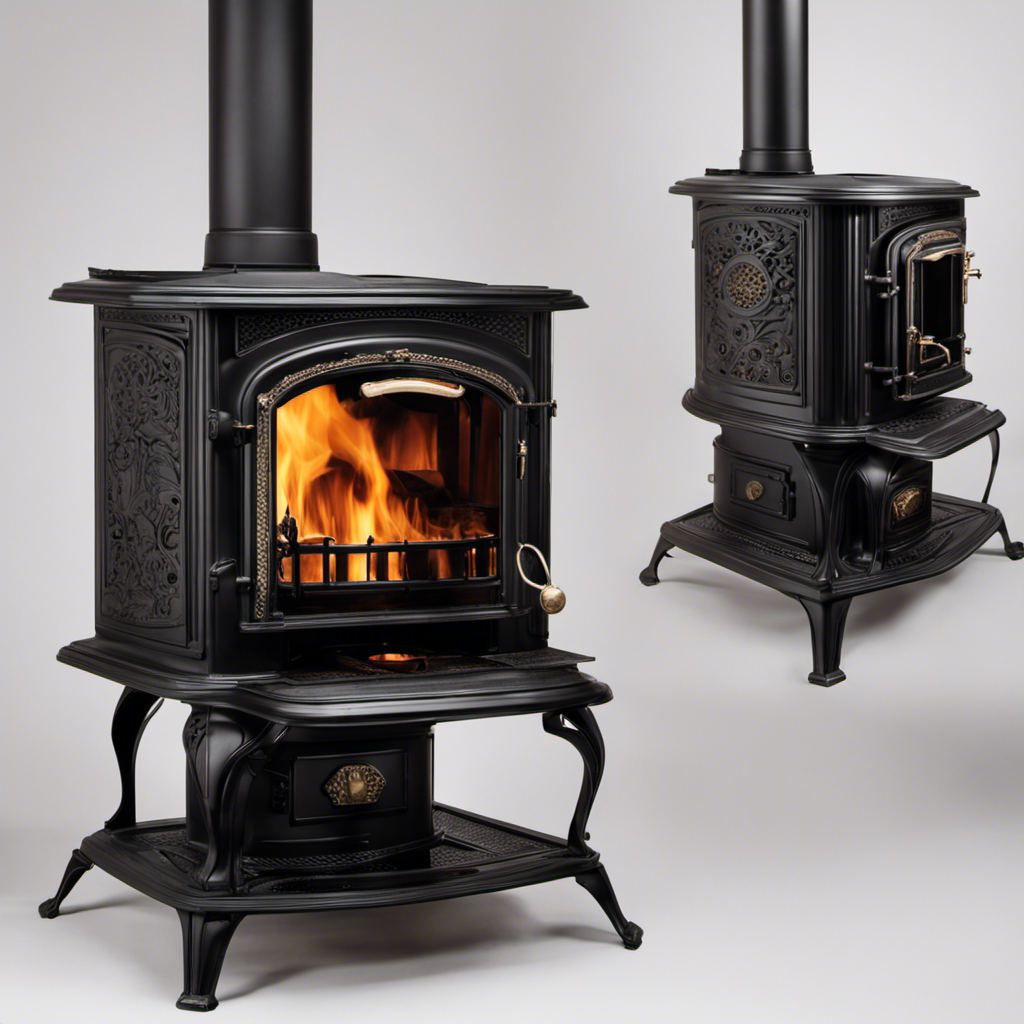
When selecting a small wood stove, it’s essential to contemplate your heating needs, space constraints, and the stove’s efficiency. These factors will guide you toward a model that provides reliable warmth without overwhelming your space. Once you’ve pinpointed the right size and style, you’ll need to pay close attention to installation considerations. Proper installation isn’t just about fitting the stove into your cabin or tiny house; it’s about ensuring safety, efficiency, and compliance with local codes. Measure your space carefully, leaving enough clearance around the stove for safe operation and maintenance. Remember to check the manufacturer’s specifications for minimum clearance requirements, and consider the placement of combustible materials such as furniture, curtains, or shelving. Installing a heat shield or non-combustible barrier can help reduce clearance needs and enhance safety.
Choose the right size and ensure proper clearance for safe, efficient small wood stove installation.
Additionally, venting is critical. You’ll need to plan for proper chimney or stovepipe installation to ensure effective smoke and gas venting outdoors. This involves selecting the right chimney type, ensuring a proper slope, and sealing all joints tightly to prevent leaks. It’s wise to hire a professional if you’re unsure about the process, as improper installation can lead to dangerous situations like smoke leaks or carbon monoxide buildup. Safety precautions should be a top priority—install smoke and carbon monoxide detectors nearby, and regularly inspect the stovepipe and chimney for creosote buildup or damage. Never overlook the importance of adequate ventilation in small spaces, which helps prevent dangerous indoor air quality issues. Proper installation practices are essential to guarantee safe and efficient operation of your wood stove.
Furthermore, choosing an appropriate floor protector is an installation consideration you shouldn’t ignore. Since small wood stoves generate heat, placing them on a non-combustible mat or hearth pad protects your flooring from heat damage and reduces fire risk. Always ensure your foundation is level and stable to avoid tilting or shifting over time. If you’re unsure about any aspect of installation, consult with a professional installer or local building authority to ensure everything adheres to safety standards.
In the end, a well-installed small wood stove offers warmth, comfort, and peace of mind. Prioritizing proper installation considerations and safety precautions guarantees a safe, efficient heating solution for your cozy cabin or tiny house. Taking these steps might seem meticulous, but they’re essential for enjoying your stove’s benefits without worry.
Frequently Asked Questions
How Often Should I Clean and Maintain My Small Wood Stove?
You should clean and maintain your small wood stove regularly, ideally once a week during heavy use. Always remove ash to keep airflow ideal, and schedule a chimney inspection at least once a year to prevent soot buildup and guarantee safety. Regular cleaning prevents creosote buildup, reduces fire risk, and keeps your stove operating efficiently. Stay proactive, and you’ll enjoy safe, warm comfort all season long.
What Safety Features Should I Look for in a Small Stove?
Imagine a tiny house fire caused by improper stove installation. To prevent this, look for safety features like a sturdy door latch, a heat-resistant glass window, and an automatic shut-off. Prioritize fire safety by ensuring your stove has proper clearance and is installed correctly. These features help reduce fire risks and protect your home, making stove installation safer and more reliable.
Can a Small Wood Stove Effectively Heat an Entire Cabin?
A small wood stove can effectively heat your entire cabin if it offers good heating efficiency and is well-insulated. You should select a stove designed for your space size, ensuring proper stove insulation to retain heat. Proper placement and consistent wood supply also help maintain warmth. While small stoves work well for cozy spaces, supplementing with insulation and draft-proofing boosts overall heating performance.
Are There Eco-Friendly or Epa-Certified Small Wood Stoves Available?
Yes, you can find eco-friendly, EPA-certified small wood stoves that prioritize purity and performance. These stoves showcase sustainable materials, strict standards, and sleek sustainability. Eco certifications guarantee efficient emissions and eco-conscious operation, helping you heat responsibly while reducing your carbon footprint. By choosing these environmentally friendly stoves, you support sustainable sourcing and safeguard the space you cherish, making your cozy cabin or tiny house both warm and environmentally wise.
How Do I Choose the Right Size Stove for My Space?
To select the appropriate size stove, start with size estimation based on your space’s square footage and insulation considerations. A well-insulated cabin or tiny house needs a smaller stove, while less insulated spaces require a larger one to maintain warmth. Measure your area accurately, and consider the stove’s heating capacity. Always opt for a stove that matches your space’s needs to guarantee efficient heating without overheating or wasting fuel.
Conclusion
Choosing the right small wood stove can make all the difference in keeping your cabin or tiny house cozy. Did you know that properly installed wood stoves can heat spaces up to 1,000 square feet efficiently? By selecting the right size and features, you’ll enjoy warmth and comfort all winter long. Remember, investing a little time now guarantees a safer, more efficient heating solution that keeps you warm and saves you money in the long run.