Understanding smoke testing and chimney sweep certification helps you make certain your chimney’s safety and efficiency. Smoke testing uses non-toxic smoke to identify leaks, blockages, and structural issues in your chimney, preventing hazards like fires or carbon monoxide. Certified chimney sweeps have proper training and adhere to industry standards, ensuring thorough inspections and maintenance. Knowing these aspects lets you make informed decisions about your chimney’s care—continue to learn more about how to keep your home safe.
Key Takeaways
- Smoke testing evaluates chimney integrity by detecting leaks, blockages, and structural issues through visual smoke flow analysis.
- Certified chimney sweep professionals have undergone specialized training and testing to ensure safe, thorough inspections and cleanings.
- Certification standards, such as those from CSIA, promote industry best practices, safety, and ongoing professional development.
- Smoke testing helps identify hazards like carbon monoxide buildup and chimney fires, preventing dangerous situations in the home.
- Hiring certified professionals ensures accurate detection of problems, enhances safety, and extends chimney and fireplace lifespan.
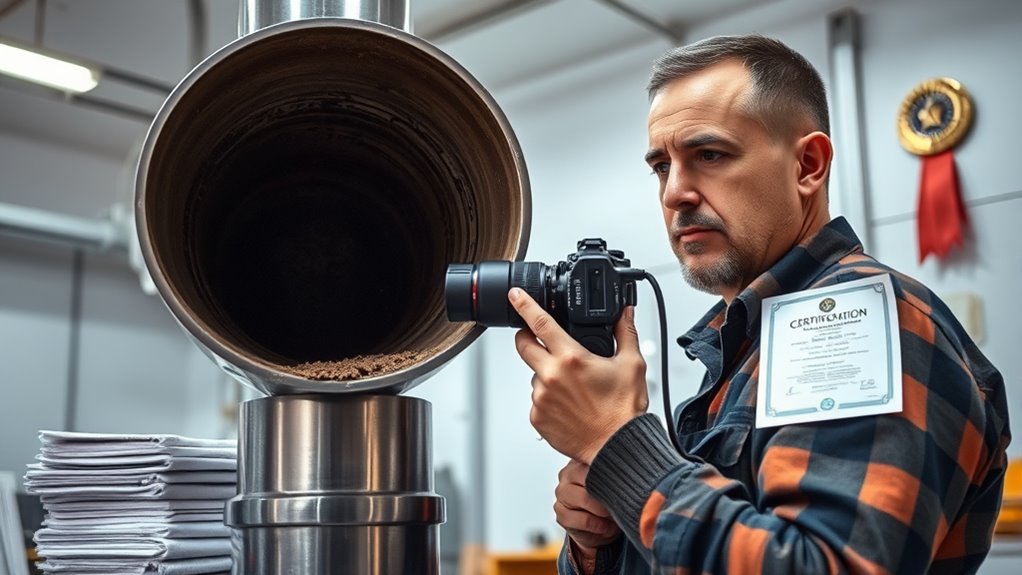
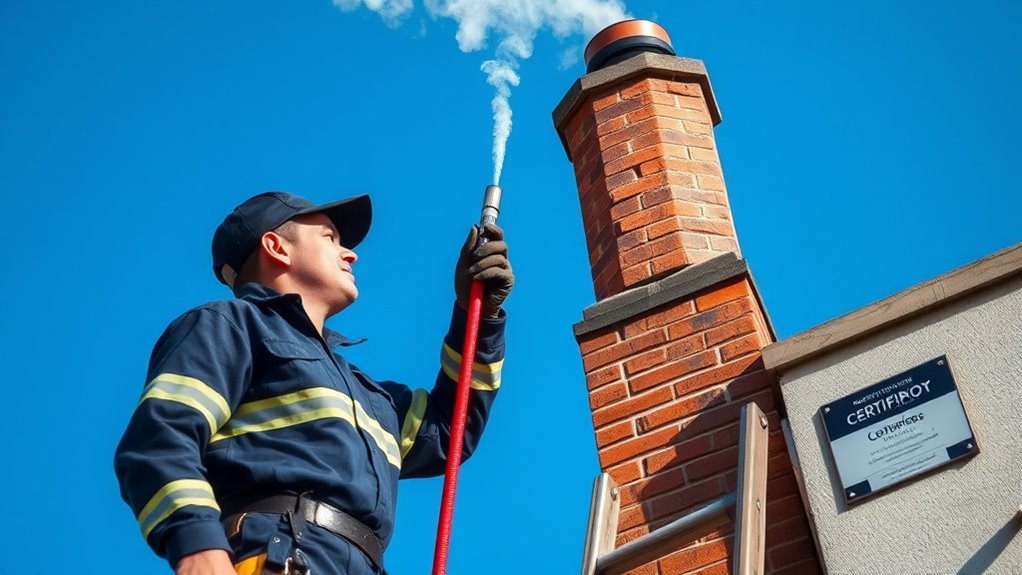
If you’re responsible for maintaining a safe and efficient fireplace or chimney system, understanding smoke testing and chimney sweep certification is essential. These practices play a crucial role in ensuring fire safety and preventing potential hazards in your home. Smoke testing is a diagnostic tool used by professionals to evaluate the integrity of your chimney and identify any leaks, blockages, or structural issues that could compromise safety. During this process, non-toxic smoke is introduced into the chimney, and the technician observes how it flows and escapes. If smoke leaks into your living space or doesn’t exit properly, it indicates problems that need addressing to prevent dangerous conditions like carbon monoxide buildup or chimney fires. Recognizing the importance of smoke testing helps you stay proactive in maintaining your chimney, especially before the heating season begins or after extensive use.
The certification process for chimney sweeps is equally vital in maintaining fire safety. When you hire a certified professional, you’re ensuring that they possess the necessary training, skills, and knowledge to perform thorough inspections and cleanings. Certification standards vary by region but typically involve rigorous training programs and testing to prove competency. Certified chimney sweeps understand how to identify signs of damage, creosote buildup, and other issues that could lead to unsafe conditions if left unaddressed. By choosing a certified professional, you also benefit from adherence to industry safety protocols, which minimizes the risk of accidents during maintenance work. This certification acts as a guarantee that the work will be performed correctly, reducing the likelihood of dangerous chimney fires or hazardous emissions. Additionally, staying informed about the latest industry standards ensures ongoing safety and compliance.
Understanding the certification process enables you to ask the right questions when hiring a chimney sweep. You can inquire about their credentials, training, and whether they follow recognized standards like those set by the Chimney Safety Institute of America (CSIA) or similar organizations. These certifications are more than just formalities; they reflect a commitment to fire safety and professional excellence. Doing your due diligence by hiring certified experts ensures your chimney system functions properly, reduces fire risks, and prolongs the lifespan of your fireplace. Regular inspections and cleanings by certified professionals, coupled with smoke testing, create a comprehensive safety net that keeps your home secure. Ultimately, staying informed about these processes empowers you to make better decisions and maintain a safe, efficient chimney system for years to come.

Allegro-2050 Fit Testing Kit, Irritant Smoke,one size
The kit comes with a vinyl protective pouch, hand operated air bulb (2.4 oz. (71 ml)), breaker tool,…
As an affiliate, we earn on qualifying purchases.
As an affiliate, we earn on qualifying purchases.
Frequently Asked Questions
How Often Should Chimney Inspections Be Scheduled?
You should schedule chimney inspections at least once a year to maintain proper chimney maintenance and guarantee safety. Regular inspection frequency helps identify potential issues like creosote buildup or blockages early, preventing costly repairs or hazards. If you use your fireplace frequently or notice signs of trouble, consider more frequent inspections. Staying proactive with your chimney’s upkeep keeps your home safe and your heating system efficient.
What Safety Precautions Are Involved in Smoke Testing?
During smoke testing, you should wear protective gear like gloves and goggles to guarantee fire safety. Make sure the testing area is well-ventilated and keep a fire extinguisher nearby in case of emergencies. Follow all testing procedures carefully, including monitoring for smoke leaks or unusual odors. These precautions help prevent fire hazards and ensure a safe, thorough inspection of your chimney or vent system.
Are There Specific Certifications for Different Types of Chimneys?
Think of chimney certifications as maps guiding you through the maze of chimney types. Yes, there are specific certifications tailored to different chimney materials, like clay, metal, or masonry. These certifications adhere to certification standards that ensure safety and efficiency. By obtaining specialized certifications, you make sure your chimney’s tested and approved for its unique material, helping you avoid future hazards and maintain ideal performance.
How Long Does a Typical Chimney Sweep Certification Last?
Your chimney sweep certification typically lasts for one to three years, depending on the certifying organization. Certification validity varies, so you’ll want to verify renewal requirements specific to your certification. Usually, you’ll need to complete continuing education or refresher courses and pay renewal fees to maintain your credentials. Staying current ensures you meet industry standards and provides your clients with trustworthy, certified chimney services.
What Are the Costs Associated With Smoke Testing?
The costs associated with smoke testing typically range from $150 to $300, depending on your home’s size and access points. You should ask for a detailed cost estimation before the testing begins. During testing procedures, a professional uses specialized equipment to introduce smoke into your chimney, checking for leaks or blockages. This process helps identify issues early, saving you money on costly repairs later.

30Feet Chimney Sweep Kit – 6 in Brush Head, Dryer Vent Cleaner, Rotary Cleaning System for Flue/Fireplace/Sewage Pipe/Hood With 23 Nylon Flexible Rods
【Sturdy Rotate Lock Design】The chimney sweep kit features a beautiful rotating design to ensure that it will not…
As an affiliate, we earn on qualifying purchases.
As an affiliate, we earn on qualifying purchases.
Conclusion
By understanding smoke testing and chimney sweep certification, you guarantee safety, maintain efficiency, and uphold standards. You protect your home, preserve your investment, and enjoy peace of mind. You verify proper function, prevent hazards, and stay compliant. You take responsibility, make informed decisions, and keep your chimney in top condition. Ultimately, you embrace quality, prioritize safety, and commit to excellence—because a well-maintained chimney is a safe, reliable, and worry-free home.

Acoath Endoscope Camera with Light, Dual-Lens 1920P HD Borescope with 8 Adjustable LED Lights, IP67 Waterproof Boroscope Inspection Tools, 16.4ft Semi-Rigid Snake Camera for iOS & Android
1920P Dual Lens Inspection Camera – Aocath dual lens 7.9mm sewer endoscope camera probe easily accesses tight spots,…
As an affiliate, we earn on qualifying purchases.
As an affiliate, we earn on qualifying purchases.

CRC Smoke Test Smoke Detector Tester, 2.5 Wt Oz, Reaches Up to 6 Feet, Checks for Obstructions or Debris which Clog Detector Vents, Aerosol Spray
CONVENIENT: Our Smoke Detector Tester sprays up to 6 feet; which allows for use while standing safely on…
As an affiliate, we earn on qualifying purchases.
As an affiliate, we earn on qualifying purchases.