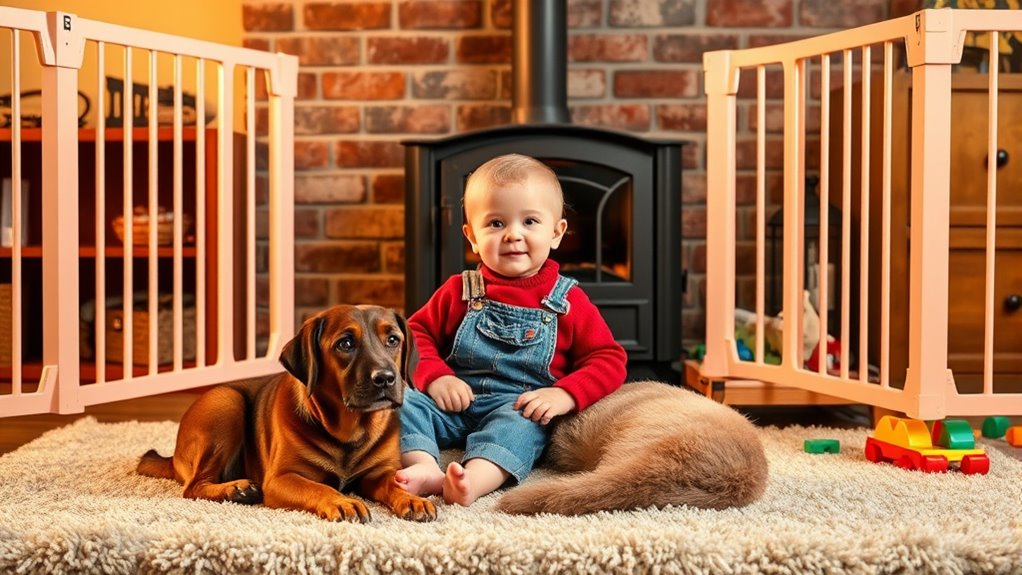

To keep children and pets safe around wood stoves, install sturdy barriers or gates to prevent access, and always supervise when the stove is in use. Make sure to keep the area clear of toys and furniture, and check that the stove and chimney are well-maintained to avoid hazards like hot surfaces and smoke leaks. Install smoke and carbon monoxide detectors, and have a fire extinguisher nearby. Continuing on will help you learn additional safety tips to protect your loved ones effectively.
Key Takeaways
- Install sturdy barriers or gates around the stove to prevent children and pets from accessing hot surfaces.
- Always supervise children and pets when the stove is in use or hot to prevent accidental contact.
- Keep the area around the stove clear of toys, furniture, and objects to reduce curiosity and accidental contact risks.
- Educate children about stove dangers and establish strict safety rules for stove proximity and behavior.
- Install smoke and carbon monoxide detectors, and keep a fire extinguisher nearby; regularly check safety devices for proper function.
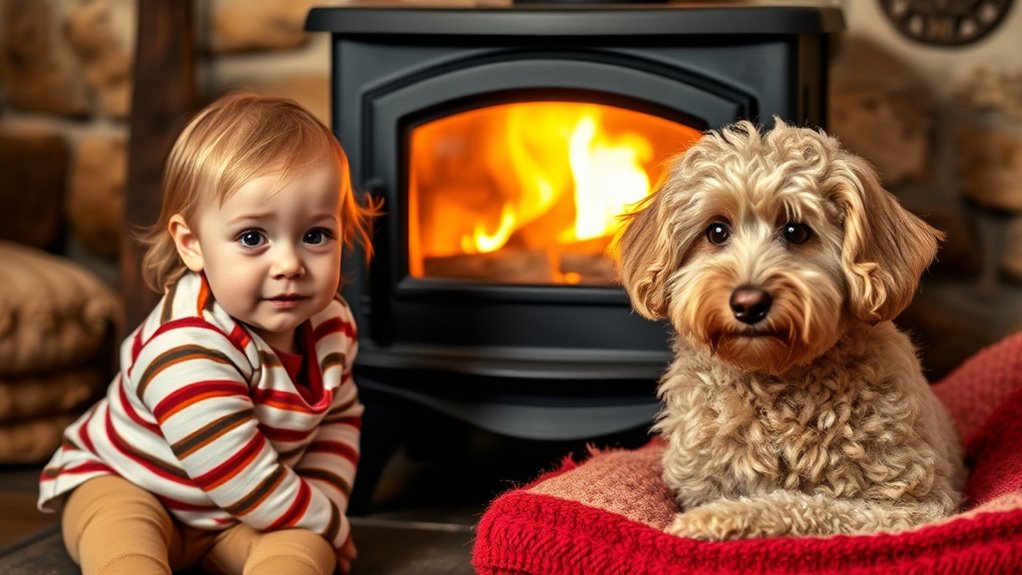
Wood stoves provide cozy warmth, but they also pose considerable safety risks for children and pets. As a parent or pet owner, you need to be vigilant about fire safety to prevent accidents. The first step is understanding that a wood stove’s open flame and hot surfaces can cause serious burns if you’re not careful. Keeping the area around the stove clear of toys, furniture, or anything that could accidentally come into contact with the hot surface is essential. Installing a sturdy, non-climbable barrier or gate around the stove helps create a physical boundary that discourages children and pets from getting too close. Never underestimate how quickly curiosity can lead to an accident, so always supervise your little ones and pets when the stove is in use.
Stove maintenance is equally critical in guaranteeing safety. Regularly inspecting your wood stove for any signs of damage or wear can prevent dangerous malfunctions. Check the door seals to make sure they’re intact, as leaks can cause smoke or carbon monoxide to escape into your living space. Clean out ashes frequently, but only after the stove has cooled completely. This prevents ash buildup that could potentially lead to a fire hazard or block proper airflow. Additionally, ensure your chimney or flue is cleaned and inspected annually by a professional. Creosote buildup inside the chimney is a common cause of chimney fires, which can quickly spread to nearby combustibles. Proper stove maintenance not only enhances efficiency but also markedly reduces the risk of fire hazards.
To further enhance safety, consider installing fire safety devices such as smoke detectors and carbon monoxide alarms in your home, especially near the stove area. Having functional smoke detectors and carbon monoxide alarms installed and tested regularly is a must. These devices alert you immediately if dangerous gases or smoke are present, giving you critical time to react. Keep a fire extinguisher nearby, and make sure everyone in your household knows how to use it. Educate children about the dangers of the stove and establish rules about never touching or playing near it. Reinforce that the stove is hot and dangerous, even when it appears to be off. Regularly practicing fire safety protocols helps ensure everyone knows how to respond quickly in an emergency. Incorporating proper stove operation practices can further reduce risks associated with wood stove use. Additionally, being aware of the safe clearance distances around the stove can prevent accidental contact with hot surfaces.
child and pet safety wood stove barrier
As an affiliate, we earn on qualifying purchases.
As an affiliate, we earn on qualifying purchases.
Frequently Asked Questions
How Can I Teach Children About Stove Dangers Effectively?
You can teach children about stove dangers by making fire safety lessons engaging and clear. Show them how to stay away from hot surfaces and explain emergency preparedness steps in simple terms. Use everyday situations to reinforce these rules, and practice fire drills regularly. Encourage questions and praise their understanding. This hands-on approach helps children grasp stove dangers and know what to do in emergencies, keeping everyone safer.
Are There Specific Pet-Proof Barriers for Wood Stoves?
You can’t just put all your eggs in one basket when it comes to pet-proof barriers for wood stoves. Look for pet-resistant screens designed specifically for stoves, and consider child-proof vents to keep little ones and pets safe. These barriers create a sturdy shield that prevents accidental contact and burns. Installing them correctly gives you peace of mind, knowing your furry friends and kids are protected from stove hazards.
What Are the Signs of Accidental Stove Burns in Pets?
If your pet has accidental contact with a wood stove, look for fire injury symptoms like redness, swelling, blistering, or burns on their skin. Pet burn signs also include pain, limping, or reluctance to move. You should act quickly by calmly examining your pet and seeking veterinary care if you notice any of these signs. Early treatment is essential to prevent infection or further injury.
How Often Should Stove Safety Checks Be Performed?
You should perform monthly inspections of your wood stove to guarantee it’s operating safely. During these checks, look for any signs of wear or damage, and make sure safety devices like smoke and carbon monoxide detectors are working properly. Regular maintenance keeps your stove safe and efficient, reducing risks for children and pets. Don’t forget to clean the stove and check seals to prevent potential hazards.
Can Certain Stove Designs Reduce Safety Risks for Kids and Pets?
Ever wonder if stove design can keep kids and pets safer? Absolutely! Modern stove designs often include safety technology like protective barriers, cool-to-touch surfaces, and child-proof locks that reduce risks. Choosing a stove with these features can make your home safer. Does your current stove have these safety innovations? Upgrading to a model with advanced safety technology is a smart step to protect your loved ones from potential hazards.
wood stove safety gate
As an affiliate, we earn on qualifying purchases.
As an affiliate, we earn on qualifying purchases.
Conclusion
Ultimately, keeping children and pets safe around wood stoves might seem simple, but it’s easy to forget the obvious dangers. You’d think the cozy glow would be enough to warn everyone away, yet accidents happen when safety is overlooked. Ironically, the very warmth meant to comfort can turn into a hazard if precautions aren’t taken. Stay vigilant, set boundaries, and remember—sometimes the safest choice is just respecting that fire’s power.
smoke and carbon monoxide detector combo
As an affiliate, we earn on qualifying purchases.
As an affiliate, we earn on qualifying purchases.
fire extinguisher for home kitchen
As an affiliate, we earn on qualifying purchases.
As an affiliate, we earn on qualifying purchases.