In stove-heated homes, ceiling fans help you achieve even warmth and eliminate cold spots by circulating warm air downward. They improve comfort and energy efficiency, reducing your need to crank up the stove or use extra heaters. Properly setting the fan’s direction keeps heat from stratifying and minimizes heat loss. If you want to learn how to maximize your home’s warmth and cut costs, there’s more to discover on how ceiling fans can make a real difference.

Get backup power and energy gear delivered free with Prime
- Fast, free delivery on millions of items
- Prime Video, Amazon Music and more included
- Member-only deals all year
Key Takeaways
- Ceiling fans promote even heat distribution, reducing cold spots and drafts in stove-heated homes.
- Proper fan use enhances energy efficiency by circulating warm air and minimizing stove operation.
- Fans prevent temperature stratification, ensuring consistent warmth throughout the room.
- Operating fans clockwise in winter pushes warm air downward, improving overall comfort.
- Ceiling fans are a cost-effective way to improve indoor air quality and reduce heating costs.
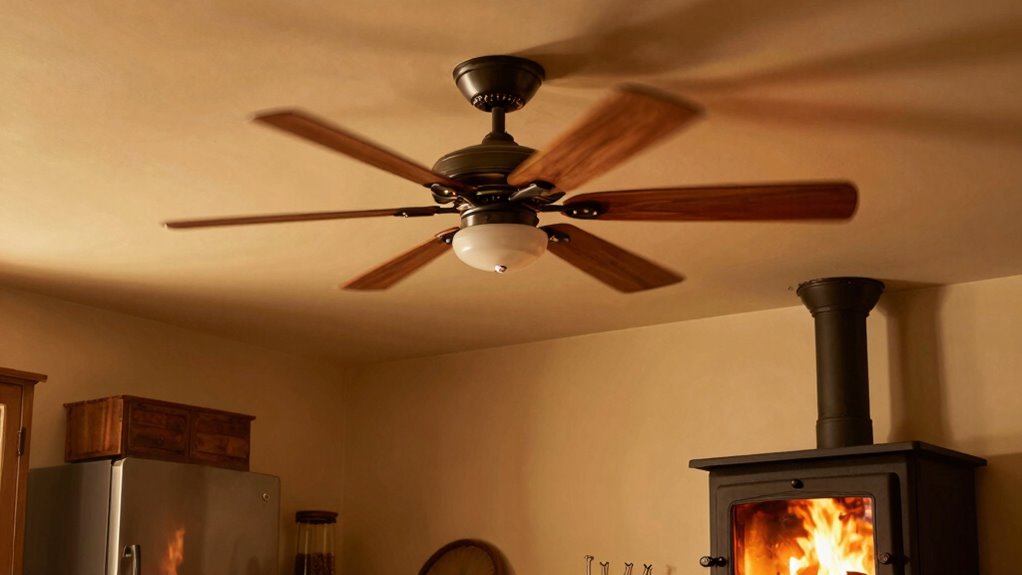
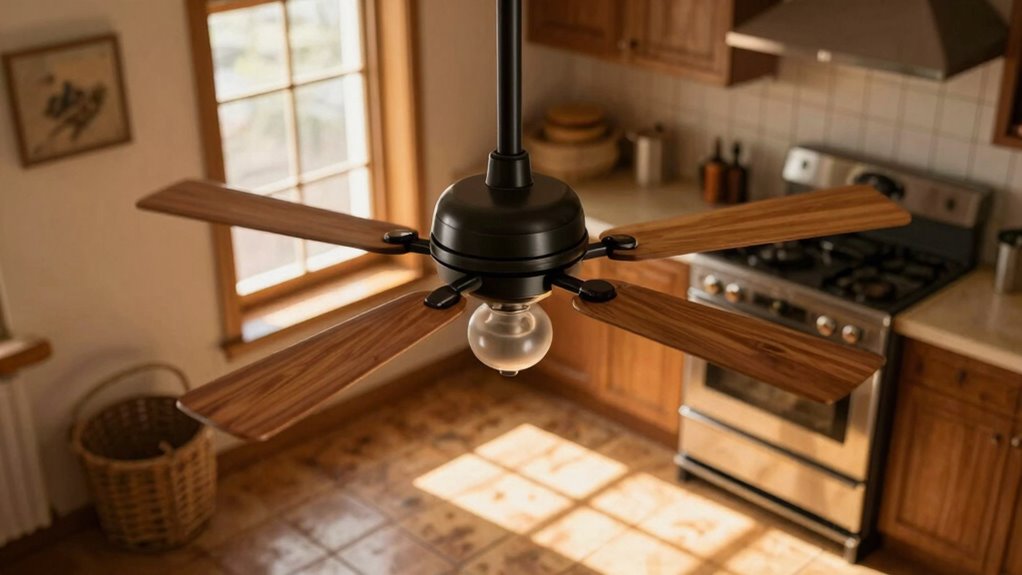
In homes heated by stoves, ceiling fans can be a practical addition that helps distribute warm air more evenly. When your stove produces heat, it often creates pockets of warm air that tend to rise and linger near the ceiling, leaving the lower areas cooler and less comfortable. Installing a ceiling fan allows you to improve air circulation, pushing that warm air downward and ensuring a more consistent temperature throughout your space. This not only enhances comfort but also boosts energy efficiency by reducing the need to turn up the stove or supplementary heating sources to compensate for uneven heat distribution.
Ceiling fans help distribute warm air evenly, improving comfort and energy efficiency in stove-heated homes.
By promoting better air circulation, ceiling fans help you make the most of the heat generated by your stove. Instead of letting warm air stagnate at the ceiling, the fan moves it around, preventing temperature stratification. This means you can enjoy a cozy environment without cranking up the stove or relying heavily on additional heaters. As a result, your energy consumption decreases, saving you money on fuel or electricity bills. The improved airflow also helps reduce cold spots and drafts, making your home more uniformly warm and comfortable. Proper airflow is especially important in stove-heated homes where heat tends to unevenly distribute without assistance.
Using a ceiling fan in stove-heated homes is a simple yet effective way to maximize energy efficiency. Since heat naturally rises, many homeowners overlook how much potential there is in just moving that warm air around. When you activate your ceiling fan in the appropriate direction—clockwise in winter to push warm air downward—you create a circulation pattern that keeps the entire room comfortable. This circulation minimizes heat loss and prevents the need for excessive stove operation, ultimately conserving energy and reducing wear and tear on your heating system. Additionally, proper airflow can help prevent temperature stratification, which contributes to uneven heating.
Furthermore, ceiling fans are a cost-effective solution for enhancing comfort in stove-heated homes. They consume far less energy than space heaters or additional heating appliances, and their ability to improve air circulation means you get better results with less effort. Proper air circulation also contributes to healthier indoor air quality by preventing stagnant, stale air from settling in corners or near the ceiling. Overall, integrating ceiling fans into your stove-heated home setup offers a practical way to boost energy efficiency, improve airflow, and maintain a cozy, evenly heated environment. Recognizing the importance of air circulation can significantly enhance your home’s heating efficiency and comfort.
Products Worth Considering

Levoit Core 400S-P Smart Air Purifier for Large Rooms

Coway Airmega 250 Air Purifier for Large Rooms

Levoit Eleva 300X HEPA Air Purifier for Home and Bedroom
As an affiliate, we earn on qualifying purchases.
Frequently Asked Questions
Do Ceiling Fans Increase Energy Bills in Heated Homes?
No, ceiling fans generally don’t increase your energy bills in heated homes. In fact, they can improve heating efficiency and promote electricity savings by circulating warm air evenly throughout your space. When you run a ceiling fan clockwise on a low setting, it pushes warm air downward, reducing the need for your furnace to work as hard. This helps you stay comfortable while cutting down on energy costs.
Are Ceiling Fans Suitable for All Ceiling Heights?
Imagine a cozy room with a towering ceiling—ceiling fan installation works well here, as it helps circulate warm air efficiently. For low ceilings, ceiling height considerations are vital; a flush-mount fan keeps the space feeling open and safe. While fans suit many ceiling heights, you should choose your fan size and style carefully to guarantee ideal airflow and safety, regardless of your ceiling’s height.
Can Ceiling Fans Help Reduce Stove-Related Indoor Air Pollution?
Yes, ceiling fans can help reduce stove-related indoor air pollution by improving indoor air quality. When you turn on a fan, it promotes better pollutant dispersion, preventing harmful particles from lingering in one area. This continuous airflow helps circulate fresh air and pushes pollutants away from breathing zones, making your home safer and more comfortable. Using ceiling fans strategically can be an effective way to manage indoor air pollution from your stove.
How Do Ceiling Fans Impact Stove Heat Distribution?
Think of your ceiling fan as a gentle breeze guiding heat like a dance partner, ensuring even air circulation. It actively promotes heat regulation by distributing warm air from your stove throughout the room, preventing hot or cold spots. As you turn on the fan, it helps balance temperature, making your home more comfortable. This simple symbol of harmony transforms stove heat into a cozy, evenly warmed space.
Are There Safety Concerns Using Ceiling Fans Near Stoves?
Yes, there are safety concerns when using ceiling fans near stoves. You should be cautious about fire hazards, especially if the fan blades are too close to heat sources or if grease and smoke accumulate on the fan. Additionally, check electrical safety; verify your fan’s wiring is properly installed and rated for your home. Regular maintenance helps prevent electrical issues, keeping you safe while improving heat distribution.
Conclusion
Including ceiling fans in stove-heated homes isn’t just about comfort—it’s a smart energy move. Did you know that ceiling fans can reduce heating costs by up to 10% by improving air circulation? This means you stay cozy while saving money and energy. So, if you haven’t already, consider installing a ceiling fan; it’s a simple upgrade that makes your home more efficient and comfortable all winter long.