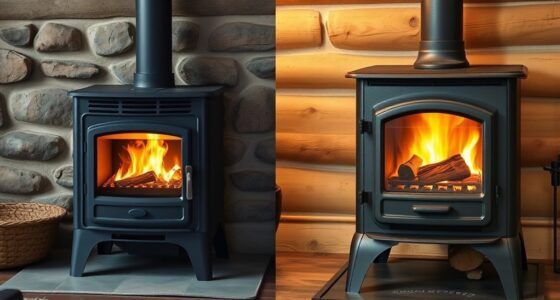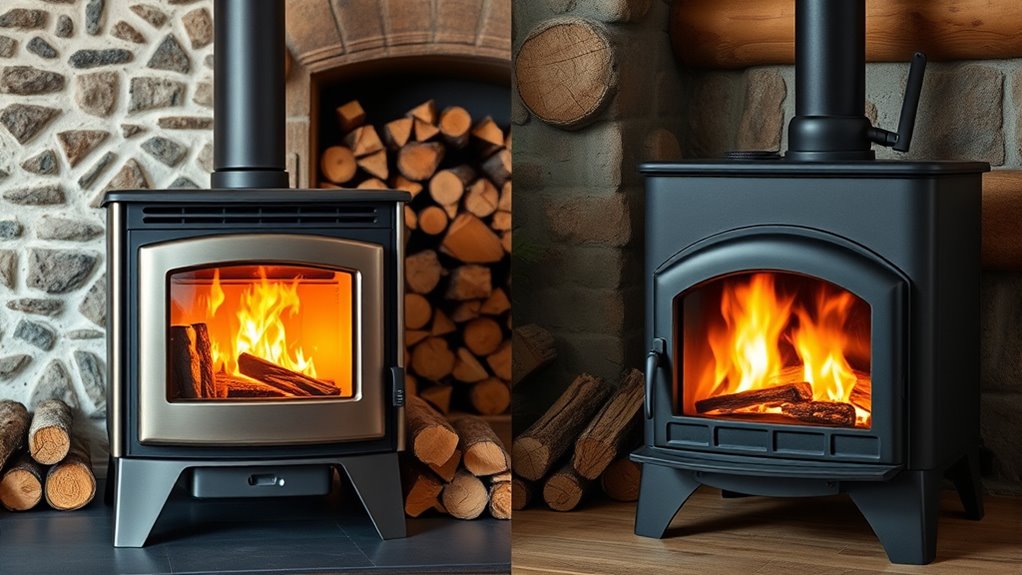

If you’re choosing between catalytic and non-catalytic wood stoves, consider that catalytic models burn wood more efficiently, providing longer burn times and more heat with less fuel, but require more maintenance and catalyst replacements. Non-catalytic stoves are simpler, easier to operate, and need less upkeep but may need more frequent refueling and don’t extract as much heat from the same amount of wood. To weigh these options carefully, keep exploring the details below.
Key Takeaways
- Catalytic stoves offer higher efficiency and longer burn times with less wood, while non-catalytic stoves are simpler and easier to operate.
- Catalytic models require regular catalyst maintenance; non-catalytic stoves need less upkeep but may need more frequent refueling.
- Non-catalytic stoves are less complex, making them more straightforward to use, whereas catalytic stoves are more forgiving with less-than-ideal wood.
- Catalytic stoves provide better heat extraction and fuel savings over time, but involve higher initial costs and maintenance.
- Non-catalytic stoves demand attentive operation to prevent creosote buildup, but offer easier maintenance and lower upfront investment.
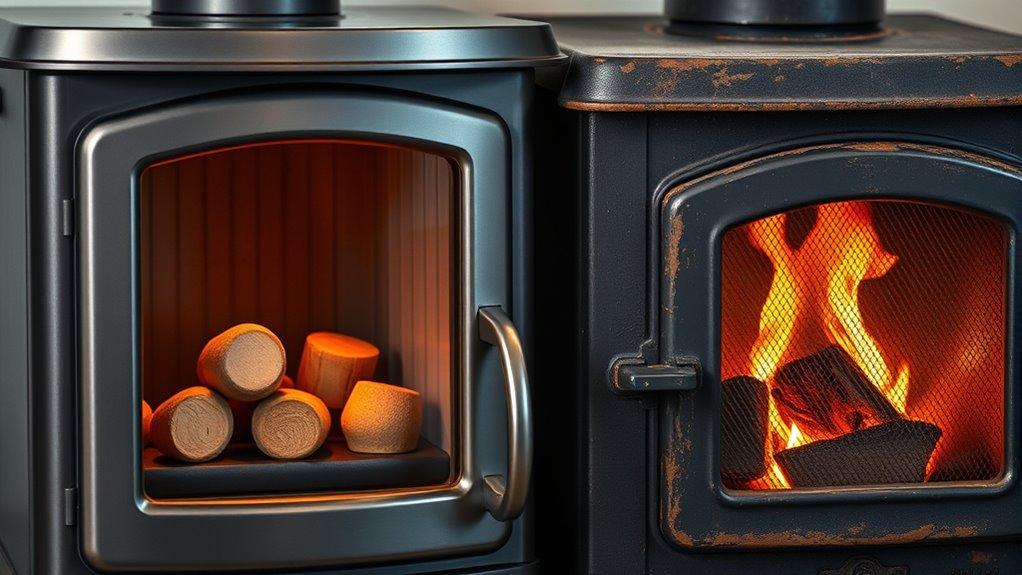
When choosing a wood stove, understanding the differences between catalytic and non-catalytic models can help you make an informed decision. One of the main factors to weigh is efficiency gains. Catalytic stoves use a specialized catalyst, usually made of ceramic or metal, to burn smoke and gases more completely. This process allows for longer burn times and higher heat output with less wood, making them generally more efficient. You’ll notice that catalytic stoves can extract more heat from the same amount of wood, which can save you money over time on fuel costs. In contrast, non-catalytic stoves rely on a different technology—burning wood at higher temperatures without a catalyst. They tend to have a more straightforward design, which often results in slightly lower efficiency gains compared to catalytic models. However, they can still produce ample heat and are simpler to operate, especially if you prefer a no-fuss approach. Additionally, catalytic stoves often feature high thermal efficiency ratings that highlight their ability to maximize heat output from fuel. Maintenance differences are another vital aspect. Catalytic stoves require more regular upkeep because the catalyst can become clogged or lose effectiveness over time. You’ll need to periodically inspect, clean, and sometimes replace the catalyst to maintain ideal performance. This added maintenance can be a downside if you’re looking for a low-maintenance heating option. On the other hand, non-catalytic stoves have fewer components that need routine care. Their simpler design means they typically require less frequent cleaning and fewer repairs, making them easier and cheaper to maintain over the years. However, they might need more frequent refueling during cold spells because their combustion process isn’t as efficient as catalytic models. Another aspect to consider is how each type responds to different burning conditions. Catalytic stoves can be more forgiving when burning seasoned or less-than-ideal wood because their design helps maximize combustion efficiency. Non-catalytic stoves, while simpler, often require more attentive operation to avoid creosote buildup and to achieve the best heat output. If you prefer a stove with less maintenance and simpler operation, a non-catalytic model might be more suitable. Conversely, if you’re willing to invest time in regular upkeep for better efficiency and longer burn times, a catalytic stove could be a better fit.

Hearth Wood Stove Catalytic Combustor for Dutchwest Parts-2460 2461 2462 Englander Dovre,6"x2" Ceramic Wood Stove Catalytic Converter for Longer Burn Time Save 1/3 Firewood Activate Higher Temp
Top High Quality: Our ceramic wood stove catalytic combustors for Dutchwest Englander is with cells per Inch -…
As an affiliate, we earn on qualifying purchases.
As an affiliate, we earn on qualifying purchases.
Frequently Asked Questions
How Do Catalytic and Non-Catalytic Stoves Compare in Fuel Efficiency?
You’ll find that catalytic stoves generally have better fuel consumption because their enhanced combustion efficiency burns wood more completely. This means you get more heat from less fuel, saving you money over time. Non-catalytic stoves may use more fuel as they rely on higher temperatures and secondary combustion, which can be less efficient. So, if you prioritize fuel efficiency, a catalytic stove might be the better choice for you.
Are Catalytic Stoves More Environmentally Friendly Than Non-Catalytic Models?
You’ll see that catalytic stoves are more environmentally friendly than non-catalytic models because they considerably lower emission levels. Their advanced technology helps burn wood more completely, reducing smoke and pollutants—making a real difference for the environment. While they may require more maintenance, the positive impact on air quality is worth it. So, if you’re passionate about reducing your environmental impact, catalytic stoves are the smarter choice for a cleaner, greener home.
What Are the Typical Maintenance Costs for Each Stove Type?
You’ll find that catalytic stoves typically have higher maintenance costs due to the need for regular chimney cleaning and replacing worn-out catalysts, which can be pricey. Non-catalytic stoves usually cost less to maintain, but you might still need occasional replacement parts like fans or gaskets. Overall, expect to invest more in upkeep with catalytic models, especially over time, mainly because of their complex components and the necessity for routine chimney cleaning.
Can Both Stove Types Be Used in the Same Home Safely?
Can you safely use both stove types in your home? Yes, but you need to verify installation compatibility and safety considerations first. Each stove requires specific venting and space requirements, so mixing them can be tricky. Consult a professional to ensure proper setup and prevent hazards. With careful planning, you can enjoy the benefits of both, but safety should always be your top priority when operating different stove types in one home.
Which Stove Type Offers Better Heat Retention During Power Outages?
You’ll find that non-catalytic wood stoves typically offer better heat retention during power outages because they have simpler designs with consistent insulation effectiveness. Their heat distribution patterns tend to radiate warmth more evenly and maintain heat longer without power, making them ideal for backup heating. Catalytic stoves may lose heat faster if the catalyst gets clogged or damaged, reducing their efficiency during power outages.

Buck Stove Fireplace Insert Model 21 | Non-Catalytic, 28,901 BTUs (Covers 1,800 Square Feet) | Wood Burning with Heat Activated Blower | Black Door with 12" Faceplate Trim Kit
Powerful Heating: Efficiently heats small to medium-sized spaces with up to 28,901 BTUs, ensuring warmth even in every…
As an affiliate, we earn on qualifying purchases.
As an affiliate, we earn on qualifying purchases.
Conclusion
Choosing between catalytic and non-catalytic wood stoves is like picking between a wise old sage and a spirited young adventurer. Each has its strengths and quirks, so consider your heating needs and maintenance preferences. Remember, just as the sun rises anew each day, your decision shapes your cozy sanctuary. Whichever path you choose, embrace it fully—after all, your home’s warmth depends on the choices you make today.
wood stove catalyst replacement kit
As an affiliate, we earn on qualifying purchases.
As an affiliate, we earn on qualifying purchases.

Pellet Stove Cleaning Brush with Scraper – Heavy Duty Wire Bristles for Ash & Soot Removal – Long Handle Fireplace Maintenance Tool for Wood & Gas Stoves, Burners and Chimneys
Dual-Action Cleaning Power (Feature & Advantage) Combines stiff wire brushes for cleaning with a built-in metal scraper to…
As an affiliate, we earn on qualifying purchases.
As an affiliate, we earn on qualifying purchases.