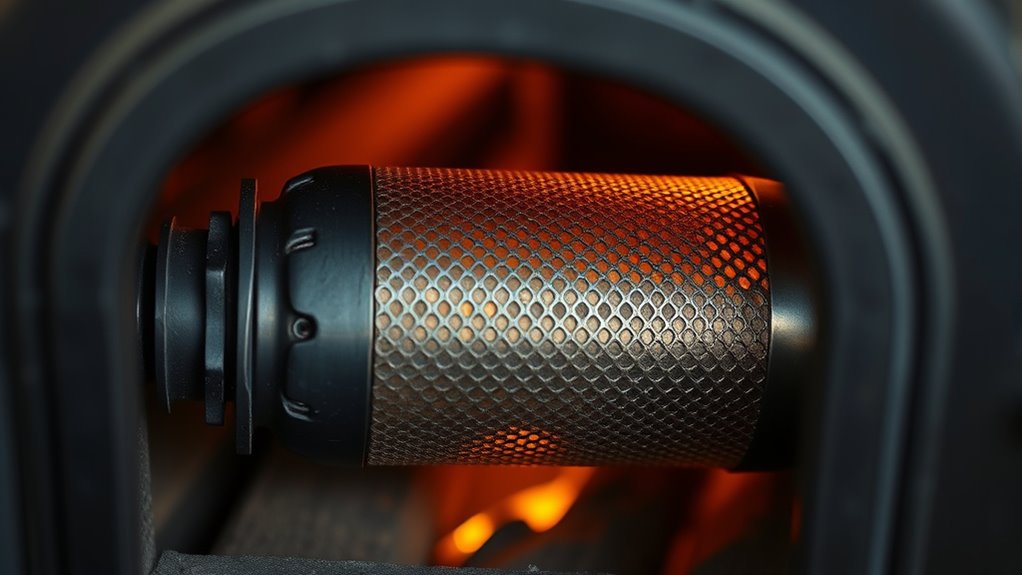

A catalytic converter in a wood stove is a device that helps improve efficiency and lower emissions by encouraging chemical reactions that promote cleaner, more complete combustion. It contains a coated substrate with catalysts like platinum or palladium, which accelerate the breakdown of pollutants into less harmful substances like carbon dioxide and water vapor. This results in warmer spaces, less creosote buildup, and a cleaner environment—if you want to know how it all works, keep exploring.
Key Takeaways
- A catalytic converter in a wood stove contains a coated substrate that enhances combustion efficiency.
- It accelerates chemical reactions, converting harmful gases like carbon monoxide into less toxic substances.
- The converter promotes cleaner, more complete burning of wood, reducing smoke, creosote buildup, and emissions.
- Installing a catalytic converter improves stove performance, heat output, and energy efficiency.
- It helps meet environmental standards by significantly lowering the stove’s pollution footprint.

Have you ever wondered how a catalytic converter can improve your wood stove’s efficiency and reduce emissions? It’s a smart addition that transforms the way your stove burns wood, making it both more effective and environmentally friendly. When you install a catalytic converter, you’re fundamentally adding a device that promotes cleaner combustion by facilitating chemical reactions that break down smoke and other pollutants. This process leads to significant emission reduction because fewer harmful gases are released into the atmosphere. At the same time, your stove operates more efficiently, meaning you get more heat from less wood, saving you money and effort.
The catalytic converter works by containing a special substrate coated with catalysts like platinum, palladium, or rhodium. As the smoke and gases pass through this substrate, these catalysts accelerate the chemical reactions that convert carbon monoxide, volatile organic compounds, and other dangerous pollutants into less harmful substances such as carbon dioxide and water vapor. This not only helps in decreasing the environmental impact of burning wood but also guarantees cleaner air quality around your home. Because the converter encourages a more thorough and complete burn, your stove’s overall efficiency improves. You’ll notice that the wood burns longer and produces less creosote buildup, which lessens maintenance needs and prolongs the life of your stove.
In addition to emission reduction, the efficiency improvement brought by a catalytic converter means you’re making better use of your fuel. Instead of losing energy through unburned smoke or inefficient combustion, the converter ensures that more of the heat generated is utilized for warming your space. This can be especially valuable during cold months when maximizing heat output is vital. The enhanced combustion process also results in less ash and soot, keeping your stove cleaner and reducing the frequency of cleaning and maintenance. Plus, since the converter promotes cleaner burning, it helps you meet environmental standards and local regulations more easily.
Installing a catalytic converter is an investment that pays off by making your wood stove safer and more environmentally conscious. You’ll enjoy warmer spaces, fewer emissions, and a more efficient burning process that uses less wood over time. Whether you’re looking to cut down on pollution or simply want a more effective heating system, a catalytic converter offers a practical solution. It’s a simple upgrade that makes your stove work smarter, not harder, and helps you do your part in reducing your carbon footprint without sacrificing comfort.
Top picks for "catalytic converter wood"
Open Amazon search results for this keyword.
As an affiliate, we earn on qualifying purchases.
Frequently Asked Questions
How Long Does a Catalytic Converter Last in a Wood Stove?
A catalytic converter in your wood stove typically lasts around 5 years, but this depends on its catalytic lifespan and how well you perform maintenance. Regular maintenance, like cleaning the converter every season, can extend its life. Keep an eye out for signs of clogging or reduced efficiency. Proper care ensures your converter functions at its best, providing cleaner burns and better heat output for years to come.
Can I Retrofit a Catalytic Converter Into My Existing Stove?
You can retrofit a catalytic converter into your existing stove, but it depends on the stove’s design and whether it’s compatible. Retrofit feasibility varies, so you’ll want to consult a professional to assess your stove’s setup. Cost considerations include parts, installation, and potential modifications. Keep in mind that retrofitting might improve efficiency and emissions, but verify it’s safe and compliant with local regulations before proceeding.
Are Catalytic Converters Environmentally Beneficial for Wood Stoves?
Yes, catalytic converters are environmentally beneficial for wood stoves because they help reduce emissions and improve air quality. By promoting more complete combustion, they lower particulate matter and harmful gases released into the air. This means you can enjoy a cleaner burn, which benefits both the environment and your health. Installing a catalytic converter actively supports emission reduction efforts and contributes to better air quality in your community.
What Are the Signs of a Failing Catalytic Converter?
If you notice your wood stove’s emissions aren’t reduced as effectively, your catalytic converter might be failing. For example, a homeowner observed increased smoke and odors, signaling reduced emission reduction. Signs include poor airflow, reduced heat output, and ash buildup around the converter. To guarantee ideal performance, follow maintenance tips like regular inspections and cleaning. Addressing these signs promptly keeps your catalytic converter working efficiently, reducing harmful emissions and extending its lifespan.
Is a Catalytic Converter Necessary for All Wood Stoves?
A catalytic converter isn’t necessary for all wood stoves, but it offers eco-friendly benefits by reducing emissions and improving efficiency. If you’re looking to cut down on pollution and maximize heat output, a catalytic converter can be a smart addition. However, consider the cost considerations, as it adds to initial expenses and maintenance. Weigh these factors to decide if a catalytic converter aligns with your environmental goals and budget.
Conclusion
Think of a catalytic converter in your wood stove like a skilled chef transforming raw ingredients into a delicious dish. Just as that chef reduces waste and enhances flavors, the converter trims harmful emissions and boosts efficiency. I remember lighting my first stove and feeling like I’d unveiled a secret to cleaner burning. It’s a small part that makes a big difference—turning your cozy fire into an eco-friendly, efficient heat source you can feel good about.